
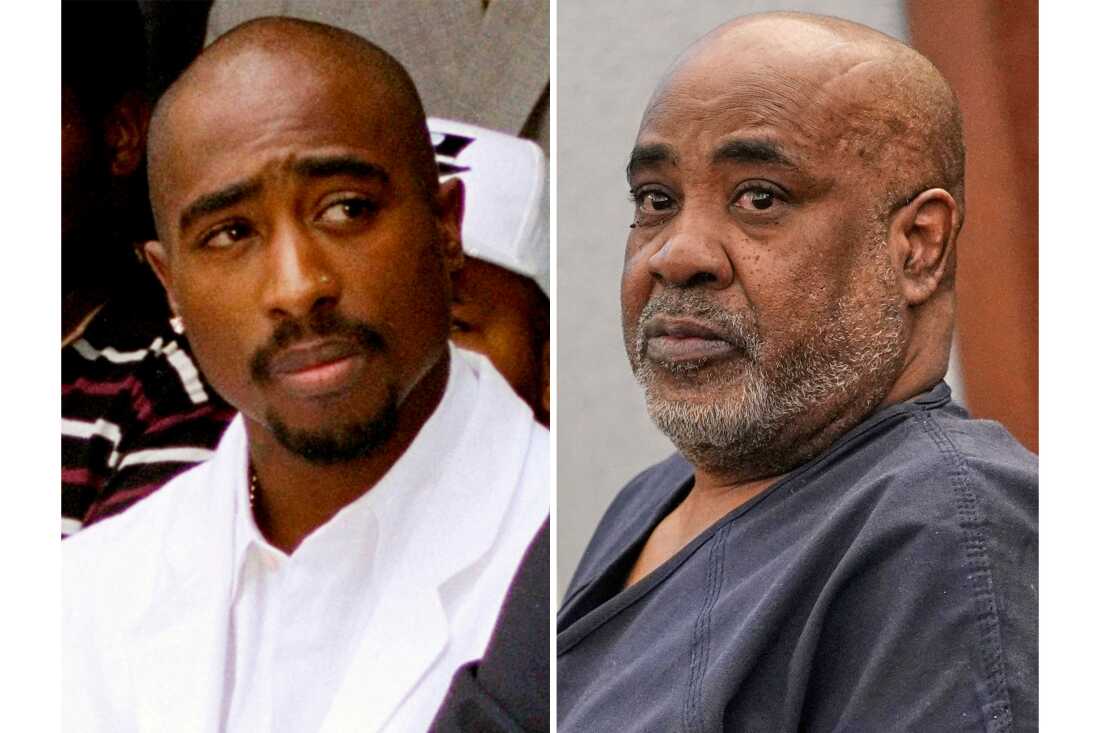
In Las Vegas, a Nevada judge decided that a 2008 interview given by Duane “Keffe D” Davis, the man accused of orchestrating the 1996 murder of rapper Tupac Shakur, could be used in his upcoming trial. Tupac Shakur, a prominent figure in the music industry, was gunned down in a still unsolved case that has captured public attention for decades.
Judge Carli Kierny ruled that the interview is admissible during Davis’ trial, which is set to commence on August 10. If convicted, Davis, now 63, faces a life sentence without parole. Prosecutors allege that Davis played a crucial role in planning the killing. The case had remained unresolved until Davis made several public remarks, including those in a book he co-authored, where he admitted to being in the vehicle from which the fatal shots were fired.
Davis’ defense lawyer, Michael Sanft, argued the 2008 interview was supposed to remain confidential, as detectives had assured Davis it would not be used against him. “I sang because they promised I would not be prosecuted,” Davis wrote in his book, “Compton Street Legend.” However, prosecutors contended that Davis’s subsequent public statements and his book nullified the confidentiality claim.
Attempts by Davis’ attorney to prevent the book’s use in the trial were unsuccessful. Kierny concluded that Davis had embraced the content as his own, referencing an interview where Davis described the book as the “real truth.” The 2008 interview was also featured in former Detective Greg Kading’s book “Murder Rap” and in documentaries such as “Sean Combs: The Reckoning.”
Tupac Shakur was shot on September 7, 1996, while at a red light near the Las Vegas Strip alongside Marion “Suge” Knight, founder of Death Row Records. A white Cadillac pulled up, and gunfire ensued, resulting in Shakur being struck multiple times. He succumbed to his injuries six days later, whereas Knight sustained minor injuries. Davis’s statement alleged that he provided the weapon, while his nephew, Orlando “Baby Lane” Anderson, who has since died in an unrelated incident, took part in the shooting. Nonetheless, Davis remains the only survivor, as none of the others faced charges related to Shakur’s murder before their deaths.
During his 2008 interview, Davis recounted the events leading up to the encounter, and stated that Anderson “popped them.” However, Anderson had denied any involvement in the killing, and a witness later claimed that Anderson lacked a clear shot, implying another accomplice may have fired the weapon.
Davis expressed regret for disclosing any information to authorities, writing in his memoir that “It kills me on the inside to know that I told them anything.” He noted investigators appeared “shocked and surprised” by his revelations regarding the events of that night.