
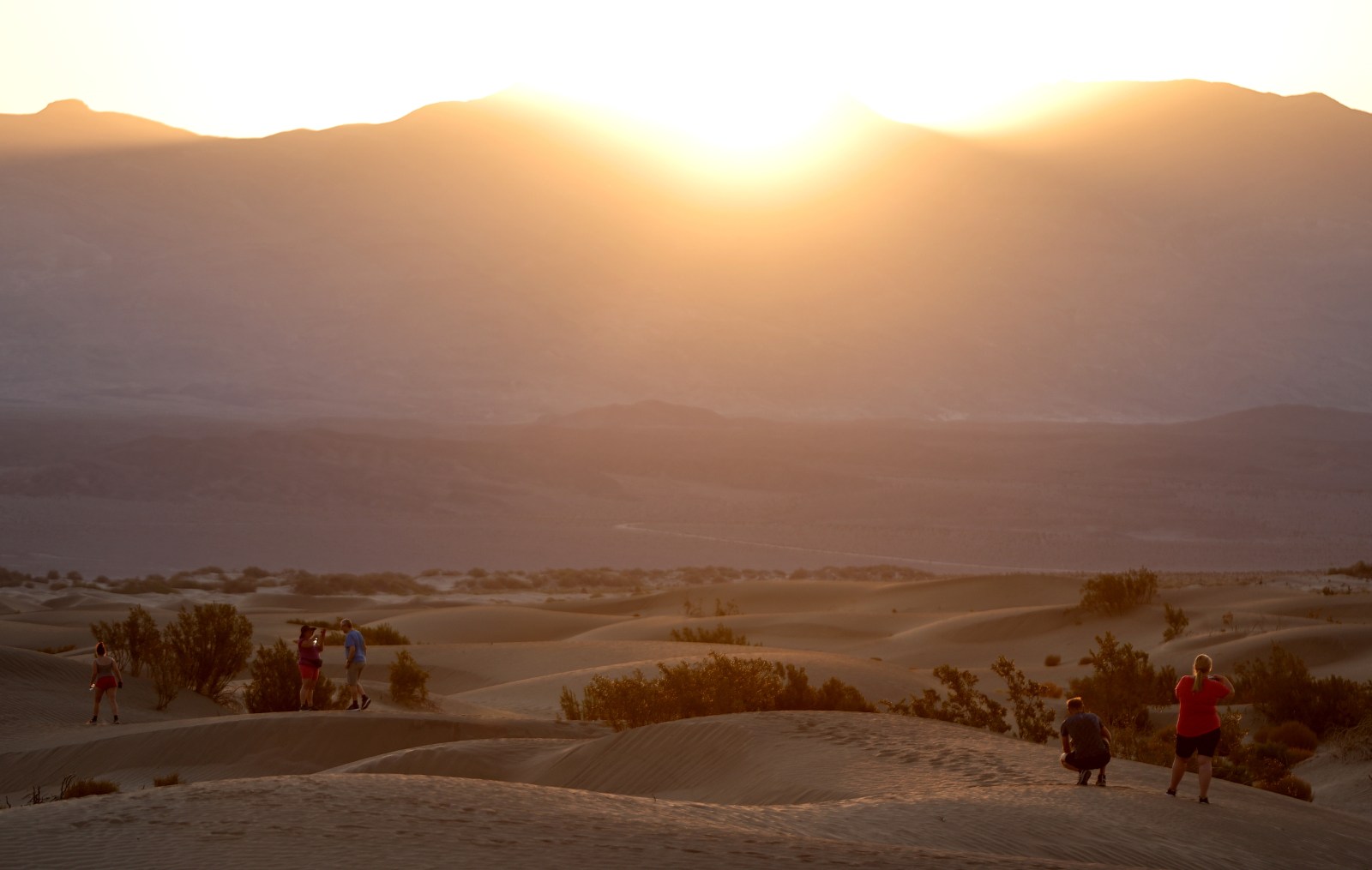
The United States may soon observe near-record temperatures in California’s Death Valley. Predictions suggest a temperature of 129 degrees Fahrenheit this Sunday, only one degree below the highest recorded temperature on Earth, 130 degrees, noted at Furnace Creek in July 2021.
The National Weather Service (NWS) in Las Vegas warns of “dangerous and potentially record-breaking temperatures” expected to start Thursday and last into early next week. Forecasts several days ahead often err by a few degrees, meaning the projected 129 degrees could vary slightly.
The NWS Weather Prediction Center indicates numerous temperature records might be broken in the Southwest this weekend. For instance, Las Vegas might hit a high of 117 degrees on Saturday. Although not included on the forecast webpage, Death Valley could break some daily temperature records this weekend. Forecasts anticipate highs of 123 on Saturday and 124 on Sunday.
Extreme weather chaser Colin McCarthy and WFLA-TV chief meteorologist Jeff Berardelli have commented on the possibility of reaching 130 degrees, contingent on certain atmospheric conditions. Berardelli mentioned Hurricane Genevieve might indirectly impact these high temperatures by reinforcing an upper-level ridge over the Southwest.
Death Valley’s Historical Temperature Readings
The hottest temperature on Earth was reported at 134 degrees Fahrenheit in Death Valley in 1913. However, according to McCarthy, this measurement is likely inaccurate. It possibly overestimated by 12-16 degrees. The highest reliable temperature, 130 degrees, was recorded on July 9, 2021, at Furnace Creek Visitor Center in Death Valley National Park.
NWS issued an Extreme Heat Warning from Thursday to Sunday for parts of Nevada, California, and Arizona. Expected highs in the Mojave Desert range from 110 to 120 degrees. Death Valley, among the hottest places on Earth, is likely to experience extraordinarily high temperatures with little overnight relief.
Dealing with Extreme Heat
Extreme heat can quickly become life-threatening. Vulnerable groups include older adults, children, outdoor workers, and those with chronic conditions. The NWS advises staying hydrated, seeking air-conditioned environments, and avoiding direct sunlight during peak heat. Regularly check on vulnerable individuals in the community.
Avoiding caffeine and alcohol during high heat periods is recommended as these can lead to dehydration. If outdoors, wear loose and lightweight clothing, minimize strenuous activities, and seek shade or air-conditioned spaces regularly. Never leave children or pets in parked cars as interior temperatures rise rapidly in extreme heat.
Be vigilant for signs of heat exhaustion like sweating, dizziness, and nausea. Prompt medical attention is crucial if heat stroke signs such as confusion and high body temperatures appear.
Currently, attention remains on Death Valley, as forecasts suggest the possibility of matching a significant global weather record.