
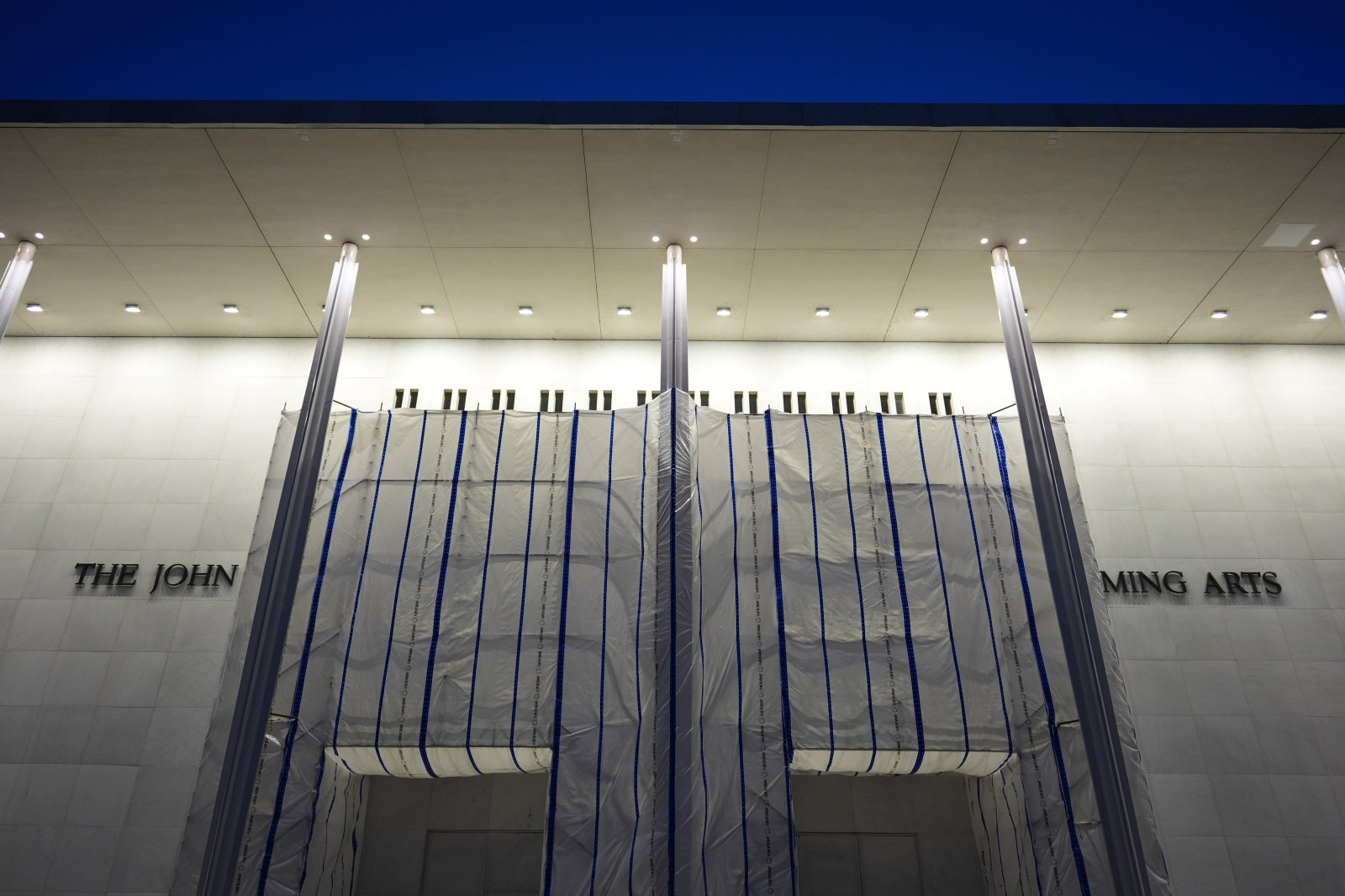
A federal judge has mandated the complete release of the PowerPoint presentation used by the John F. Kennedy Center for the Performing Arts’ board to decide on closing the main building for extensive renovations. This decision comes from U.S. District Judge Christopher R. Cooper. It represents another hurdle for the Trump administration in Representative Joyce Beatty’s ongoing legal challenge over control of the Kennedy Center, its proposed two-year closure, and President Donald Trump’s attempts to associate his name with the iconic venue.
Judge Cooper instructed that the Delta Construction Group PowerPoint be unsealed entirely. He also decided that the separate 163-page JLL construction plan should be disclosed to the public, with the Trump administration having one week to propose specific redactions for portions that it claims could pose legitimate security concerns. The documents were initially presented to the Kennedy Center’s Board of Trustees during an August 13 meeting, where the decision to close the main building for renovations was made.
Public Disclosure and Security Concerns
This unsealing occurs against a backdrop of broader disputes over Trump’s efforts to include his name on the Kennedy Center. Democrats have alleged that Trump is pushing for the institution’s closure and threatening its future, potentially including demolition, to fulfill his efforts to have his name affixed to the building. Meanwhile, the Trump administration contends that the Kennedy Center is facing severe structural and financial challenges, necessitating immediate major construction work.
The administration argues that the Kennedy Center is in dire trouble without intervention from the Trump Administration and President Trump. In legal filings, they asserted that the Center cannot survive without significant assistance.
The crisis is so acute that, without the Trump Administration, its people, and President Trump, the Center cannot survive, either structurally or financially.
Newsweek has reached out to the White House for comment.
Details from the PowerPoint Presentation
The PowerPoint presentation is one of two documents the government submitted under seal after the board meeting in August. The other document is the comprehensive JLL Plan. Beatty argued for public access to both documents, stressing their importance since they justified decisions involving a major public institution, public funds, and the closure of a landmark cultural facility. She accused the Trump administration of hiding behind executive privilege to withhold these documents.
Beatty’s lawyers described the Delta presentation as a five-slide deck, providing key analysis to the board regarding the consequences of closing the building. The lawyers contended that the JLL Plan lacked a cost-benefit analysis justifying the closure. According to Beatty’s lawyers, the Delta presentation included just two slides with substantive analysis, criticized for inconsistencies, and failed to present any advantages for staying partially open.
This was the sole assessment of the decision to close the Kennedy Center presented to the Board, the lawyers stated. The unsealing is significant as the administration maintains the closure is necessary to address severe physical issues and allow for extensive renovations.
Partial Unsealing of the JLL Plan
The court approached the JLL Plan with caution. The government described the plan as detailing proposed construction work, alongside sensitive information about the Kennedy Center’s physical layout and infrastructure. The administration feared that releasing it entirely could expose sensitive details such as schematics, floor plans, and other infrastructure-related specifics.
Judge Cooper acknowledged these security concerns. However, he dismissed the argument that they justified keeping the entire document secret. He declared that the JLL Plan qualifies as a judicial record since the government extensively relied on it during legal proceedings.
Defendants have not met their burden to rebut the presumption of disclosure,
Cooper wrote. He pointed out publicly available information about the Kennedy Center, which had been reported by national media and appeared in court documents.
Cooper has given the administration until October 14 to specify passages it believes should stay sealed and provide detailed justifications for such redactions. Beatty has until October 19 to respond. The judge will then determine which parts, if any, remain undisclosed.
Update on the Kennedy Center Naming Dispute
The controversy over the Kennedy Center’s naming is tied to the institution’s closure. Democrats argue that Trump’s attempt to rename the facility is linked to the decision to shut it down for renovations. Senator Mark Warner has criticized Trump’s preference for closure over cooperative renovation efforts with Congress.
It is a shame the president would rather close the center because it cannot have his name on the building, rather than work with Congress to renovate the building.
Representative Chellie Pingree, a leading Democrat on the House Appropriations subcommittee overseeing the Kennedy Center, challenged the official reasoning for the closure, suggesting it is unrelated to renovation needs.
Trump’s stance, supported by allies, has been that the renovations address essential structural concerns. They refute claims that the closure is entirely due to the naming dispute. Trump’s name was added to the Kennedy Center’s exterior in December 2025, following a unanimous vote by the board of Trump-appointed trustees.
Court Rulings on Naming Attempts
In May, Cooper ruled that the board lacked authority to rename the institution after Trump, ordering the removal of his name. The ruling was based on federal law designating the Kennedy Center as a memorial to John F. Kennedy. Despite this, the board continued pursuing ways to honor Trump.
In September, Cooper blocked further attempts to affiliate Trump’s name with the center, citing violations of existing injunctions and congressional restrictions. The board was required to provide at least 60 days’ notice before any effort to acknowledge Trump or the Trump Kennedy Center Fund in the future.
As the renovation-related dispute continues, the Kennedy Center remains closed, with programming relocated. The administration must submit proposed redactions to the JLL Plan by the deadline. Beatty will then have her chance to respond, and the court will make its decision afterward. The broader legal debate concerning Trump’s communications and claims of presidential privilege remains unresolved.