
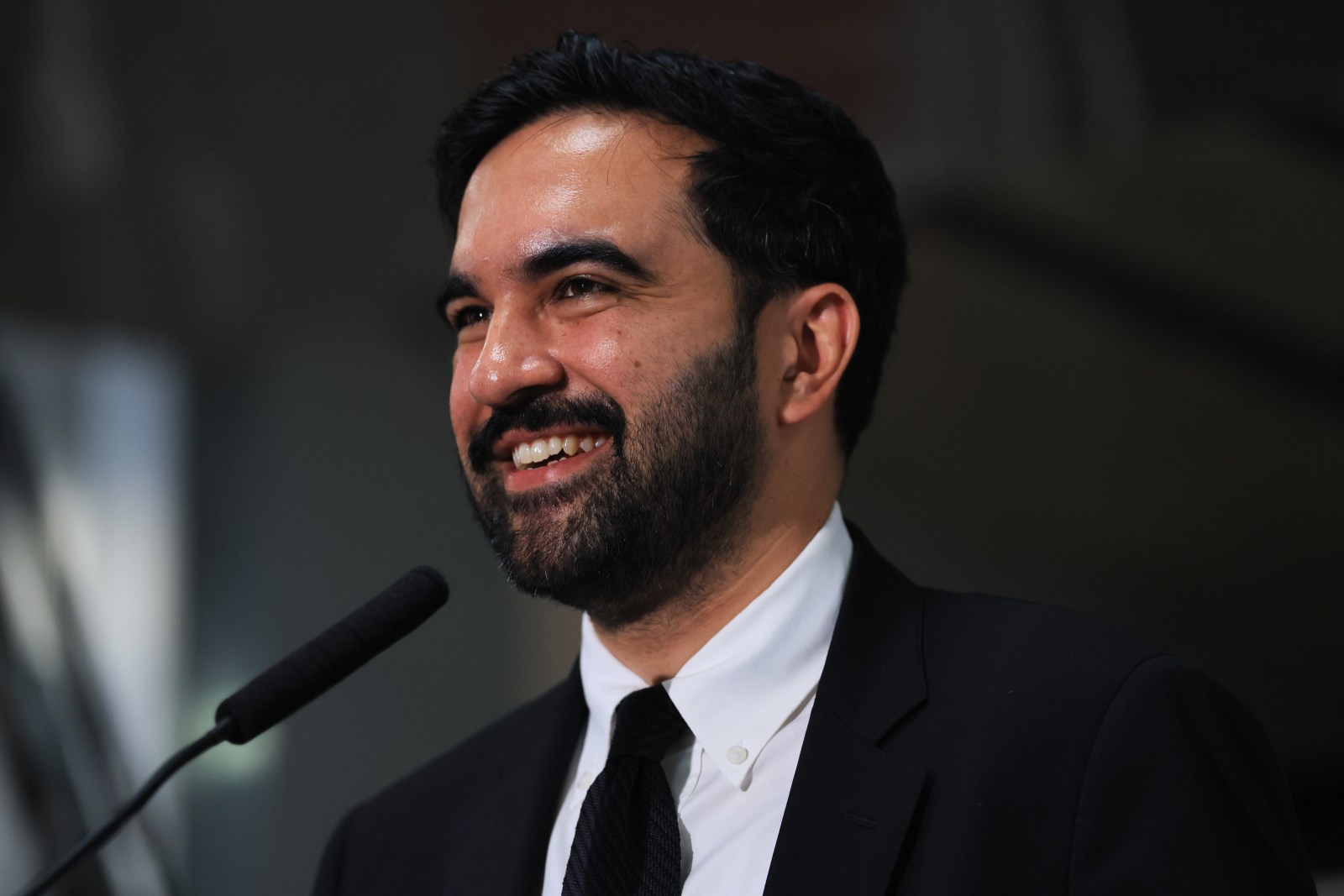
Rabbi Zalman Leib Teitelbaum, the Satmar Rebbe of Williamsburg, has openly criticized labeling Mayor Zohran Mamdani as antisemitic. This puts a significant anti-Zionist Hasidic leader on the opposite side of Jewish groups accusing the mayor of fostering a hostile environment for Jews. This scenario highlights the difficulty in treating Jewish New York as a singular political entity.
Satmar’s stance does not signify an endorsement of Mamdani’s progressive policies. The Satmar opposition to Zionism stems from religious beliefs that precede Mamdani. Their leaders prioritize functional relationships with governing authorities, as Teitelbaum emphasized by referencing the biblical advice to seek the city’s welfare. Mamdani’s alignment with Satmar is based on different grounds than his appeal to leftist anti-Zionist activists. This disrupts the traditional assumption that stances on Israel predict political alliances.
Satmar’s Uncommon Alliance
Mamdani’s Jewish supporters do not form a unified bloc. Satmar leaders collaborate with him, deriving their anti-Zionism from a distinct religious perspective, unlike progressive Jewish groups who agree because of opposition to Israeli policies or broader political alignment. In contrast, liberal Zionists might oppose Mamdani on Israel but still value maintaining City Hall relations.
For Satmar, practical concerns are also at play. City Hall decisions on housing, schools, and social services directly affect Hasidic neighborhoods. During Mamdani’s campaign, Satmar leaders advocated for dialogue, while other Orthodox voices chose confrontation.
Thus, different Jewish constituents may unite over Mamdani despite disparate views on Zionism, Israel, or other issues.
Complexity in Jewish Consensus
Satmar’s relationship with Mamdani should not be mistaken as a decline in Jewish support for Israel. Though Satmar opposes Zionism, surveys like the 2026 Pew Research found 64% of American Jews view Israel favorably. Meanwhile, some New York Jewish voters oppose positions against Israel’s existence as a Jewish state.
The real fracture lies in what these views mean for local politics. Jewish leaders, broadly supporting Israel, differ on whether opposing Mamdani should mean cutting ties. For instance, in March, Orthodox leaders meeting with Mamdani sparked debates; former Assemblyman Dov Hikind criticized this as legitimizing hostility, while Rabbi Yaacov Behrman saw refusing dialogue as counterproductive.
This debate extends beyond Mamdani’s Israel stance, encompassing political access and communal interests.
Redefining Jewish Influence in New York
For decades, New York mayors seeking Jewish opinions contacted familiar institutions like the UJA-Federation. Yet, Mamdani’s leadership questions their irreplaceability. Notably, many major Jewish organizations skipped his Jewish American Heritage reception, yet over 100 attendees still engaged.
Mamdani’s administration actively engages diverse Jewish groups directly. This was evident when Mamdani invited rabbis from various denominations to City Hall. Although many rabbis critiqued his Israel rhetoric, the dialogue itself marked a new engagement model, where City Hall interacts with varied Jewish leaders directly rather than through a single entity.
The major Jewish organizations might still influence key city policy areas despite existing conflicts. But if Mamdani continues negotiating with Jewish constituencies separately, the institutional shift may overshadow ideological differences. No singular entity can then claim authority over Jewish political representation in New York.
Teitelbaum’s intervention doesn’t erase opposition Mamdani faced from other rabbis. It underscores New York politics where one Jewish leader’s support doesn’t equate to a consensus. The central question remains whether Jewish New York can still be regarded as a uniform political constituency.