
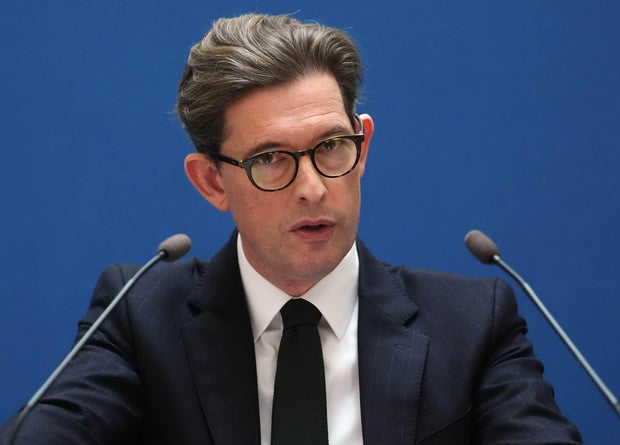
London – Iran has significantly intensified its efforts to attack the United Kingdom, targeting more challenging locations such as military bases. This warning emerged from Britain’s domestic spy agency leader, MI5, Sir Ken McCallum, as he delivered his annual threat update in London.
McCallum addressed the increasing challenges arising from aggressive foreign governments, terrorism, and the possible misuse of artificial intelligence. Iran’s activities have extended to intimidating oppositionists, Iranian media, and Israeli sites using criminal proxies. He expressed solidarity with British Jewish communities, who have faced much of this aggression.
A notable development is Iran’s move towards targeting military sites directly. Over the past year, these activities led to more than 50 arrests related to Iran across the UK. McCallum delivered these remarks from MI5 headquarters, noting ongoing investigations into the targeted military installations, including an aborted attack on the RAF Fairford air base.
The US had previously relocated its long-range bombers from the base after the incident believed to be orchestrated by Iran’s Islamic Revolutionary Guard Corps. McCallum emphasized that Iran’s involvement in certain activities might involve proxies not fully aware of their association with the regime.
Britain’s counterterrorism unit acknowledged that these acts could be carried out by proxies, or individuals unknowingly working for a foreign state. The Iran-aligned IMCR claimed responsibility for prior incidents in Europe, targeting synagogues and other communities.
Russia’s Persistent Threat
McCallum also highlighted the increase in state-threat cases managed by MI5, quadrupling over the past decade. As the agency allocates more resources towards countering state threats than during the Cold War, Russia remains identified as the primary aggressor, engaging in hybrid warfare tactics against Britain and its allies.
The intelligence agency suggested Russia’s intensified hostility might relate to its challenges in the Ukraine conflict. Moscow’s military progress faced limitations and high costs, prompting attempts to destabilize other European nations through cyberattacks and sabotage.
The Role of Artificial Intelligence
Artificial intelligence emerged as a pivotal aspect of McCallum’s address. He pointed out the technology’s rapid evolution amid changing security landscapes. AI could potentially produce tailored extremist propaganda, altering cyber defense dynamics and facilitating biological weapon advancements.
With AI’s capabilities enhancing cybersecurity confrontations and becoming a tool for spreading extremist ideologies, it presents novel security challenges. McCallum remained concerned about AI’s role in enhancing biological weapons or developing new ones.