
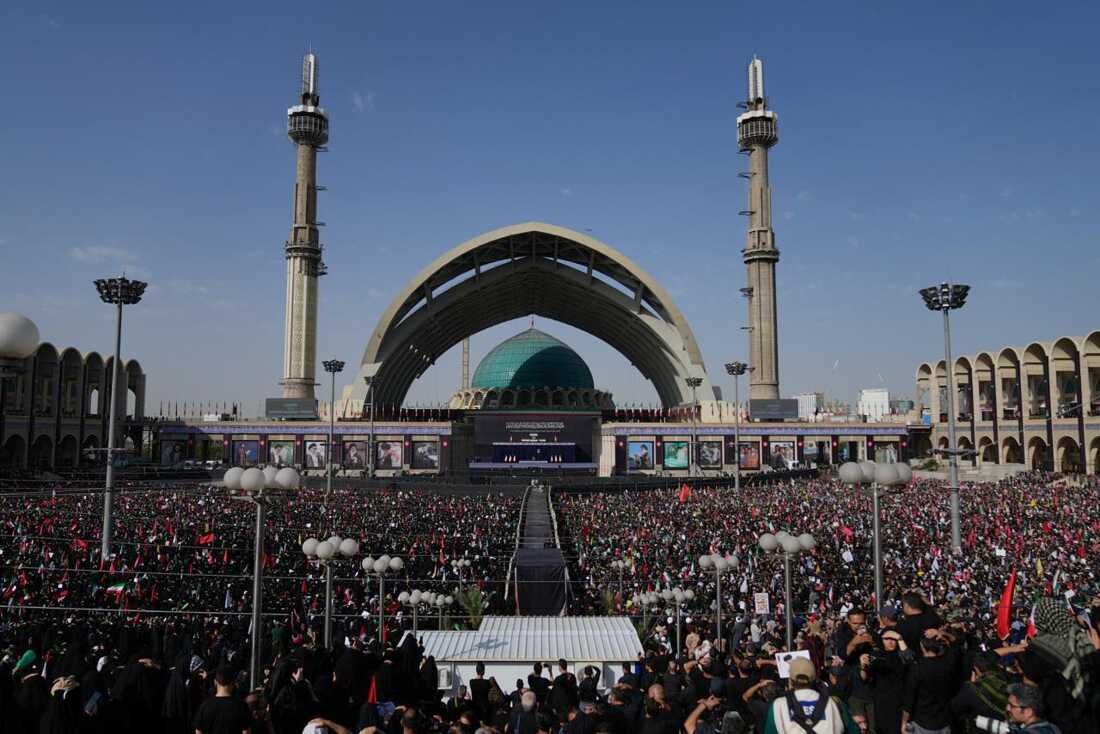
The dayslong funeral for Iran’s late Supreme Leader Ayatollah Ali Khamenei commenced at the Imam Khomeini Mosalla Grand Mosque in Tehran on July 4, 2026. Khamenei, who was killed at 86 in an Israeli airstrike marking the beginning of the war, was laid in a glass casket displayed at the Grand Mosalla.
Mourners, some carrying banners and flags, expressed their grief by beating their chests, a traditional Shiite mourning act. Many cried out for revenge, displaying banners with Khamenei’s image throughout the city. Hananeh Mousavi, a 27-year-old attendee, tearfully expressed her wish never to have witnessed such a tragic day.
“I am here to say goodbye to my beloved leader Ali Khamenei,” Mousavi said.
A stage reminiscent of the one from where Khamenei often spoke was set at the Grand Mosalla, adding symbolic value to the proceedings. Alongside Khamenei’s casket, adorned with his black turban symbolizing his descent from the Prophet Muhammad, lay the coffins of his family members, also casualties of the airstrike that destroyed Khamenei’s home in Tehran.
The Iranian government anticipates millions attending the event, drawing parallels to the funeral of Ayatollah Ruhollah Khomeini in 1989. To support mourners in the summer heat, organizers provided water and cold drinks. Ali Kazemi, having traveled from Tabriz, expressed solidarity in defending the nation and their faith.
“We are all committed to defend our country and religion,” Kazemi stated.
The event serves not only as a mourning ritual; it may potentially reinforce the government’s position amid negotiations with the United States over the Strait of Hormuz. Meanwhile, Israel’s potential threat looms in the background.
Coinciding with America’s 250th anniversary, the timing of the funeral is symbolic. Though unacknowledged officially, chants of “Death to America” echoed the longstanding sentiment present since the 1979 Islamic Revolution. Concurrently, President Donald Trump remarked in South Dakota, referencing the impact of the conflict.
Amidst the mourning, protestors displayed anti-Trump messages. Khamenei’s body is planned to travel to additional locations in Iran and Iraq with security measures in place in Tehran.
Uncertainties remain if Ayatollah Mojtaba Khamenei, his successor, will attend the ceremonies. His late wife, also among those killed, lay in view at the Grand Mosalla. Israeli threats towards him prompted a stark warning from Iran’s military to both Israel and the U.S. against making any aggressive moves during these sensitive days.