
Every spring, millions of monarch butterflies migrate from Mexico to the United States, marking one of the natural world’s most astounding journeys. These butterflies, having wintered on remote mountains in Mexico, prepare for a journey back home to Northern America. Although the monarch migration has likely occurred for thousands of years, their numbers have significantly dwindled. Over the last 30 years, the population in Mexico decreased by 70%.
The Monarchs’ Winter Refuge
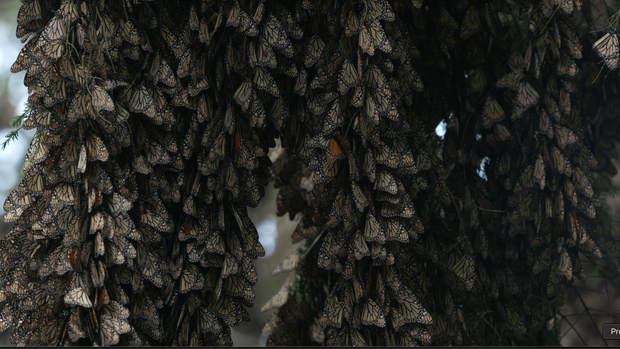
The monarchs arrive in Mexico’s central mountains, particularly Michoacan, by late October. Jorge Rickards, director of the World Wildlife Fund in Mexico, guides visitors to these sites. He emphasizes the delicacy of their surroundings. Monarchs roost in fir and pine trees, forming clusters that resemble sagging branches. Despite the 66 million butterflies present, they are hard to spot initially, appearing as clumps of dead leaves.
Monarchs, hanging from tree branches, resemble clusters of dead leaves.
The Ideal Dormancy
These butterflies are effectively in hibernation, having fattened up on nectar to endure the winter. The local climate offers protection from storms and maintains humidity vital for their survival. Monarchs remain inactive, with their wings closed, appearing drab to avoid predators. Sound and carbon dioxide levels can alert them to potential threats.
Morning Awakenings
As sunlight reaches the canopy, clusters of orange begin to appear. The monarchs open their wings and start to take flight. Court Whelan, an expert photographer and tour guide, captures these moments of awakening. This spectacle, when millions of butterflies fill the air, is driven by warmth and sunlight.
The air becomes saturated with monarch butterflies, responding to the warm day.
The Super Generation
It’s intriguing how the monarchs perform this migration. Most butterflies have a short lifespan of about a month. However, during late summer and fall, a ‘super generation’ emerges. This group suspends their reproductive process to conserve energy, allowing them to live longer and complete the journey to Mexico. These butterflies navigate using circadian clocks and internal compasses.
Migration Mystery
The question remains why monarchs choose these specific mountains. Theories suggest ancient routes formed by geographical and climatic conditions. This instinct is shared across generations, guiding them to the same location year after year.
Conservation Efforts
Illegal logging posed a significant threat to monarch roosting areas, reducing their habitat from 45 acres to just four and a half. The World Wildlife Fund has made strides in forest recovery, working with local communities to protect the area and utilize tourism responsibly.
Monarchs engage in a behavior called mud puddling for hydration and essential trace elements. As their time in Mexico comes to a close, the super generation prepares to mate before migrating north.
Support from the United States
Chip Taylor, founder of Monarch Watch, leads efforts to tag butterflies and track their migration through volunteers in Kansas. Monarch Watch promotes planting milkweed, vital for monarch caterpillars, due to its decline on agricultural land.
In Mexico, these conservation efforts are acknowledged, evidenced by the discovery of tags from Monarch Watch.
An Evolving Yet Fragile Migration
Despite challenges from storms and climate change, monarchs attempt the trek to Mexico. Their arrival coincides with the spiritual Day of the Dead, aligning local beliefs with their presence. Conservation has shown progress, with surveys indicating a doubling of forest coverage during recent hibernations.
The fascinating journey of the monarch butterfly remains an iconic example of natural perseverance and the ongoing efforts to safeguard their future.