
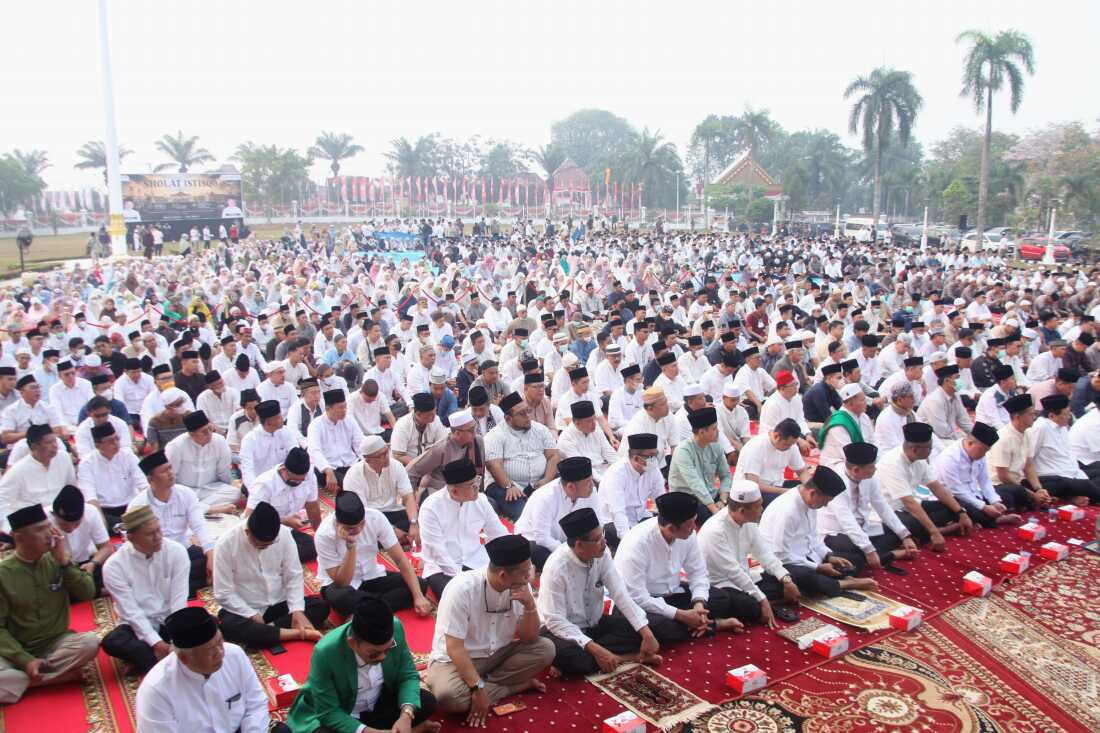
Thousands of Indonesian Muslims gathered in Palembang, South Sumatra, seeking relief from raging wildfires. The flames have ravaged peatlands in Sumatra and Kalimantan. On August 25, 2026, residents performed the Islamic prayer for rain, ‘salat istisqa,’ to mitigate the worsening haze.
South Sumatra currently registers the highest number of active wildfire hot spots, according to recent satellite data. The Environment Ministry reported 1,429 hot spots in South Sumatra, followed by 1,226 in West Kalimantan and 811 in Central Kalimantan. The Forestry Ministry noted that fires scorched nearly 940 square kilometers of land in July alone, with South Sumatra suffering significant damage.
Governor Herman Deru addressed the crowd before the prayer, emphasizing the community’s efforts against the wildfires. ‘We have done everything we can and worked closely with all relevant parties,’ he stated. He cited spiritual practices as an integral part of tackling the dry weather wreaking havoc on forests and peatlands.
In addition to prayer, Indonesia is stepping up weather-modification strategies. Emergency services are combating fires exacerbated by an intensified El Nino pattern. Dense smoke has spilled into Malaysia and Brunei. Efforts include deploying 30 aircraft for cloud-seeding and water-bombing operations over Kalimantan and 22 helicopters over Sumatra.
The National Disaster Management Agency aims to induce rainfall by dispersing salt particles into suitable clouds. Meanwhile, police have arrested 72 individuals suspected of causing these fires. Investigations are underway for four companies possibly employing fire as a tool for inexpensive land clearing.
The dry season routinely brings fires that create hazardous haze, affecting visibility and public health. Plantation owners and traditional farmers often resort to burning land for farming, contributing to the problem. The haze has occasionally led to diplomatic tensions in Southeast Asia.