
Approximately 140 individuals are reported missing following the capsizing of the passenger ferry Virgo Transport 8 in the turbulent seas of Indonesia’s Java Sea. The ferry was on its route from Surabaya, Indonesia’s second-largest city, to Banjarmasin, the capital of South Kalimantan province, when the tragedy occurred on Sunday.
Challenges in Maritime Safety
This incident is the most recent in a sequence of significant ferry disasters in Indonesia since July. Previous incidents have included one sinking and two onboard fires that resulted in several fatalities and necessitated the evacuation of hundreds. These events have intensified the focus on maritime safety in a nation highly reliant on sea transport.
Currently, passengers, crew members, and their anxious families await news as rescue teams labor under challenging conditions.
Indonesia’s Ministry of Transportation has been contacted by Newsweek for comments regarding the incident, which occurred on Sunday.
Comprising over 17,000 islands, Indonesia’s geographical makeup positions ferries as critical transportation links for millions. The recent spate of high-profile maritime emergencies has increased scrutiny on safety protocols, passenger accountability, and emergency response effectiveness across the archipelago.
Ongoing Search Efforts
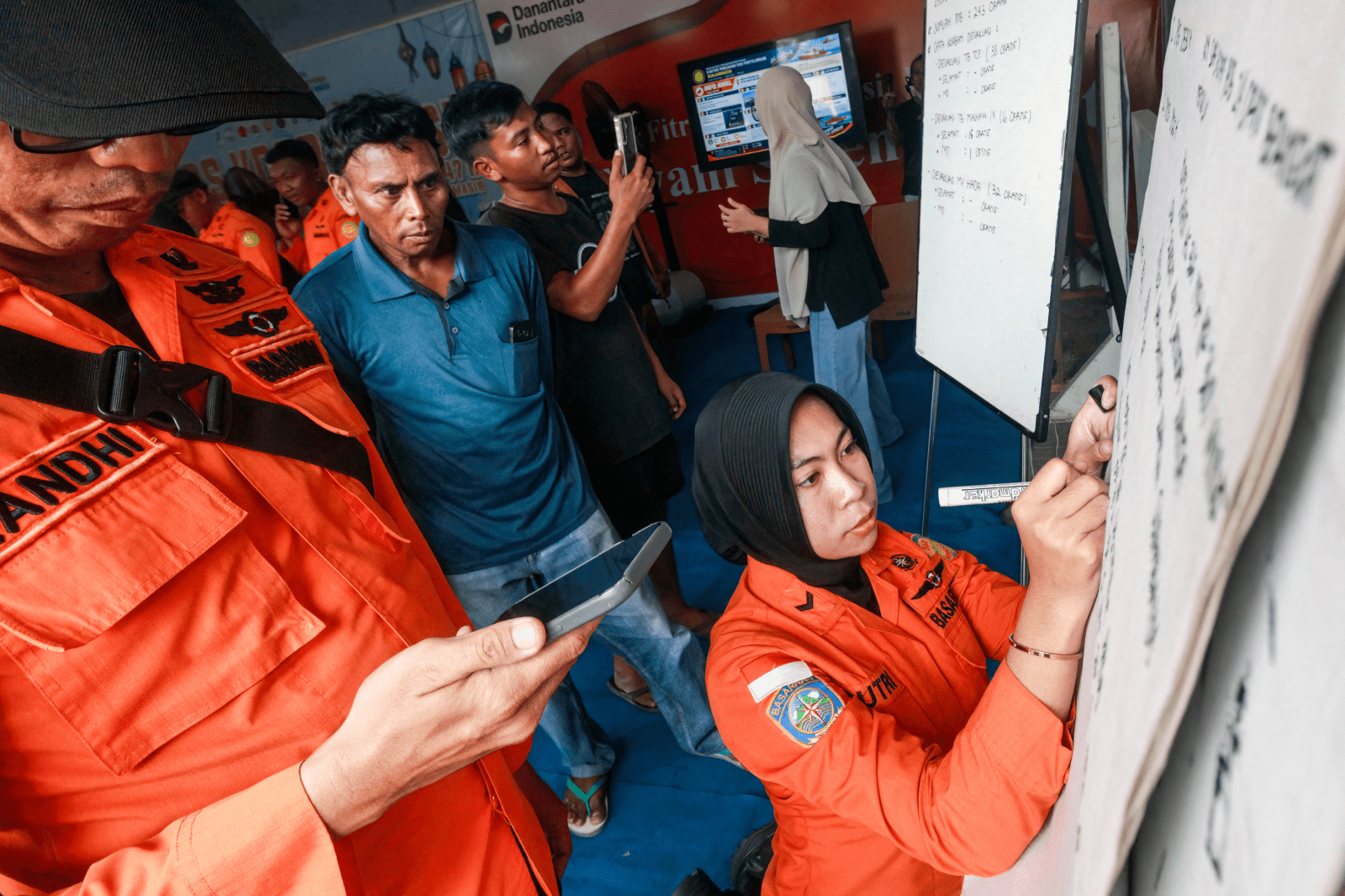
Authorities reveal that 243 individuals were believed to be aboard when the Virgo Transport 8 encountered severe weather. Search teams have braved rough seas and strong winds in an effort to reach the vessel’s last known location. I Putu Sudayana, head of the Search and Rescue Office, stated: “The ship’s operator informed authorities of the incident after becoming aware of the challenging weather conditions.”
So far, 102 people have been rescued and one death confirmed. Officials warn that the exact number of missing persons may fluctuate due to discrepancies between passenger totals and official manifests.
Efforts to Rescue Survivors
Emergency crews have retrieved survivors from the sea, who were then transported to nearby areas for medical evaluation and assistance. Rescue operations continue to focus on locating those still unaccounted for, with teams deployed throughout the region where the ferry overturned.
The uncertainty around the final count of passengers presents a recurring issue in maritime emergencies. Discrepancies between manifests and actual passenger counts can complicate rescue operations and hinder officials’ ability to ascertain the number of missing individuals.
A Pattern of Maritime Disasters
The incident with Virgo Transport 8 is the fourth major ferry emergency since July. In that month, a ferry with more than 70 passengers sank near Selayar, south of Sulawesi. Furthermore, on August 2, the Mutiara Sentosa 2 ferry caught fire near Madura, resulting in at least five deaths. Initial reports indicated 225 individuals were rescued, with 41 others missing. Another ferry fire occurred on August 12 in the Lombok Strait near Bali, leading to one reported death, five missing, and 211 rescues.
These incidents, though involving different vessels and scenarios, have cast a shadow on the safety practices of maritime operations throughout Indonesia.
Impact of Dependency on Sea Transport
Sea transportation is integral to daily life in Indonesia, connecting islands, communities, and commercial hubs across extensive water expanses. This dependency means that significant accidents have far-reaching impacts, affecting travelers, local economies, and emergency services.
For families waiting for updates about loved ones aboard the Virgo Transport 8, the ongoing search efforts remain the foremost concern.
This article includes reporting by The Associated Press. For further details, please contact Newsweek editors Daniel Orton and Robert Greenall.