
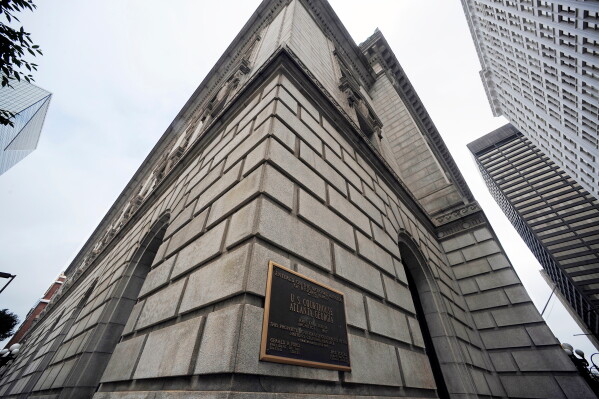
Two Republican congressional representatives from Georgia have filed impeachment resolutions against U.S. District Judge Eleanor Ross. The resolutions arise from an investigation that discovered she engaged in sexual activities with a police officer within her chambers, participated in a partisan political event, and lied to investigators.
Reps. Clay Fuller and Andrew Clyde are leading the charge to impeach Ross. Clyde shared on social media his belief that Ross has shown she is incapable of being impartial and should be removed from her judicial position.
The responsibility to commence impeachment proceedings against Ross falls under the purview of the House Judiciary Committee. Federal judges hold life appointments and can only be removed through impeachment.
Calls made to Ross’ chambers regarding this matter received no comment. Ross was nominated to serve in the Northern District of Georgia by former President Barack Obama in January 2014 and confirmed by the Senate in November that same year. Her career includes prior service as a state court judge in DeKalb County and as a state and federal prosecutor in Atlanta.
Investigation and Allegations
The investigation into Ross was initiated after her law clerk reported incidents of her engaging in sexual activity with a high-ranking uniformed police officer in her office. It was further alleged that Ross did not adequately supervise her clerks and had episodes of yelling and cursing at staff. After the investigation, she received a private reprimand, confirming the sexual misconduct and attendance at a partisan event.
The investigation did not publicly reveal the identity of the judge or the location of the court within the 11th Circuit, which encompasses Alabama, Florida, and Georgia. A source later informed The Associated Press that Ross was the disciplined judge. The Atlanta Police Department has begun an investigation to discover if the officer involved is a member of their force.
Disciplinary Process
William Pryor, the chief judge of the 11th Circuit, launched the initial investigation, asking Ross to respond to the allegations. Ross denied them initially but later speculated a clerk may have fabricated them in retaliation. Pryor formed a special committee, which confirmed Ross’s relationship with an officer through security footage and testimonies from clerks, despite Ross’s initial denials.
While the clerks described an intimidating environment, the committee found no evidence of abusive behavior. Ross eventually admitted to the extramarital relationship but disputed allegations regarding staff mistreatment.