
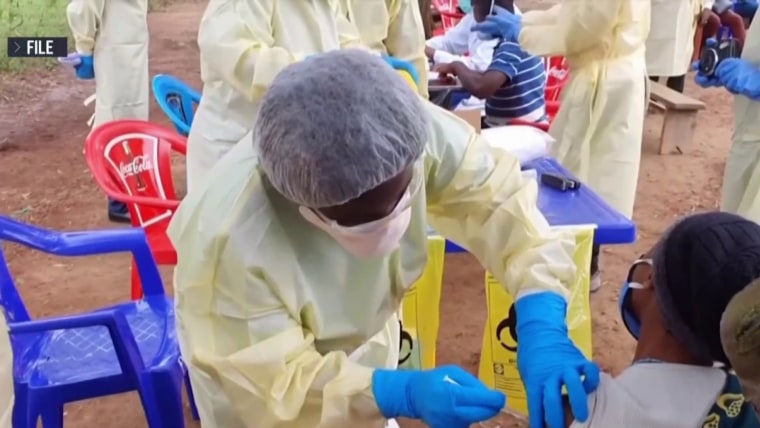
Until last year, the U.S. Agency for International Development (USAID) played a key role in responding to Ebola outbreaks. Its reduction has affected the U.S. response to the current outbreak, leading to delays and a less coordinated effort, according to former federal employees. The Trump administration greatly reduced USAID’s operations, ending many programs and letting go most of its staff. Some program functions were transferred to the State Department.
Former officials from various health agencies, including USAID and the CDC, argue that maintaining USAID’s resources could have better contained the outbreak and potentially saved lives. The outbreak, recently identified in Congo, had been spreading unnoticed for weeks. The World Health Organization reported 139 suspected deaths and 600 cases, but actual figures might be higher.
Speed is crucial in such emergencies, noted Nicholas Enrich, former acting assistant administrator for global health at USAID. He emphasized that USAID programs were capable of enhancing laboratory detection, speeding protective equipment delivery, and deploying community health workers.
Dr. Daniel Bausch highlighted the employment challenges faced by community health workers with past outbreak experience, who have now resorted to other jobs. The International Rescue Committee (IRC), previously supported by USAID, had to downsize due to funding cuts, limiting surveillance efforts and essential sanitation aid.
Heather Reoch Kerr of the IRC reported a shortage of protective supplies in many affected facilities. The State Department has refuted claims that USAID’s restructuring affected its Ebola response capabilities. It stated $23 million was mobilized for foreign assistance to support various outbreak response activities. Plans have also been announced to fund clinics for emergency screening and isolation.
However, a senior official noted that specific USAID involvement might not have directly impacted outbreak detection. Another official acknowledged USAID partners remain active in the field, though their roles have shifted.
Dr. David Heymann remarked that international collaboration, not just funding, is vital. The U.S. withdrew from the World Health Organization last year, which could limit international coordination efforts. In USAID’s absence, the CDC has stepped up its role, aiding surveillance, diagnostics, and PPE distribution in Congo and Uganda.
Dr. Satish Pillai from CDC outlined their current efforts, highlighting significant presence in Uganda and DRC. Yet, Enrich warns that CDC’s role traditionally focused on technical guidance rather than broad coordination. Bausch fears CDC staff might lack local knowledge and experience, crucial for effective outbreak response.
A CDC official noted security challenges in Congo, stressing the importance of working with USAID. Security issues have complicated federal employee access to affected regions.
Andrew Nixon from Health and Human Services expressed confidence in CDC’s disease expertise. Despite efforts, challenges remain. The initial Ebola case dates back a month, with the virus strain identified late. Congolese labs reportedly faced equipment shortages, delaying testing.
Enrich suggested USAID could have provided vital technical support in testing. A former USAID official echoed this, citing degraded systems due to USAID’s absence. Hospitals in Congo and Uganda await resources from various health organizations.
Dr. Herbert Luswata at Bwera Hospital, near the Congo border, expressed concern over PPE shortages and insufficient healthcare staff. He reported slower and inadequate response compared to past outbreaks, highlighting the elevated risk for health workers.