
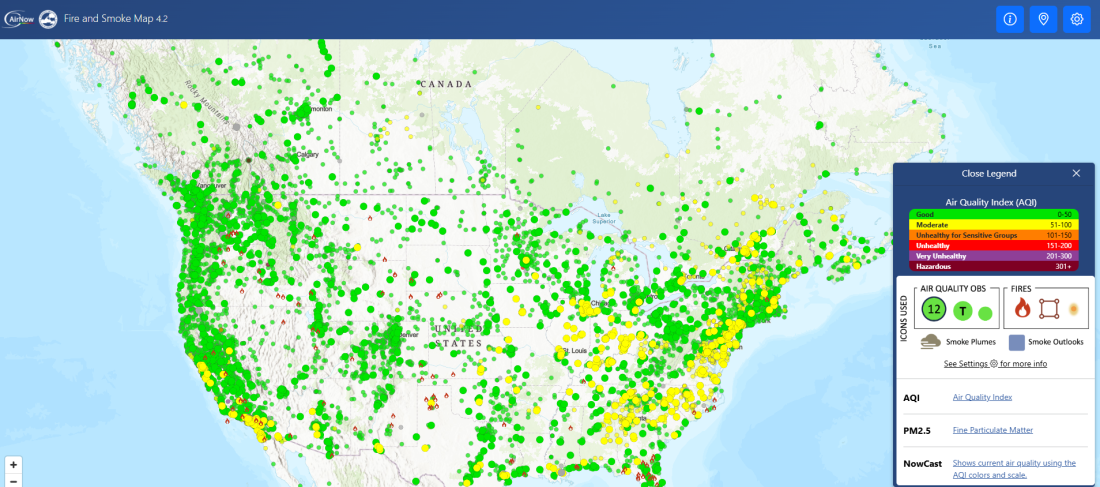
Wildfire and smoke maps, available on the federal fire.airnow.gov website, have been developed with research funding from the U.S. Forest Service. These maps track wildfire locations, smoke drift forecasts, and harmful particulates, providing critical data for at-risk groups, such as those with health conditions. Ernesto Alvarado, a fire ecologist at the University of Washington, collaborates with the U.S. Forest Service on these projects.
Concerns Over Federal Funding Cuts
Public universities like the University of Washington, which receive significant federal research funding, face uncertainty. President Trump’s administration has cut or suspended funding from the National Science Foundation and National Institutes for Health, creating anxiety among researchers. These budget changes might impact institutions like UW’s School of Environmental and Forest Sciences.
Proposed cuts to U.S. Forest Service funding and agency reorganization pose immediate challenges. As the West braces for a severe wildfire season, Alvarado emphasizes the importance of continued research and technological advancements in smoke monitoring. His team at UW, including graduate students and IT staff, contributes to these efforts. This work informs governments, firefighting teams, and commercial applications used during smoky conditions.
Seattle Smoke Lab at Risk
The Seattle smoke lab, instrumental in wildfire research, faces closure under the Trump administration’s plans. Morgan Varner, a former fire behavior scientist at the lab, expresses concern about the impact on research. The lab’s location in Seattle is strategic, leveraging the presence of a major research university and an international airport.
Varner doubts staff willingness to relocate under the reorganization, threatening the lab’s ability to attract top talent and conduct vital research.
Forest Service Chief Defends Reorganization
U.S. Forest Service Chief Tom Schultz defends the proposed agency reorganization. Despite backlash, Schultz emphasizes that research remains crucial. He acknowledges a $3 billion deferred maintenance backlog and asserts that consolidating research stations will save money, suggesting some researchers might only relocate to nearby offices.
Schultz highlights the necessity of budget control but maintains that science is still prioritized, despite Trump’s proposed budget eliminating all research and development funding for the Forest Service.
State Officials Voice Concerns
State officials worry about the lack of communication from the Forest Service regarding the reorganization. Dave Upthegrove, Washington’s public lands commissioner, stresses the reliance on U.S. Forest Service research for wildfire responses and public safety improvements across Washington state. Initially hopeful about the reorganization, concerns have risen as communications from the Forest Service have ceased.
With climate change intensifying wildfires, Washington’s officials and researchers face apprehension about the summer’s potential impact on the state’s forests and air quality.