
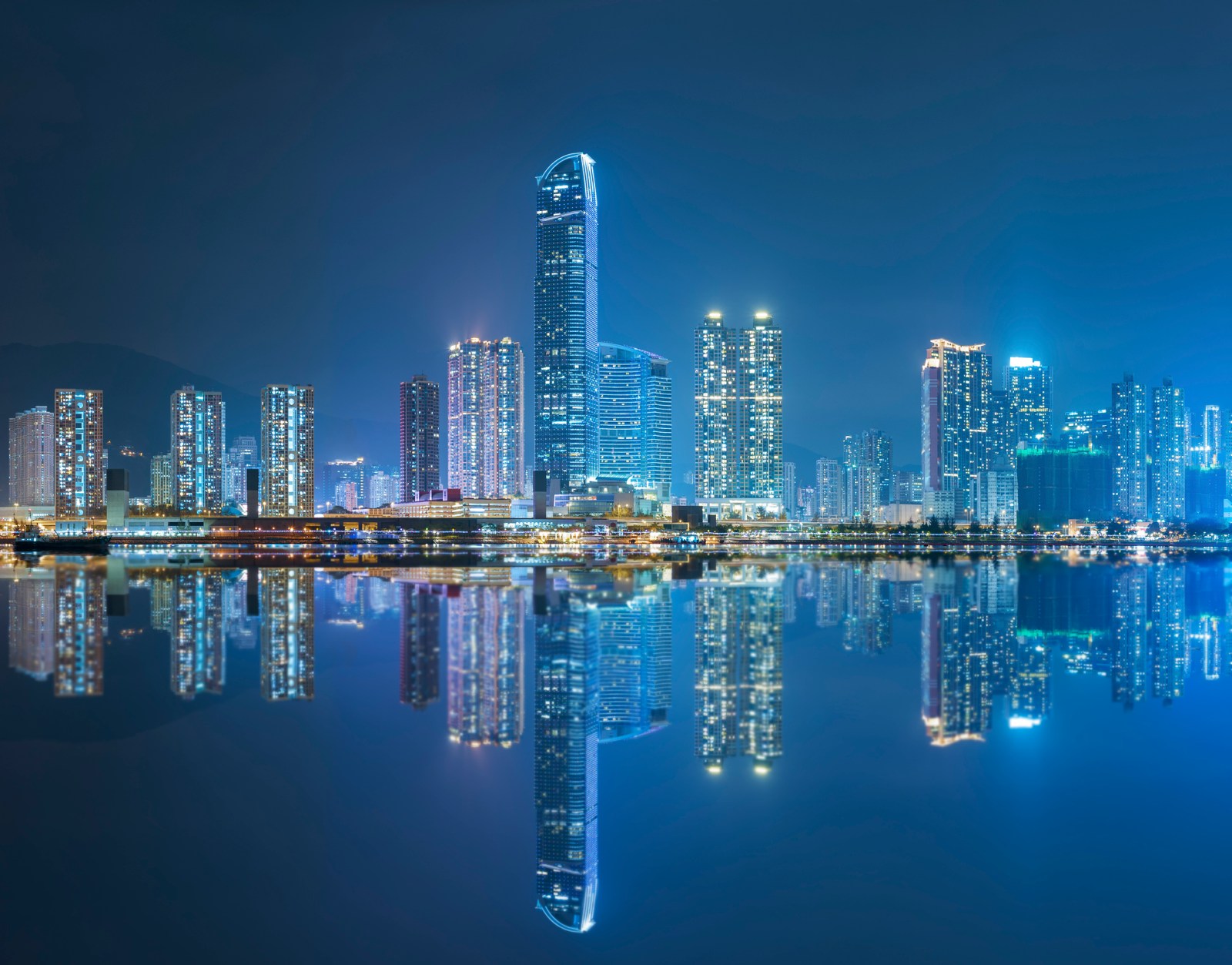
Hong Kong stands out as the city with the most skyscrapers globally, surpassing even New York, Chicago, and Dubai. With 569 buildings taller than 150 meters, Hong Kong exceeds New York City’s 320 towers, according to the Council on Vertical Urbanism. This council defines tall buildings as those exceeding 14 stories or 50 meters in height, and Hong Kong’s skyline has reshaped the city’s urban density significantly.
Hong Kong’s skyline features 102 buildings over 200 meters, along with six structures exceeding 300 meters. This total eclipses New York City’s and Chicago’s skyscraper count, illustrating Hong Kong’s dominance in vertical architecture. Cities like Hong Kong and Dubai are pushing boundaries in tall design, but this growth poses environmental challenges.
Buildings and construction contribute 39% of global energy-related carbon emissions, as reported by the World Green Building Council. Operational energy accounts for 28% and materials and construction for 11%. Emissions occurring before building occupation, termed ‘upfront carbon,’ are significant. These emissions, resulting from material extraction and manufacturing, may constitute half of new constructions’ carbon footprint by 2050 as building stock doubles.
Architect Gordon Gill, known for the Jeddah Tower project, emphasized the problem’s magnitude. He stated embodied carbon, released during the building products’ lifecycle, is hidden within structural systems. Gill likened these emissions to a concealed city beneath asphalt, highlighting the challenge cities face as they construct taller towers. The drive for height must now be carefully balanced with emissions reduction strategies.
Hong Kong’s Growth Strategy
Geography and economics largely explain Hong Kong’s skyscraper proliferation. Architect James von Klemperer, from KPF, noted two key conditions driving high-rise construction: limited land availability due to island/mountain topographies and burgeoning demand from economic growth.
A quarter of Hong Kong’s land is developed, with the remainder preserved as nature reserves. This commitment compelled upward growth, ensuring residents remain close to nature. Serving as a gateway between China and the world, Hong Kong experienced rapid office, residential, and retail expansion. The skyscraper boom originated in the 1970s, accelerated in the 1980s, and peaked during the 1990s and 2000s.
Engineer John Peronto from Thornton Tomasetti emphasized necessity in this vertical expansion. He compared Hong Kong’s situation to early Chicago, where spatial constraints fostered vertical construction. In Hong Kong, density necessitates maximizing available land.
Lessons for Other Cities
Despite Hong Kong’s global impact, its construction model is not easily transferable. Von Klemperer points out that while design knowledge can be shared between cities, adaptation is crucial. Climatic conditions, cultural norms, and resilience to natural forces demand customized design approaches. Success for high-rise cities lies in adapting strategies to local specifics, as exemplified by Hong Kong’s unique ascent as a vertical city.