
George Washington, writing to the Marquis de Lafayette after the War of Independence, expressed it as a “high disgrace” that Americans had to pay tribute to the Barbary pirates. These North African pirates preyed on American merchant ships in the Mediterranean, endangering the young republic’s economy by enslaving crews and demanding payments.
Lacking naval power, the U.S. paid monetary tribute to avoid attacks. This practice sparked debate between John Adams, who preferred payment over combat, and Thomas Jefferson, who suggested using naval force.
Today, centuries after U.S. independence, similar challenges persist. The discussion centers on defending navigation through strategic waterways like the Strait of Hormuz, with the Islamic Republic of Iran taking the place of Barbary.
In 1786, a meeting in London with Jefferson and Adams revealed the worldview of the Barbary pirates. Tripoli’s ambassador, Sidi Haji Abdul Rahman Adja, argued that their authority must be recognized in the Mediterranean, and nations that refused were deemed to be enemies.
“All nations who should not have acknowledged their authority were sinners… it was their [the Muslims’] right and duty to make war upon them,” Adja stated.
Adams believed that engaging in endless conflict with the Barbary states was not tenable. He argued it would be too financially burdensome and that tribute was a necessary evil.
Jefferson disagreed, claiming peace required war, which would deter other threats. He emphasized that America needed a navy to confront Barbary, recommending a halt to negotiations until naval power was achieved.
The Adams-Jefferson debate on fighting or bribing pirates influenced discussions around adopting a federal Constitution. A unified federal government, with taxing power, was deemed necessary for building a capable navy.
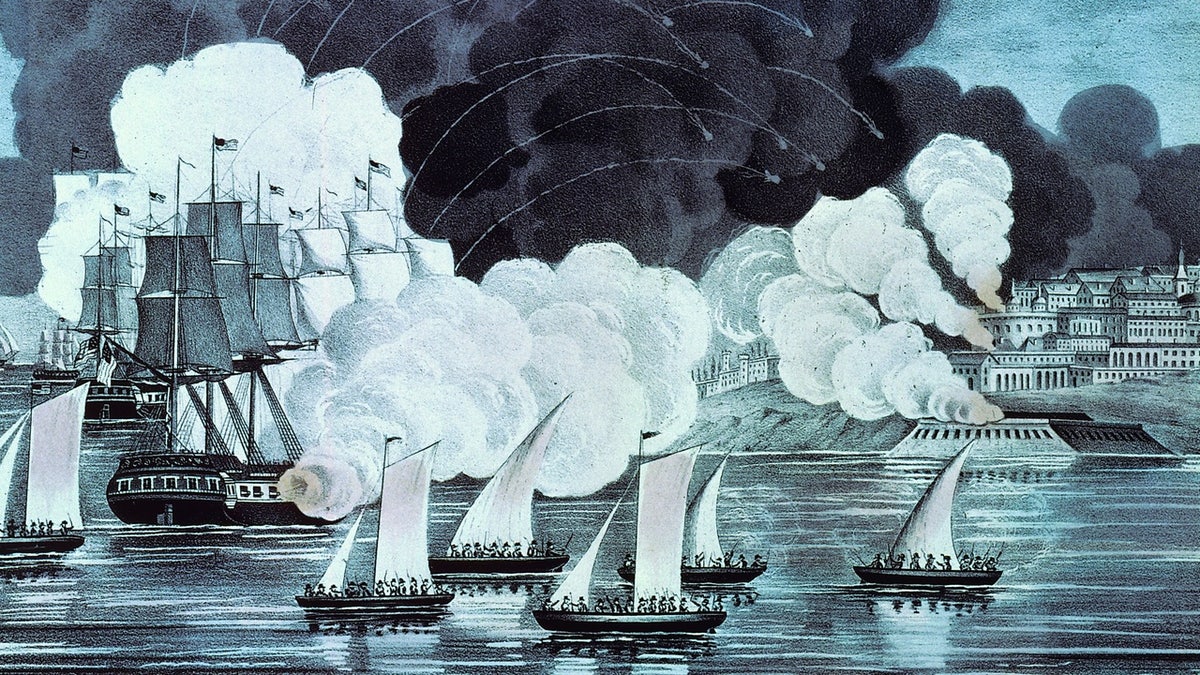
Under the new Constitution, America built six frigates to combat Barbary, leading to America’s first and longest foreign war, ending in 1815. This victory ensured safe Mediterranean passage for American merchant ships and celebrated national pride with monuments and city names.
Today, as the U.S. approaches its 250th birthday, these historical events remind Americans of past leadership resolving navigational threats from extremist regimes. The decision to use force instead of financial incentives led to a lasting peace.
The Trump administration used a dual strategy with Iran, combining military actions with financial inducements. The outcome remains uncertain, raising questions about replicating past successes with Barbary in modern conflict resolution.
Michael Oren, former Israeli ambassador to the U.S., reflects on these historical parallels.