
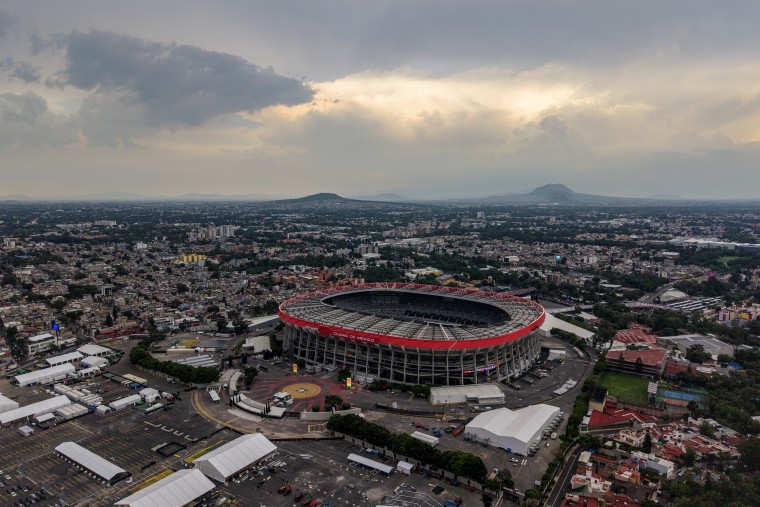
As the United States gets ready to host the FIFA World Cup, security efforts are extending into the skies. Law enforcement agencies are preparing for possible drone activities that could range from minor nuisances to serious threats. Over 60 local, county, and state law enforcement agencies in areas where the games will be played have completed a new federal training program. This initiative aims to detect and deter unauthorized drones near World Cup venues and fan gatherings. The FBI intends to continue training even after the tournament ends.
Drone technology poses a significant challenge for law enforcement, as it evolves rapidly and is easily accessible. Drones can carry anything from cameras to hazardous substances. The Federal Aviation Administration sets flight restrictions around major events and limits drone use in specific areas. Violators face criminal penalties.
“The airspace has gotten very busy,” said Mike Torphy, the FBI agent leading the certification training. The program teaches participants to discern threats and decide on appropriate actions, which may include taking over an unlawful drone. “We employ various technical methods. Taking control is one option. Confusing a drone to redirect it is another,” Torphy explained.
The 2026 FIFA World Cup will be the largest ever, with 48 teams competing in 16 cities across the U.S., Canada, and Mexico. The event runs from June 11 through July 19, starting in Mexico City and concluding at MetLife Stadium in East Rutherford, New Jersey. Hundreds of thousands are expected to attend the matches and watch parties.
Although the FBI has not identified specific threats, they expect security issues to arise. Christopher Raia, co-Deputy Director of the FBI, said, “I think there will be some kind of security event, ranging from minor altercations to major incidents.” He assured that fans should feel secure attending the games. “This is an all-hands-on-deck effort to keep people safe,” Raia stated.
The FBI’s anti-drone arsenal includes cameras, radars, and listening devices, which can help law enforcement take control of unauthorized drones. In cases of extreme threat, drones can be grounded. The FBI respects the rights of drone owners where no restrictions are in place but acknowledges the difficulty in distinguishing enthusiasts from those with harmful intentions.
During training exercises, the FBI showcased its ability to track drones and alert operators with a warning: “This is the FBI! You have violated a no-fly zone. Land your drone and wait for law enforcement contact.” Raia cautioned drone enthusiasts against flying near World Cup events: “With all the capability we have, we will find you, and it will be a very uncomfortable day for you. You could face jail time, so my advice is simple: Don’t do it.”
Raia emphasized that law enforcement is well-prepared, likening the preparations to managing multiple Super Bowls simultaneously. “We are ready,” he concluded.