
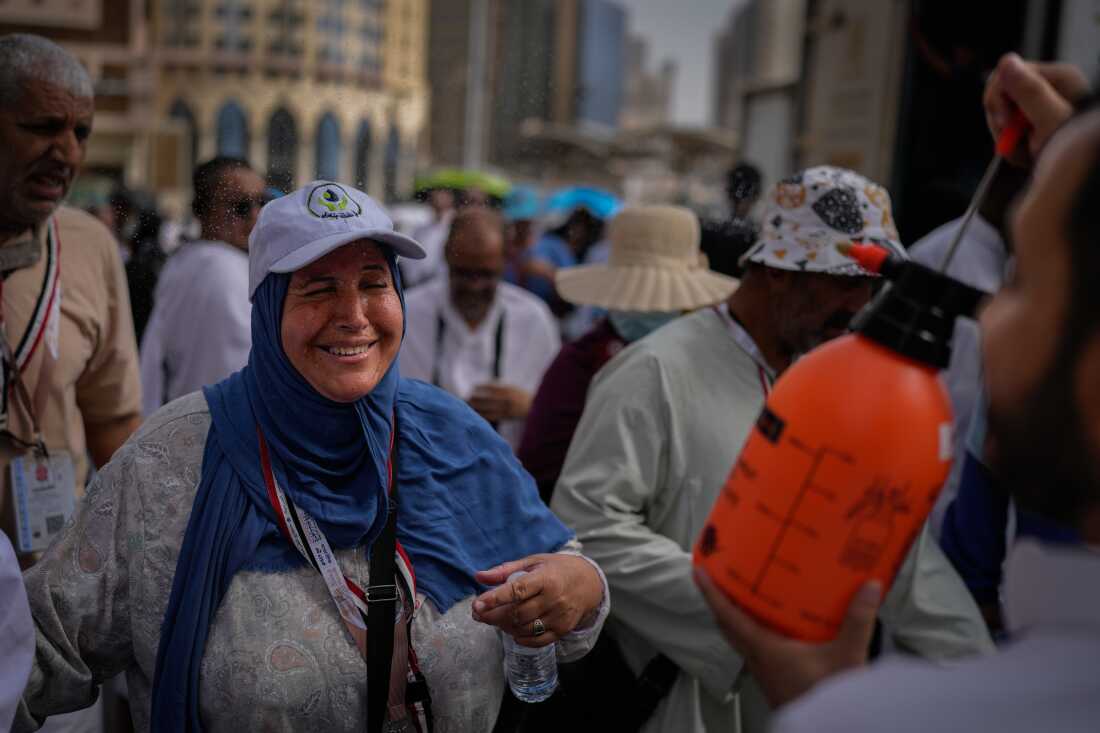
The annual Hajj pilgrimage, one of Islam’s Five Pillars, officially commenced on a Monday. Over 1.5 million pilgrims have traveled to Saudi Arabia from abroad, as confirmed by Saleh bin Saad Al-Murabba, the commander of the Hajj passport forces.
This year’s Hajj occurs amidst a fragile ceasefire in the Iran conflict, accompanied by regional tensions and uncertainties. Egyptian pilgrim Samya Abdul Moneim expressed gratitude for her participation, a lifetime obligation for Muslims who can afford and undertake it physically. “I am in a state of blessing and happiness,” she shared, adding that the experience is indescribable.
The first day sees pilgrims converged at a large tent camp in the desert. Before that, many circled the Kaaba in the Grand Mosque under extreme heat. The pilgrimage is a profound spiritual event, offering an opportunity for forgiveness and a cleansing of past sins.
“It’s an indescribable feeling, truly. I mean, thank God, I am in a blessing.” – Samya Abdul Moneim
Photographs captured with slow shutter speeds show pilgrims circumambulating the Kaaba. Despite the intense heat, pilgrims rely on umbrellas for shade and portable fans. Volunteers offer water, and large fans mist the air for relief.
Amid these spiritual endeavors, geopolitical developments are unfolding. U.S. President Donald Trump announced a tentative deal with Iran concerning the war and the Strait of Hormuz. He called it a “Memorandum of Understanding pertaining to PEACE,” although it awaits finalization.
The possibility of a deal comes after the U.S. considered further attacks on Iran. Many pilgrims rely on faith as regional stresses loom, expressing deep thankfulness for their journey.
Impact of Regional Tensions on Hajj Travel Plans
In the face of global concerns, Indonesia, which hosts the largest Muslim population, has prepared contingency strategies. Authorities emphasized that increased travel fees should not burden Indonesian pilgrims. Meanwhile, in India, where a significant Muslim minority resides, pilgrimage planning continues, though high fuel prices have caused travel cost surges for pilgrims.
The opening of the Strait of Hormuz could alleviate the energy crisis initiated by the U.S. and Israeli strikes on February 28. Iran’s closure of the passage heightened oil, gas, and related product costs, disturbing the global economy. The U.S.’s blockade of Iranian ports persists, with President Trump stating it will continue until an accord is ratified.
In response to the attacks, Iran’s counter-strikes have expanded the conflict, but a fragile truce formed in April.
In Saudi Arabia, pilgrims continue circling the Kaaba. The tent city in Mina awaits those who fulfill the pilgrimage’s subsequent stages, praying and worshiping there.
The climax of Hajj, standing on Arafat’s plain, happens on Tuesday. Pilgrims pray, seek God’s forgiveness, and make supplications. Many carry prayer requests from those back home, lifting their hands in devotion while tears flow.