
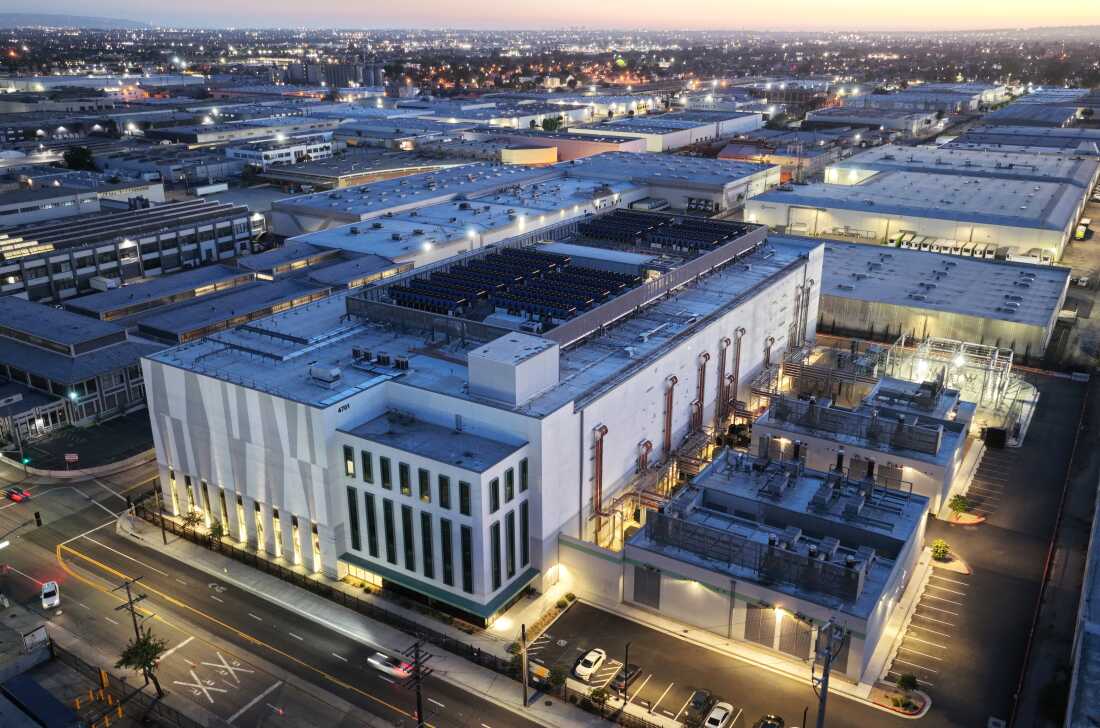
On April 14, an aerial view showed a data center in Vernon, Calif., highlighting the surge in demand for AI infrastructure. This growth fuels a boom in data centers nationally and globally. In the spotlight, Mario Tama/Getty Images captured this expansion visually.
Two months following the groundbreaking of a large data center campus by OpenAI and Oracle in Saline Township, Michigan, Democratic U.S. Senate candidate Abdul El-Sayed staged a rally at the site. The project became a focal point for his insurgent campaign. ‘I stand with local and state elected officials, advocating for federal-level guardrails before approving more projects like this,’ El-Sayed stated, joined by community activists.
Data centers are essential for the AI industry. However, a Gallup poll found that 70% of Americans oppose having AI data centers nearby. This opposition is being leveraged by political candidates across various parties. Although data centers were not the central focus of El-Sayed’s campaign, they align with his themes of populist economics and minimizing the influence of money in politics. ‘Until local communities are shielded from corruptive monetary and political influences, projects like these will continue to be imposed on unwilling communities,’ he remarked.
In Ohio, Republican gubernatorial candidate Vivek Ramaswamy introduced an ‘Ohioans-first data center pledge,’ pushing for legislative action and a temporary halt to data center constructions in the state until then. ‘The growing concern I hear second only to property taxes is the rapid data center expansions affecting everyday Ohioans,’ Ramaswamy stated. He highlighted complaints regarding rising electric bills, noise, pollution, and unclear economic benefits for Ohio families and demanded data center companies pay the power bills of nearby residents.
Similarly, Ohio Democratic gubernatorial candidate Amy Acton proposed a ‘conditional moratorium’ on data centers, criticizing Ramaswamy for compromising community welfare for the interests of big-tech billionaires.
In Michigan’s 7th Congressional District, Democrat William Lawrence, who hadn’t initially planned to campaign against data centers, found the topic gaining traction as voters raised concerns. ‘Data centers unexpectedly became a campaign issue as proposals increased in the district,’ Lawrence said as he advanced in his primary against moderate rivals.
Democratic candidate Francesca Hong in Wisconsin has gained support by calling for a halt on data center construction, associating this with broader concerns about energy costs, the economy, and the environment. ‘We need a complete pause on AI data centers until proper regulations are in place,’ she announced in a campaign video, positioning herself favorably ahead of the elections.
During Hong’s campaign event, supporter Peggy McCrumb expressed, ‘She’s the only candidate opposing data centers, reflecting public sentiment.’ Hong’s stance resonates across political lines, with Amanda Litman from Run For Something noting anxiety surrounding data centers. These structures symbolize AI-related challenges like increasing energy expenses and job threats. ‘This apprehension is evident across urban, rural, and suburban areas, cutting across state political landscapes,’ Litman observed.