
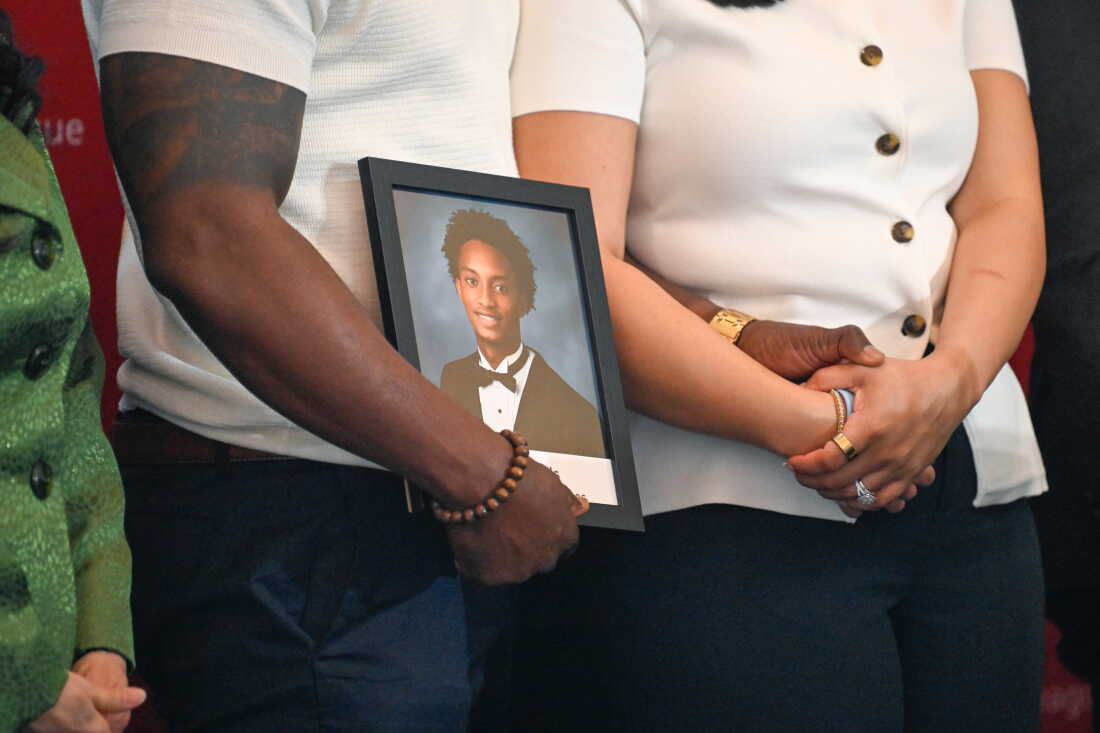
Christine Wonsley and Elmore Wonsley, the mother and stepfather of Nolan Wells, appeared at the National Urban League’s annual conference with a photo of their son. They shared updates on his death, which occurred on July 30, 2026, in Nashville, Tennessee. A Mississippi grand jury concluded there isn’t enough evidence to file charges related to Wells’ case. However, activists, attorneys, and his family continue to seek answers.
Civil rights attorney Ben Crump highlighted a detail from the medical examiner’s report during a press conference. The report noted bruising on the back of Wells’ head, deemed not a fatal injury. Crump pointed out, “Nolan Wells’ parents deserve answers.” He urged the district attorney to keep investigating the mystery surrounding Wells’ death, questioning the cause of the blunt force trauma.
The Rev. Al Sharpton, who delivered Wells’ eulogy, stated, “The absence of an indictment is not an answer as to how the 18-year-old didn’t return home.” Following the release of Crump’s independent autopsy report, the NAACP urged the district attorney’s office to make its own report public.
“Nolan’s family deserves a thorough and independent investigation,” expressed Kristen Clarke, NAACP general counsel, urging transparency from officials.
The grand jury, which met from September 14 to 18, determined Wells’ death as “consistent with drowning.” They issued over 100 subpoenas and reviewed evidence such as GPS data and cellphone extractions. Witnesses testified, including views from Horn Island, a barrier island off Mississippi’s coast.
The grand jury found no credible evidence of criminal activity by those who traveled with Wells on July 4, 2026. However, Wells’ family raised concerns about whether a different investigation would have taken place if Wells were white.
Jackson County District Attorney Angel Myers McIlrath rejected these racial concerns. She claimed the narrative of racial hate wasn’t based on evidence. Myers McIlrath emphasized Wells chose to stay on the island, stating it wasn’t unusual.
The grand jury’s report highlighted they thoroughly searched Horn Island before discovering Wells’ body on July 6. The forensic pathologist, Dr. Roger Mitchell, agreed with the state examiner’s “undetermined” conclusion for the cause of death, calling “drowning a diagnosis of exclusion.”
Crump’s team alleged obstruction in their independent autopsy, but the grand jury refuted any claims of limited access to Wells’ body. They noted only certain internal neck structures were kept by the state examiner. Autopsy reports showed bruises on Wells, with none causing fatal injuries.
Issues surrounding Wells’ cellphone remain contentious. Myers McIlrath claimed the state never obtained Wells’ phone legally. Nolan’s family controlled access to the device. They offered to share its data but did not comply fully, resulting in selective reports being submitted to the grand jury.
Amid disputes over the investigation’s conduct, civil litigation might proceed. Legal notices were issued to Wells’ friends and their families. Additionally, a former teammate who accompanied Wells may sue the family for defamation.
Mississippi has no statute of limitations on homicide, allowing for consideration of new evidence if it arises. Allegations against Wells’ companions were deemed outcomes of public pressure, escalating tensions in the community.