
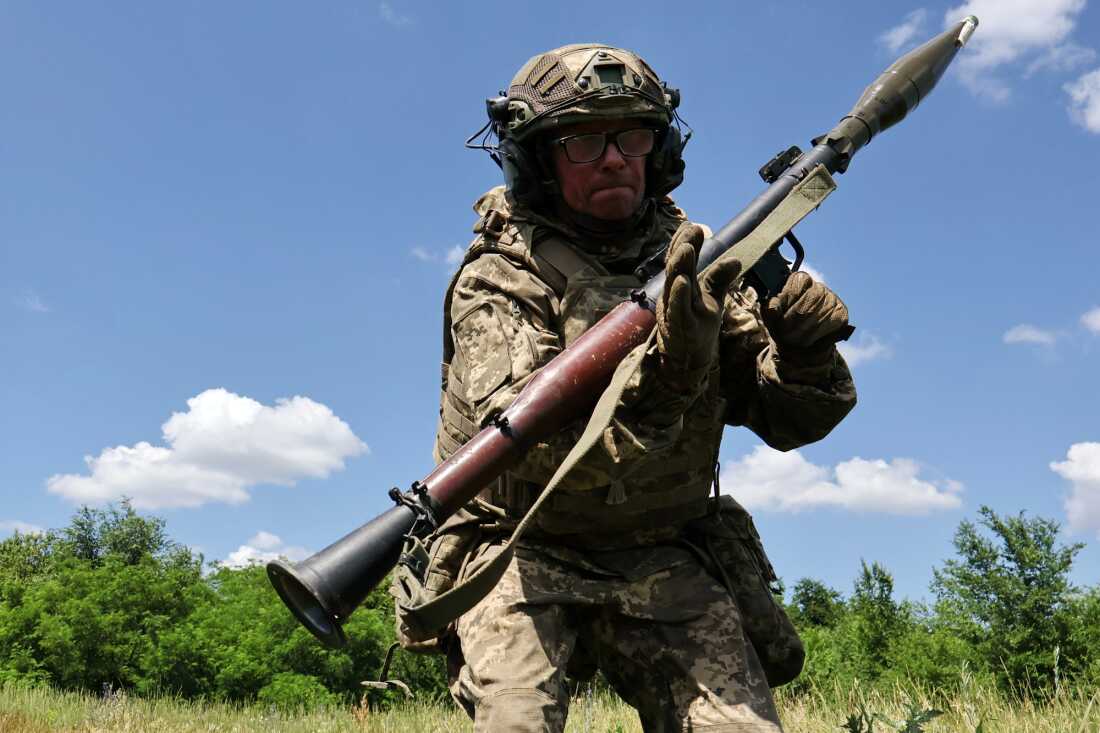
In an image shared by Ukraine’s 65th Mechanized Brigade, a soldier is seen honing military skills at a training site near the frontline in Zaporizhzhia, Ukraine. Recent developments have intensified as Ukrainian forces focus on fueling issues in Crimea.
Officials in Crimea, under Russian control, have halted civilian gasoline sales following attacks on fuel supplies in the Black Sea region. Sergey Aksyonov, the Kremlin-appointed governor of Crimea, reported that Ukrainian attacks led to four deaths and 28 injuries. He withheld details regarding the attack’s target but announced that gas stations would cease sales to private entities indefinitely, prioritizing government agency needs.
“Fuel will be sold only to government agencies that ensure the functioning and security of the Republic of Crimea,” Aksyonov stated.
Ukraine has increased its efforts to disrupt Crimea’s energy, leading to the peninsula’s most significant energy shortage since it became part of Russia in 2014. Ukrainian President Volodymyr Zelenskyy indicated a Crimean oil depot and an oil facility in Russia’s Krasnodar region as key targets, labeling the strikes as components of Ukraine’s sanctions strategy against Russia’s energy infrastructure.
The situation in Krasnodar was further strained as Russian officials reported a drone-induced blaze at a Black Sea oil terminal, which also damaged a ferry, resulting in one death.
Motorists Experience Fuel Scarcity
Crimea has faced fuel shortages due to Ukrainian strikes previously, but the current crisis is unprecedented since the 2014 annexation. In late May, authorities limited gas sales to 20 liters per vehicle owner weekly through prepaid coupons, causing immediate demand. Motorists queued for lengthy periods to refuel, and social platforms were flooded with updates on fuel availability.
A hotline has been set up for stranded tourists, and some motorists opt to transport fuel from Krasnodar, albeit restricted to 100 liters per vehicle. The situation has encouraged some to sell fuel at double the usual cost.
The Kremlin acknowledged the crisis publicly for the first time, promising a swift response. Meanwhile, Ukraine’s strategic strikes underscore its capability to significantly impact Russia’s position, while Russian military advances have stalled. As of June 11, the conflict’s duration exceeded that of World War I, marking a significant milestone in ongoing hostilities.