
The United States will celebrate its 250th anniversary of independence on July 4, 2026. Cities nationwide are preparing spectacular fireworks displays. However, the risk of fires due to fireworks presents a significant concern.
Fire Risk from Fireworks
Fireworks cause numerous fires annually, with 32,000 incidents recorded in 2023. Human-caused fires increase notably on July 4 each year. In 2026, much of the U.S. is experiencing moderate to severe drought, elevating the fire risk. Several communities have banned fireworks ahead of the holiday. In some areas, even professional shows have been replaced with drone displays. This includes some parts of Colorado, currently battling destructive wildfires.
Dry Year Conditions
The U.S. has seen more wildfires in the first half of 2026 than in any of the past decade’s first halves. The Southeast faced extremely dry conditions in early 2026, leading to a high number of spring wildfires. By late June, over 40% of the region remained in severe drought.
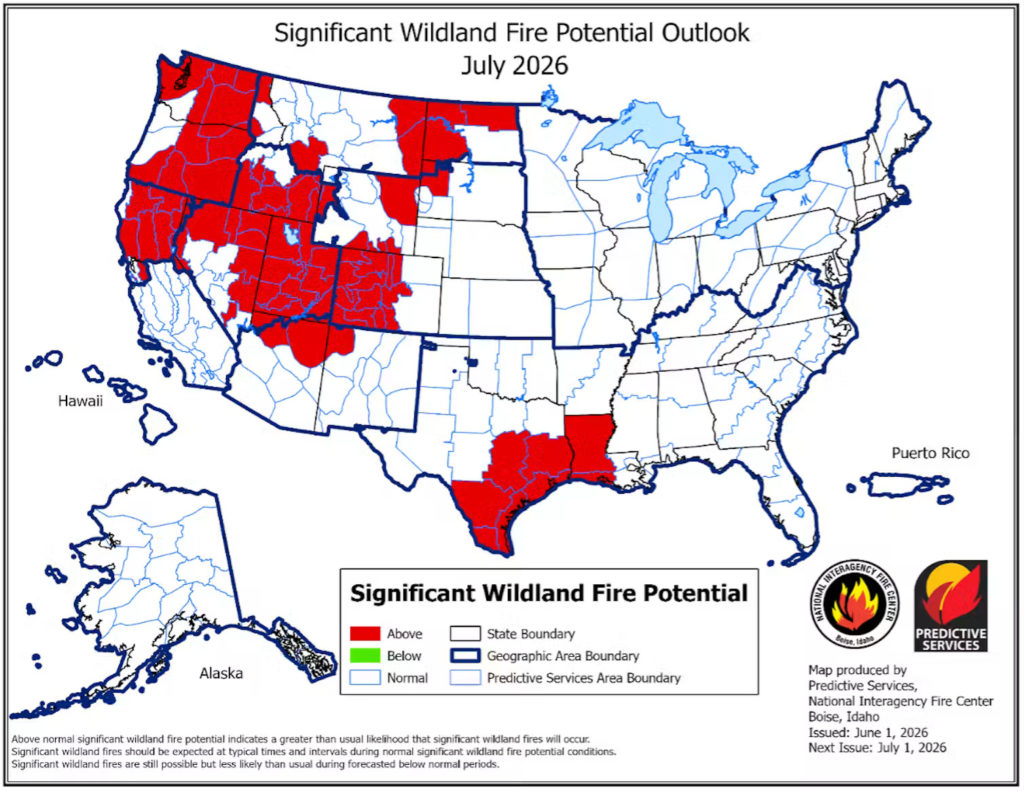
In the western U.S., a lack of winter snowpack has left forests dry. Oklahoma, Nebraska, and Utah are in extreme or exceptional drought. June’s wildfires in these areas have caused evacuations. The national forecast predicts continued above-normal fire risk through July in the West and Texas.
Influence of Heat Waves
Large areas of the West and Southeast expect above-average heat and dryness early in July. Heat waves highly increase fire risk. A recent study showed that 42% of land burned in the West from 2001 to 2024 occurred during or soon after heat waves.
July 4th Fireworks and Fire Risk
In hot and dry conditions, starting a fire requires little effort. Dry vegetation acts as significant fuel. Wind can exacerbate fire spread. Human activities like fireworks are frequent fire starters. Between 1992 and 2015, 97% of fires threatening homes in wildland-urban areas were human-caused. Independence Day stands out for high human-caused fire numbers, with about 15,000 fires started from 1992 to 2020. In the eastern U.S., July Fourth experiences around 400 more fires than other days in July.
Experts’ Recommendations
In many drought-affected regions, fireworks bans are in place to protect communities. Apart from fire risks, fireworks caused an estimated 9,700 injuries in 2023, with a third involving children. The National Fire Protection Association advises leaving fireworks to professionals. Public displays are cost-effective, safer, and often more impressive.
Supporting reliable journalism is crucial for a healthy democracy.