
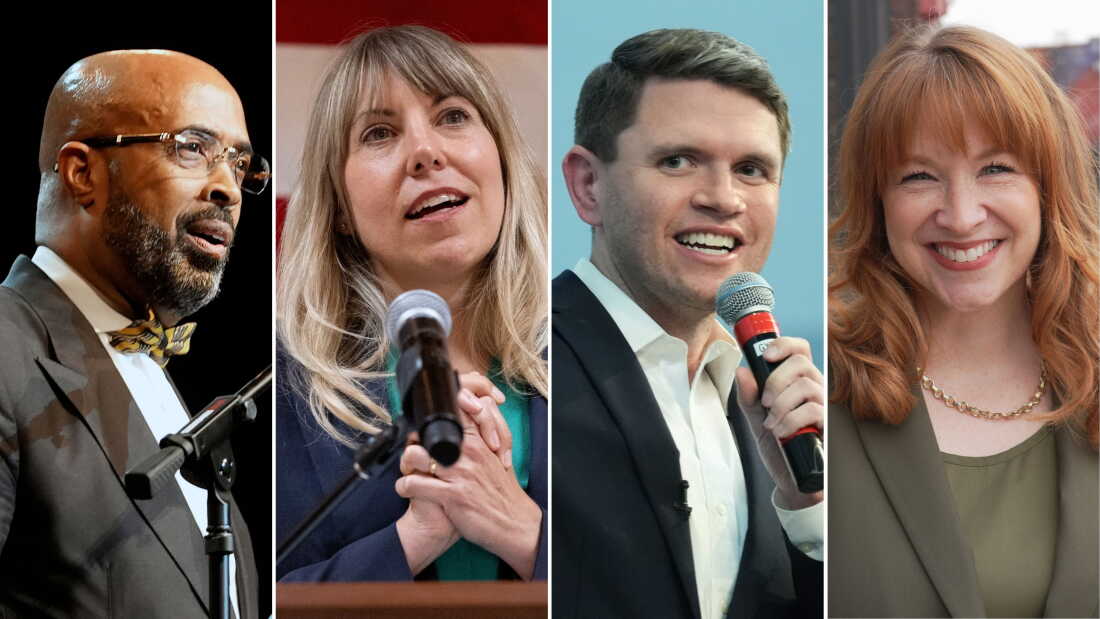
Several Democratic candidates have centered their congressional campaigns around faith. Among them are Frederick Haynes, Sarah Trone Garriott, James Talarico, and Lindsay James.
On a Sunday at Brentwood Baptist Church in Houston, state representative and U.S. Senate nominee for Texas, James Talarico, addressed the congregation. He spoke as a fellow Christian, emphasizing Christianity’s simplicity yet challenging nature. Talarico proposed that faith provides clarity amidst political turmoil, saying, ‘Sometimes we see the world most clearly through our tears.’
Democrats typically don’t emphasize religion in campaigns, yet several are embracing it this cycle. Candidates range from ordained clergy to those studying ministry, including a megachurch pastor in Dallas and clergy members in competitive races across Iowa and Kansas. These candidates refer to biblical teachings to support policies on healthcare, veterans, immigrants, and economic opportunities.
Talarico faced criticism from Republicans who questioned the sincerity of Democratic candidates’ religious rhetoric. At the state Republican convention, Texas Lt. Gov. Dan Patrick accused Talarico of blasphemy and vowed to pray for him. In response, Talarico criticized policies that cut funds for healthcare while benefiting billionaires.
Candice Stroud, a longtime church member, welcomed Talarico’s openness about Christianity. She expressed that Democrats have long discussed religion, but certain audiences, notably Republicans, are dismissive.
Pew Research Center’s study shows 28% of Democratic adults deem religion significant in their lives. Talarico acknowledged the danger of theocracy, positioning himself against Christian nationalism, especially within political arenas like the Department of Defense under the Trump administration.
Republican opponent Texas Attorney General Ken Paxton questions Talarico’s authenticity, urging vigilance against perceived deception.
At a Democratic town hall, Talarico spoke to a crowd of 700, including those who appreciate the approach, like nurse practitioner Brandon Sterling. Sterling noted the cultural influence of religion on political views in the South.
Not everyone favors religion-political intersections. Kristin Kott prioritized issues like education and flood recovery over religious discourse.
In Dallas, Frederick Haynes runs for the U.S. House, drawing inspiration from the redistricting of Texas’ Black districts. He seeks to reflect Jesus’ teachings from the Gospel of Luke, aiming to uplift marginalized communities. Haynes hosted a successful interfaith forum, collaborating across Christian and Muslim communities against Islamophobia.
Republican adversary Everett Jackson criticized Haynes for politicizing religion, contrasting traditional shepherd roles with Haynes’ approach.
In Iowa, Sarah Trone Garriott juggles political duties and Lutheran ministry. At Grace Lutheran Church, she discussed unconventional metaphors from the Gospel of Matthew, stimulating congregational reflection.
Church member Rich Snyder expressed skepticism towards clergy in politics but appreciated Trone Garriott’s sincere expressions of faith.
Trone Garriott’s campaign faces scrutiny from Republican Rep. Zach Nunn, who referenced her seminary internship involving a Satanist wedding as dissonant with mainstream Christian values.
In northeast Iowa, Lindsay James engages voters on healthcare concerns tied to public health funding and reimbursement rates. As a chaplain, she integrates Christian morality into dialogues with constituents.
Republican candidate Joe Mitchell labeled James and Trone Garriott as PINOs, citing differences on transgender rights and interpretation of Christian teachings.
Democratic clergy aim to fuse faith and public service, drawing inspiration from the Good Samaritan parable, promoting collective governmental action.