
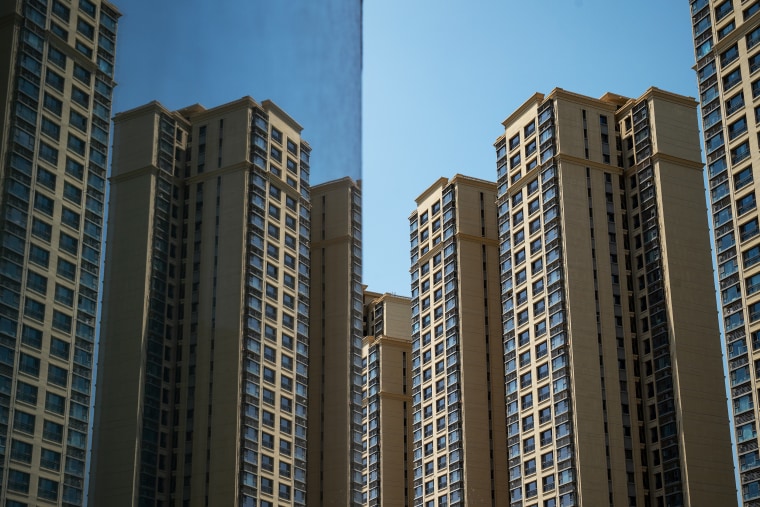
Chinese property developer Hui Ka Yan, the founder of the Evergrande real estate group, received a life sentence in prison, as announced by a court in Shenzhen. This decision represents a significant development in the Evergrande saga, following the company’s collapse associated with liabilities exceeding $300 billion. The collapse occurred after Chinese authorities took action against excessive borrowing within the real estate industry in 2020, leading to financial strain across many developers and affecting the economy.
The Shenzhen Intermediate People’s Court found Hui, also known as Xu Jiayin, and Evergrande guilty of large-scale financial fraud. This included inflating the assets of the group and concealing its liabilities. The court revealed that Hui abused his position to orchestrate fraud and misappropriated company assets.
Several other senior executives of Evergrande have also been sentenced to prison terms of up to 18 years. They faced charges such as illegally taking public deposits and committing fraud. Evergrande group was penalized with a fine amounting to 8.82 billion yuan ($1.31 billion), while Evergrande Real Estate Group was fined 7 billion yuan ($1.04 billion).
In April, Hui admitted guilt to charges including illegal absorption of public deposits, fraud, and bribery, after his arrest. Founded in 1996, China Evergrande defaulted on its debts in 2021, becoming the world’s most indebted real estate developer. This led to the company liquidating its assets.
Investigations conducted by authorities in Hong Kong and mainland China revealed that Evergrande had been manipulating its financial data. Tactics involved prematurely booking revenue from property sales before the apartments were completed and handed over to buyers. Revenue figures were overstated by approximately $80 billion during 2019 and 2020.