
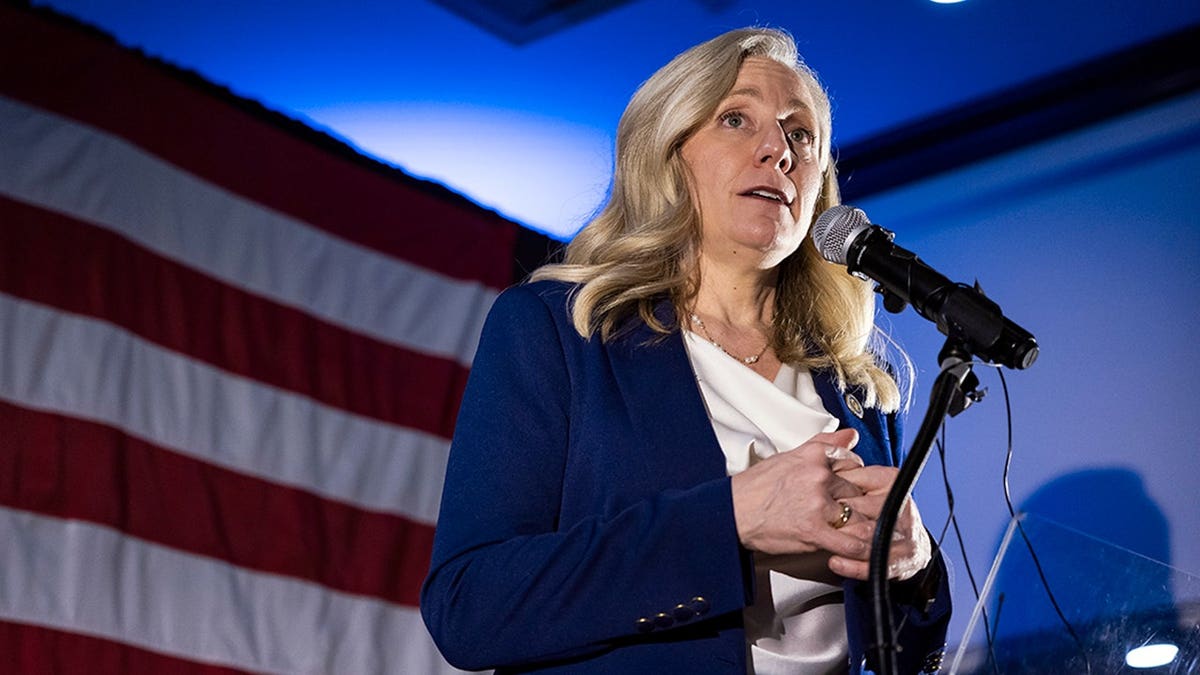
Virginia Governor Abigail Spanberger’s initiative to restore voting rights is under scrutiny. A recent incident involved a letter indicating restored voting rights being sent on behalf of a woman who is still incarcerated for a felony drug conviction.
Gov. Spanberger, alongside Secretary of the Commonwealth Candi Mundon-King, has faced criticism for several mistakes. These errors include a letter sent to a deceased dog in Goochland County, another to a sheriff’s office addressed to ‘Betty No Last Name,’ and numerous letters sent to families of deceased felons.
A Virginia resident reported receiving a voting rights restoration letter addressed to ‘Kayla Renae Vaughn,’ who remains in prison. Vaughn is serving a 40-year sentence at the Central Virginia Correctional Unit following charges of manufacturing and distributing drugs, according to correctional records.
Restoring the rights of the dead is a failure. Restoring the rights of a dog is an embarrassment,stated Virginia House Minority Leader Terry Kilgore, a Republican. He emphasized that granting rights to an incarcerated person represents carelessness.
Delegate Tom Garrett previously criticized the administration’s approach. He highlighted a lawsuit by former Virginia House Speaker Bill Howell that challenged the blanket restoration of voting rights. The Virginia Supreme Court ruled that restoration decisions must be considered individually.
Though the administration claims individual case reviews, Garrett pointed to errors like the letter to ‘Biscuit Rigsby,’ a dog in his district, to argue otherwise.
Spanberger has portrayed her restoration efforts as beneficial for individuals who have completed their sentences and reintegrated into society. However, this does not apply to Vaughn, who remains incarcerated. The recent amendment to Virginia’s voting rights ensures automatic restoration only for those released from incarceration, stating it explicitly excludes individuals currently serving felony sentences.