
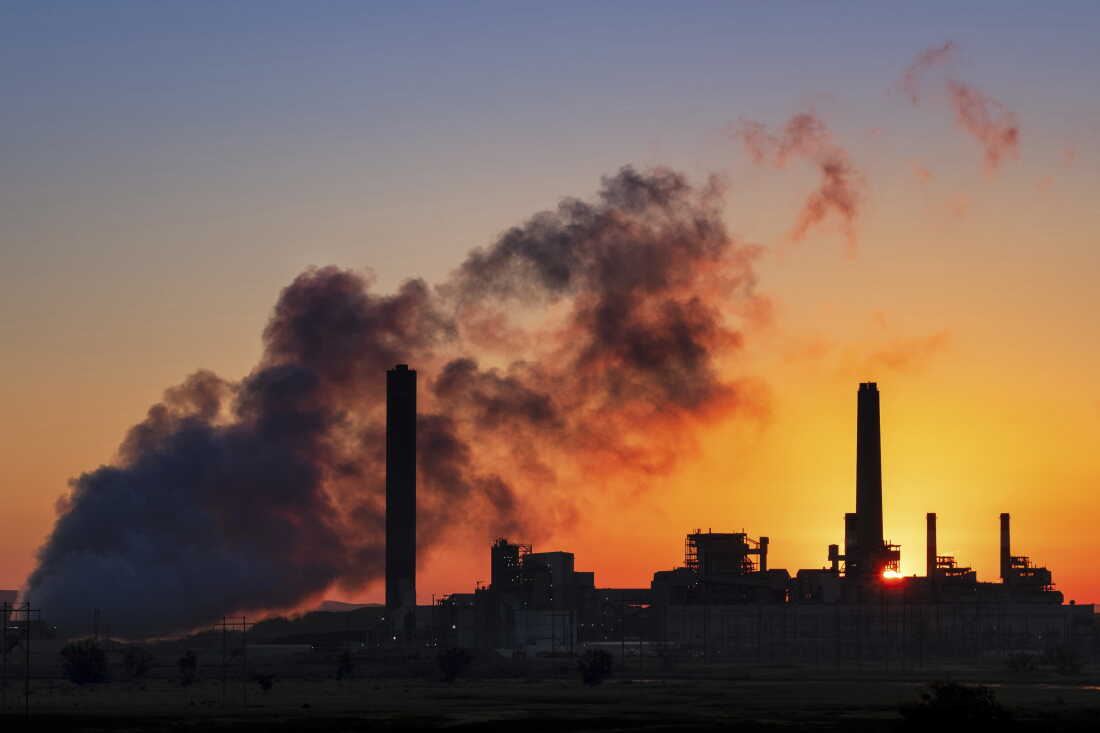
The Environmental Protection Agency (EPA) announced on Monday the repeal of limits on greenhouse gas emissions from fossil fuel-fired power plants. The move, hailed as the largest deregulatory action in the U.S. power sector’s history, came under the Trump administration. This decision overturns rules finalized by the previous Biden administration, which aimed for significant reductions in carbon dioxide emissions from existing coal and new natural gas-fired power plants starting in the 2030s.
Human activities have made carbon dioxide the main driver of global warming. Power plants rank as the second-largest source of carbon dioxide emissions in the U.S., with transportation being the largest.
“The days of Biden and Obama working to destroy natural gas and coal are over,” said EPA Administrator Lee Zeldin during a Houston press conference, coinciding with the G20 Energy Summit. He criticized the past administrations for allegedly causing energy price hikes and hindering the country’s energy potential.
Despite these deregulatory movements, according to financial services firm Lazard, solar and wind projects are more cost-competitive than those based on natural gas and coal. Nonetheless, Zeldin expressed the EPA’s intention to rescind all remaining power plant greenhouse gas emission standards.
On the contrary, environmental groups argue that this decision poses a threat to public health by increasing harmful pollutants. Gudrun Thompson, a senior attorney at the Southern Environmental Law Center, emphasized the importance of these rules not only for climate protection but also for safeguarding public health from local air pollution dangers.
Former President Trump had previously dismissed climate science and deemed climate change a “con job.” The latest repeal reflects his continuing efforts to dismantle former President Biden’s climate policies, complicating future attempts to restrict greenhouse gas pollution that exacerbates planetary warming.
Legal opposition is mounted as environmental groups plan to contest the decision in court.
The Supreme Court’s 2007 Massachusetts v. EPA case marked the beginning of regulatory limits on climate pollution from power plants, concluding that the EPA must regulate such emissions under the Clean Air Act. Obama later proposed the “Clean Power Plan,” aiming to cut emissions by 32% from 2005 levels by 2030. Although obstructed legally, the goal was surpassed, due to a shift to natural gas and renewable energy sources.
In 2021, the Biden administration introduced an aggressive climate agenda, targeting the elimination of power sector climate pollution by 2035. However, a 2022 Supreme Court decision restricted the EPA’s authority, leading to regulations targeting individual plants rather than industry-wide mandates.
Amid the ongoing regulatory shifts, the Trump administration is now removing these limits altogether. Critics such as Michael Gerrard, a law professor at Columbia University, stress that amid record global temperatures, the EPA must focus on reducing emissions. With July standing as the hottest month recorded, and 2026 predicted to be another warm year, the urgency to combat climate change is high.