
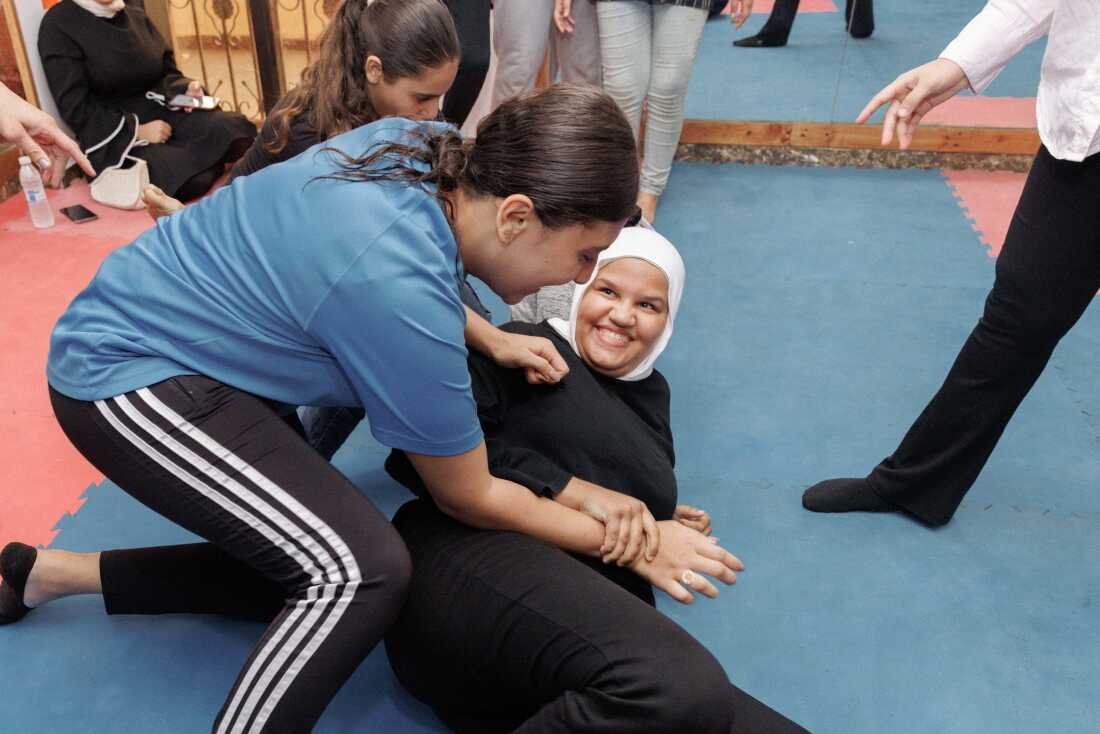
In the refugee camp of Bourj el Barajneh in South Beirut, Palestinian girls are engaging in jiu jitsu training. This takes place in a makeshift gym, a setting where traditional views on women’s behavior are challenged. Coach Mirella Atallah leads a Brazilian jiu jitsu course designed not only for self-defense but as a form of empowerment.
Mirella Atallah, a Lebanese-Canadian former world champion, focuses on empowering women and marginalized communities globally. Her work is significant in societies with limited awareness about gender-based violence, where discussing sexual abuse often remains taboo.
Atallah emphasizes the importance of public empowerment over merely self-defense. She encourages women to notice their surroundings, maintain eye contact, and use their voices. Aisha Saqqa, a college student participating in the course, describes a transformation in her outlook and mental health.
The training helps participants overcome adversity. Living in Lebanon’s Palestinian refugee camps, these women and girls come from families displaced since the creation of Israel in 1948. Malak, a Palestinian refugee, views her jiu jitsu partner Hanan as more than a friend, sharing aspirations of becoming a beauty specialist.
Atallah’s journey serves as a role model. From a poor Lebanese background, she faced bullying but eventually pursued education and martial arts, defying societal norms. Jiu jitsu provided her with a voice, helping her grow beyond shy beginnings.
In Beirut, Atallah runs a class attracting diverse participants. For many, life in the camps is marred by poverty and the risk of violence. Women face harassment and risk, often staying indoors after dark due to safety concerns. Atallah aims to build communities among her students, fostering support networks to overcome isolation.
Atallah collaborates with organizations to offer free jiu jitsu classes, targeting migrant workers, refugees, and marginalized groups like the LGBT community. Her reach extends globally, with classes taught in countries like Syria and Pakistan.
Participants, such as Fatima Mohammad, find newfound confidence in jiu jitsu, altering their physical and mental perspectives. Atallah routinely asks her students about potential changes in their camp environment, fostering dreams of removing weapons, planting trees, and improving exercise access.
Through community building and jiu jitsu training, Atallah empowers these women to affect change, encouraging them to believe in the possibilities ahead.