
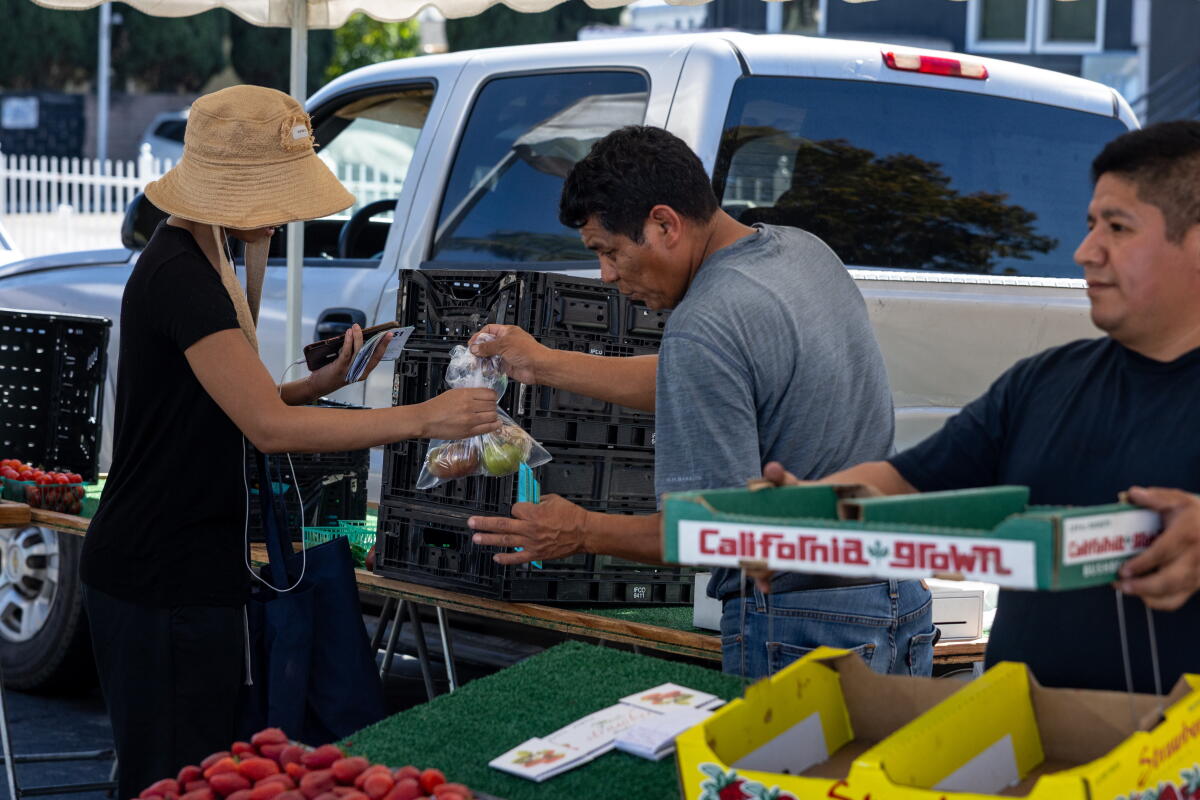
In the United States, a trade conflict led by President Trump has been increasing inflation rates, affecting the cost of everyday items. The Iran conflict has added volatility to gas prices, creating unpredictability for American consumers. Additionally, significant tax reductions have pushed the national debt beyond $40 trillion, sparking a bond market crisis. A sweeping immigration enforcement has further stressed labor supplies in several key sectors, including agriculture and construction, contributing to climbing prices.
Halfway through President Trump’s second term, his economic policies have attracted scrutiny as the upcoming midterm elections approach. Despite the administration’s promises of economic improvement, public sentiment remains critical. Polls indicate disapproval of Trump’s economic management. As Labor Day approached, polling indicated that fewer than one-third of Americans viewed the president’s economic handling favorably. Specifically, a University of Massachusetts Amherst survey reported only 22% of Americans perceiving the economy as in good or fair condition.
Economic sentiment remains low due in part to how quickly negative news can diminish confidence. This has proven challenging for Trump’s administration. As election day on November 3 nears, any significant shift in economic perceptions seems unlikely.
Aaron Klein of the Brookings Institution observed that voter opinions on the economy are mostly fixed. Klein emphasized that today’s economy influences the public’s voting decisions more significantly than conditions encountered later in the year.
Amidst increasing trade tensions with Canada, President Trump dismissed areas opposing data-center development as “backwards and poor.” This stance risks Republican successes in key northern battlegrounds, potentially affecting Senate control. Products like Canadian-sourced hockey gear exemplify how the trade dispute impacts American shoppers.
Recent surveys show over 90% of Americans perceive widespread government corruption under Trump. Trump has spent considerable funds on vanity projects across the capital. Maine’s Republican Senator Susan Collins criticized Trump’s latest tariff actions against Canada, which she says complicates efforts to secure reelection.
“There’s just nothing good you can say about them,” Collins remarked on the tariffs.
The president has countered these critiques by highlighting what he terms a manufacturing boom and asserting that the U.S. has “the greatest economy we’ve ever had.” Meanwhile, distancing himself from potential midterm implications, he stated:
“I’m not affected by the election,” Trump said.
However, Rep. Mike Johnson of Louisiana, the House Speaker, described the midterms as a verdict on Trump’s presidency, his policies, and administration.
Facing possible defeat, several incumbent Republicans are distancing themselves from Trump. Legislators such as Reps. Tom Barrett and Zach Nunn plan to skip a GOP convention hosted by Trump in Texas.
Joanne Hsu from the University of Michigan’s Survey of Consumers pointed to fluctuating gas prices as a primary frustration among Americans. The prolonged nature of the Iran conflict exacerbates this sentiment.
“Consumers are absolutely not feeling great about the economy right now,” Hsu explained.
She indicated that even if resolved, the conflict in Iran will only influence economic views once gas prices visibly decline.
Vice President JD Vance acknowledged the Iran crisis’s influence on escalating gas prices during a recent press briefing. He expressed uncertainty about when prices might drop:
“The reason gas prices are so high now is because the Iranians are shooting at commercial shipping,” Vance said.
Shortly after, diesel reached a high of $5.85 per gallon, with California seeing prices as elevated as $7.71. Trump continued downplaying financial burdens tied to the Iran situation, emphasizing security measures in the Strait of Hormuz.
He also referenced a deal with Venezuela to tap into its oil reserves, predicting potential future benefits for American consumers – albeit with no promised timeline for changes in gas prices.
Voters like Monica Escalante, experiencing firsthand the strain from expanding tariffs and rising fuel costs, underscore economic concerns as a significant election motivator. A home care provider affiliated with the United Domestic Workers union, Escalante elaborated on the financial pinch resulting from Trump’s tariffs and the Iran skirmish:
“It’s really hard when I don’t have the money for gas, and she doesn’t have the money for gas,” Escalante shared.