
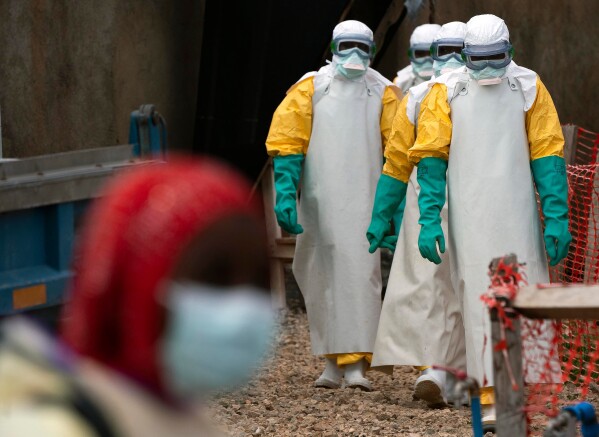
The Central African nation of Congo is facing a new Ebola outbreak, with over 300 suspected cases and at least 88 deaths reported. The outbreak has extended to neighboring Uganda, prompting the World Health Organization (WHO) to declare it a public health emergency of international concern.
Ebola is a severe, often lethal disease first recognized in 1976 after simultaneous outbreaks in regions now known as South Sudan and Congo. Sub-Saharan Africa has witnessed all major Ebola outbreaks, particularly in West and Central Africa. The disease is caused by several viruses, with the Ebola virus, Sudan virus, and Bundibugyo virus leading large outbreaks.
The current outbreak stems from the Bundibugyo virus, which is uncommon and has only resulted in two previous outbreaks. According to WHO, fruit bats may be the natural hosts of Ebola viruses, but animals like apes and monkeys can also contract the virus. Infection occurs through contact with the body fluids of an infected person or contaminated surfaces.
Symptoms emerge between two days and three weeks post-exposure, typically within one week, and include fever, aches, fatigue, sore throat, gastrointestinal issues, rashes, seizures, and bleeding. The average Ebola fatality rate is 50%, with historical outbreaks ranging from 25% to 90%.
Only the Ebola virus has approved vaccines and treatments. The 2013-2016 outbreak remains the worst on record, affecting over 28,000 people, with more than 11,000 fatalities across Guinea, Liberia, and Sierra Leone. The epidemic began in Guinea when “patient zero” interacted with infected fruit bats.
The 2018-2020 outbreak in Congo’s North Kivu, South Kivu, and Ituri provinces had over 3,400 cases and more than 2,200 deaths, spreading to Uganda. It was the second-largest outbreak in history, also originating from the Ebola virus.
In 2007, Uganda saw the first Bundibugyo strain outbreak near Congo’s border, reporting 131 cases and 42 deaths. The strain’s fatality rate was lower than others, yet no specific vaccines or treatments exist.
The virus was first identified in Sudan and Zaire (present-day Congo) in 1976. The Sudan outbreak involved cotton factory workers exposed to bats, resulting in 151 deaths and 284 cases. A concurrent outbreak in Zaire saw 280 fatalities, originating in a village near the Ebola River.
That same year marked the first known Ebola infection outside Africa when a British lab technician accidentally pricked himself with a needle while studying samples. Despite the incident, only a few cases have surfaced beyond Africa since Ebola’s discovery.