
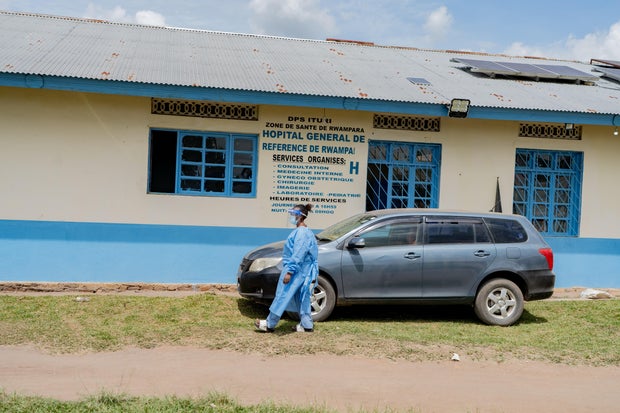
The World Health Organization (WHO) has announced that the Ebola outbreak in Congo and Uganda is a public health emergency of international concern. This follows the identification of over 250 suspected cases and 80 suspected deaths related to the disease.
Officials caution that the outbreak’s true extent could be more significant than reported. Efforts are being intensified to enhance screening and contact tracing to control the spread. The WHO determined that, while serious, the outbreak doesn’t meet the criteria for a ‘pandemic emergency’ like COVID-19. It advised against closing international borders.
“Eight laboratory-confirmed cases, 246 suspected cases, and 80 suspected deaths were reported in Congo’s Ituri province.” – WHO
In addition, two lab-confirmed cases, including one death, occurred in Kampala, Uganda. These incidents are attributed to individuals who traveled from Congo without apparent connections to each other, as per the WHO.
The Africa CDC reported 246 suspected cases and 65 deaths in Congo. However, regional health officials mentioned up to 300 probable cases.
In Congo’s Ituri province, particularly in Bunia, frequent burials have heightened fears among locals. Jean Marc Asimwe, a resident, expressed, “Every day, people are dying… we bury two, three, or more people in a day.”
Health Minister Samuel-Roger Kamba confirmed the presence of the Bundibugyo virus strain in the outbreak; it’s a less prominent variant of Ebola. Congo has faced 17 Ebola outbreaks since the disease appeared there in 1976.
Ebola spreads quickly through bodily fluids like vomit, blood, or semen. Dr. Céline Gounder, a CBS News medical correspondent, noted the lack of approved vaccines or treatments for this strain, raising containment concerns.
Uganda confirmed an Ebola case originating from Congo, with an affected person dying in Kampala. The Africa CDC expressed worries over further spread due to the proximity of health zones to Uganda and South Sudan.
A patient who died in Kampala was transported back to Congo, with no further local cases confirmed. Health screenings increased at the Kibuli Muslim Hospital in Kampala.
Kenya’s government stated there’s a moderate risk of Ebola importation due to regional travel. An Ebola preparedness team has been formed, enhancing surveillance at entry points.
Logistical Challenges in Outbreak Management
Congo faces logistical hurdles in delivering expertise and supplies during outbreaks. Ituri province, 620 miles from Kinshasa, suffers from violence and instability complicating containment.
Dr. Abdi Rahman Mahamud of the WHO highlighted the challenges due to the volatile situation in the affected region.
Three health zones in Ituri, including Bunia, Rwampara, and Mongwalu, are affected. Limited testing capacity has complicated efforts, with only 13 samples tested; eight tested positive for Bundibugyo.
Bunia’s residents hope for swift outbreak containment. Adeline Awekonimungu urges government action for effective hospital management.
Ebola Risk to Americans Remains Low
U.S. health officials assess the Ebola threat to Americans as low. However, questions remain about potential exposure during travel.
The U.S. Centers for Disease Control and Prevention (CDC) supports outbreak management, with its office in Congo deploying personnel to address the crisis.
The CDC advises Americans traveling in Congo and Uganda to avoid symptomatic individuals and ensures measures at entry points for symptom detection.
Concerns About U.S. Response
Dr. Craig Spencer, a survivor of a past Ebola outbreak, expressed concern about the U.S.’s current capacity for rapid response due to recent administrative changes. Despite these challenges, the U.S. maintains its ability to handle high-consequence pathogens.
Spencer emphasized the commitment shown by the United States through the establishment of specialized centers for disease management.