
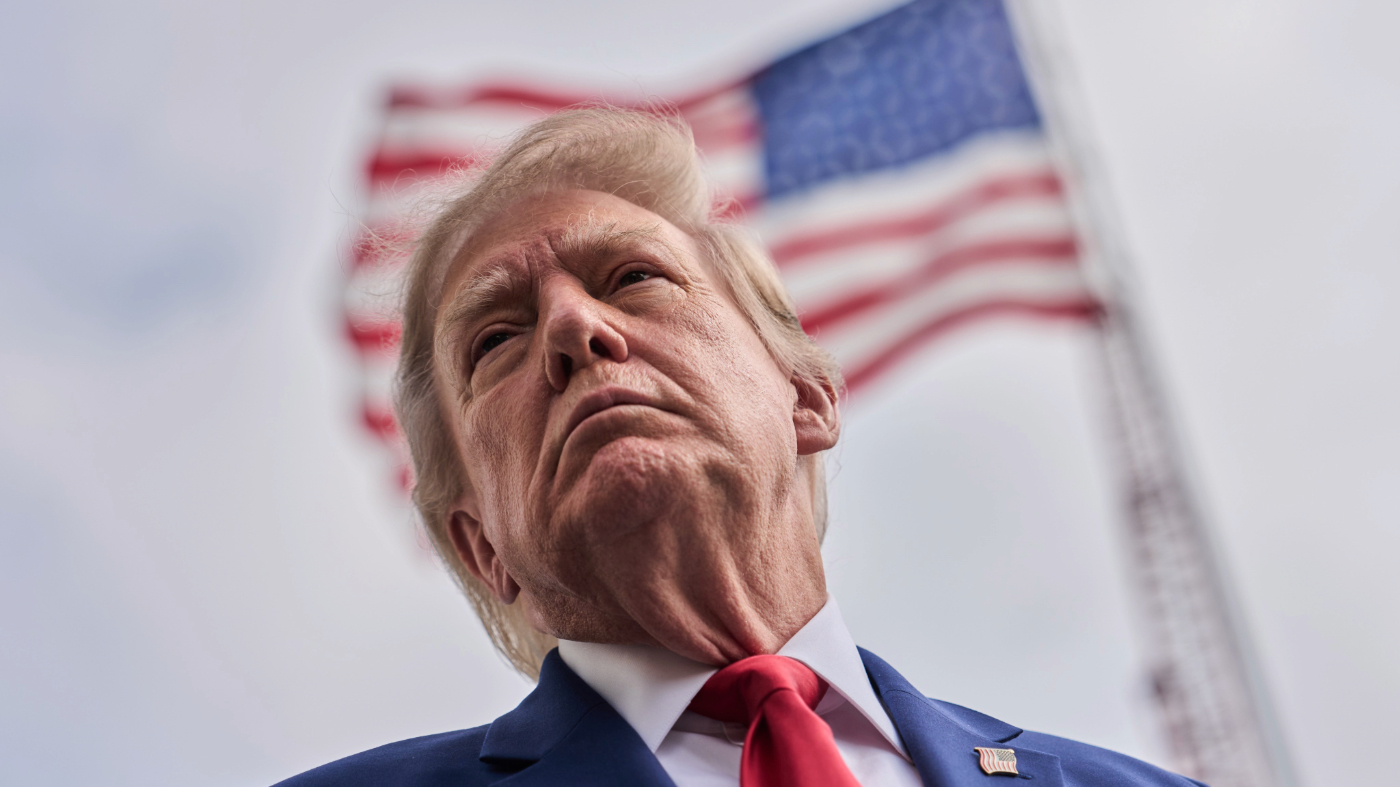
President Donald Trump addressed reporters with the American flag waving in the background on the South Lawn of the White House on Friday, Oct. 16, 2026. Amidst this backdrop, the political landscape of the year’s midterm elections unfolded, marked by record-breaking advertising expenditures. Over $11.21 billion was spent on political ads, surpassing the $11.2 billion expended during the 2024 presidential cycle. These funds fueled a relentless barrage of campaign messages across social media, television, and even billboards.
Despite this considerable investment, Republicans failed to convey a convincing plan for addressing the economic challenges exacerbated by Trump’s presidency. Voters remained unconvinced by the party’s capacity to improve the nation’s worsening affordability crisis. As a result, the party ended the election cycle weaker, suffering defeat while alienating crucial voting blocs gained in prior years.
Contrary to some speculations, the predicted Democratic wave materialized with substantial victories. Democrats achieved notable Senate wins in states like Kansas, Iowa, Texas, Ohio, South Carolina, and North Carolina, often with significant margins. In Texas, James Talarico triumphed decisively over Trump’s favored candidate, Ken Paxton. The Democratic momentum also penetrated the South, traditionally a Republican stronghold, capturing governorships in Texas and Georgia. Keisha Lance Bottoms made history in Georgia as the first Black female governor of the state.
Recognizing the scale of Democratic success, Trump refrained from reiterating claims of election fraud and instead acknowledged the results publicly. He expressed willingness to collaborate with Democrats, signaling a possible shift in approach. The midterm outcomes highlighted waning support for Trump within the Republican ranks. Florida Governor Ron DeSantis openly challenged Trump on key issues, signaling discord within the party’s top leadership. Additionally, several staunch Trump allies, including Rep. Scott Perry, lost their seats, reflecting Trump’s dwindling clout.
The results empowered Democrats, who had faced significant setbacks in 2024. They successfully unified their platform around Trump’s economic and foreign policy failures, resonating with diverse voter groups such as Latinos, Arab Americans, young people, and independents. The Democrats’ straightforward message linked Trump’s policies to worsening economic conditions and connected with voters across various demographics.
Exit polls indicated that economic concerns and public corruption were paramount for voters, with many blaming Trump for declining living standards. The Republican Party faced intensified challenges, compounded by voter dissatisfaction and an erosion of party support. The GOP is now wrestling with its weakest political standing since the 2008 financial crisis and must navigate a potential future without Trump. The path forward remains uncertain as preparations for the 2028 elections begin in earnest.
This analysis is provided by Max Burns, a Democratic strategist and founder of Third Degree Strategies.