
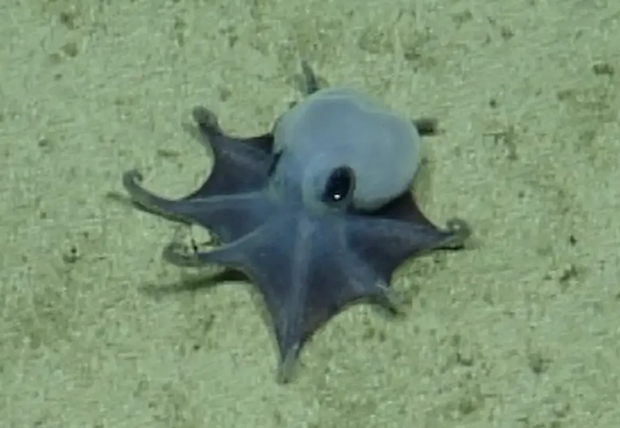
On the ocean floor near the Galapagos Islands, scientists have uncovered a remarkable new species of octopus. This cerulean cephalopod, found at a depth of 5,900 feet, was first spotted by a team from the Charles Darwin Foundation.
The octopus, described as “blue and tiny,” caught the attention of octopus expert Janet Voight. Initially, she examined photos of the animal before receiving its preserved body. Voight was immediately struck by its unique characteristics.
“It’s beautiful,” Voight remarked upon viewing the specimen.
This octopus, measuring 5,800 feet deep in the ocean near Isla Darwin, presents an unusual challenge for classification. The closest known relative lives off the coast of Uruguay, far from the Galapagos.
Typically, new species identification involves examining physical characteristics by dissection. However, Voight opted for a different approach. The Field Museum used CT scans to develop a detailed 3D model, preserving the specimen’s physical integrity.
Stephanie Smith, head of the X-ray lab, expressed excitement:
“There’s nothing like spending the day looking at something no other human has ever seen.”
Named Microeledone galapagensis, this octopus features distinct attributes beyond its rare blue hue. As part of the Megaleledonidae family, it is comparatively small and lives far from its Antarctic relatives.
Its stubby arms, lined with a single row of suckers, and smooth skin distinguish it further. Beneath its light blue back, the octopus displays a “very deep purple” underside.
This color pattern likely serves a protective purpose, concealing light-emitting prey from predators.
Voight explained:
“The octopus puts its dark-colored web over the prey item, keeping itself safe.”
Despite the discovery, finding new octopus species in unexplored areas of the ocean is not unusual. The ocean floor covers more land than the entire Pacific Ocean.
Voight last encountered a new octopus species in 2023, off Costa Rica. She led the team in formally describing this new blue octopus, marking a milestone in her career.
“These are little octopuses that live in the deep sea, and hardly anybody on Earth has ever gotten to see them,” Voight noted.
Voight’s findings were published in the journal Zootaxa. Globally, approximately 300 octopus species inhabit oceans worldwide. In 2024, a research team identified four new species near Costa Rica.