
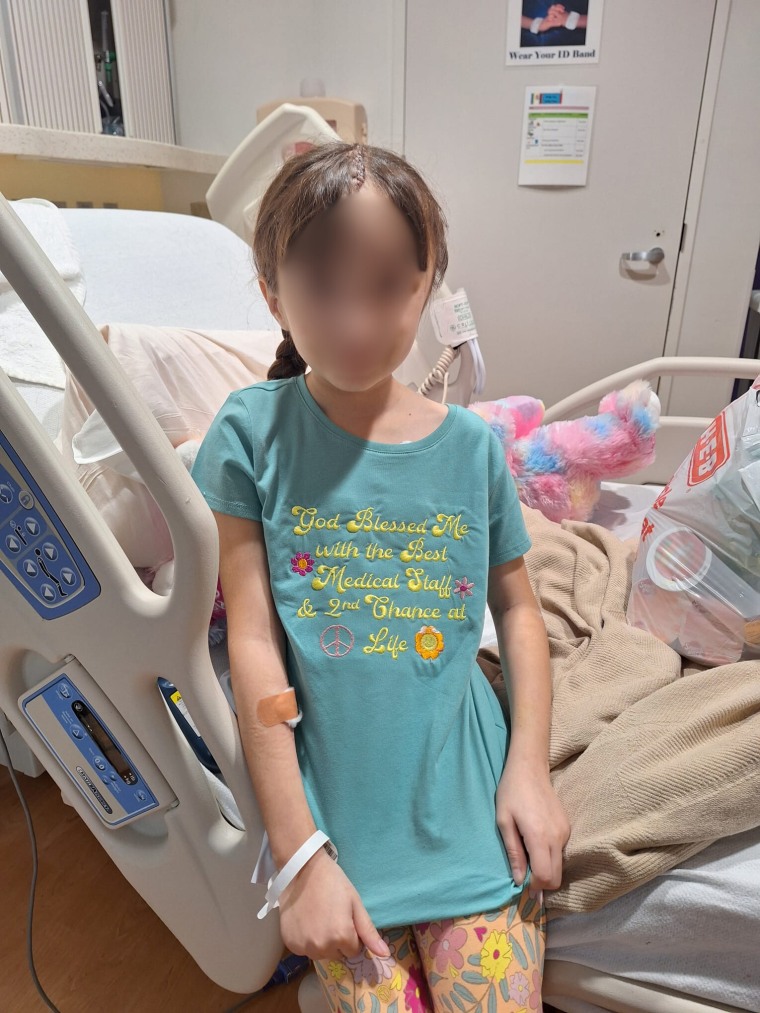
The mother of a U.S. citizen child, recovering from a rare brain tumor, was recently denied a humanitarian request to return to the U.S. This decision came after a long wait of over 10 months. The mother expressed deep frustration and difficulty in accepting the news.
The child’s situation became dire when, deported over a year ago, her access to vital medical treatment ended. Forced to relocate to Mexico, her health has worsened significantly. The child, who was 10 at the time of her parents’ deportation, was part of a family that included four siblings, with three also being U.S. citizens.
“Instead of improving, my daughter’s health is actually regressing,” the mother said.
Currently 12, the child experienced a severe seizure that underlined her declining health. Challenges include abnormal MRI results, ongoing muscle spasms, dizziness, and an inability to sleep due to pain. Her condition has impacted her speech and motor skills, leaving her mother’s care as vital.
Despite attempts to gain re-entry into the U.S. for her medical needs, the family received refusal letters. The letters provided no specific reasons for denial, and communication from U.S. Citizenship and Immigration Services highlighted that ICE holds jurisdiction over such cases. ICE did not respond to inquiries.
The family’s attempts to find a suitable medical provider in Mexico have hit barriers. Their options are limited by the child’s inability to travel by plane and her need for specialized care. Medical records suggest the tumor is linked to a “novel” condition, needing expert treatment that’s hard to find outside the U.S.
The mother faces an uphill battle, managing her daughter’s complex care needs without the proper resources. Once a rehab technician and certified nursing assistant, she applies her skills daily but lacks comprehensive support systems like therapy teams and emergency medical facilities.
Another challenge is the distance from family support. The girl’s 19-year-old brother remains in the U.S., working hard to help cover medication costs. He also sought advocacy from lawmakers including Rep. Adriano Espaillat, highlighting the family’s plight at the State of the Union address.
The Texas Civil Rights Project continues to support the family. Attorney Danny Woodward notes the option to reapply for humanitarian parole, albeit at a high cost and with no guarantee of approval.
In early 2025, the deportation stemmed from an incident where Border Patrol detained the family at a checkpoint while en route to a hospital. Previously, they had successfully navigated such checkpoints with the necessary paperwork. The deportation left them in a precarious position, with their child’s health deteriorating and their support networks severed.
According to the Department of Homeland Security, the deportation followed “expedited removal orders.” This enforcement, under the current administration, resulted in increased denials of humanitarian parole applications. Data shows that fewer applications were approved compared to the previous administration.
The fight continues for the family’s return to the U.S. Their options remain limited amidst complex immigration policies. Meanwhile, the mother finds each of her daughter’s birthdays bittersweet, celebrating life in the shadow of their ongoing struggles.