
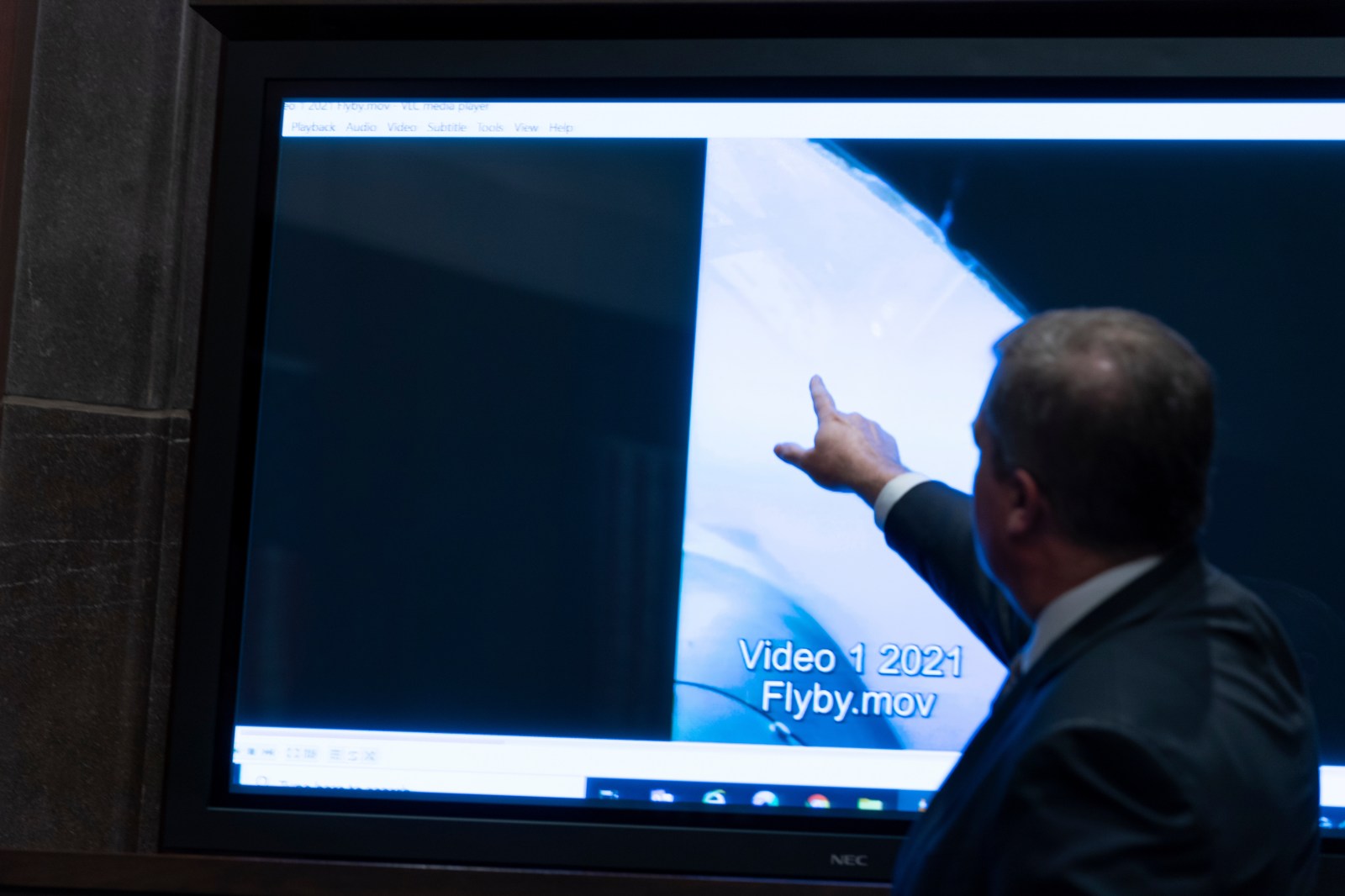
The Department of Defense announced on Monday a legal waiver enabling current and former military personnel, civilian employees, and contractors to share information about Unidentified Anomalous Phenomena (UAP), also known as UFOs. This can be done with designated representatives of a government initiative called the Presidential Unsealing and Reporting System for UAP Encounters (PURSUE).
Renewed Interest in UAP Investigations
The announcement follows heightened interest in UAP investigations. Congressional hearings, whistleblower allegations, and the release of classified documents have drawn attention in recent years. Historically, military personnel and contractors avoided discussing UAPs due to fears of legal penalties and security clearance issues. The new waiver removes these barriers, allowing them to share information with the PURSUE program without violating secrecy agreements.
Understanding the PURSUE Initiative
The waiver marks a significant change in how the government handles UAP information. Officials explained that the new process establishes a formal pathway to review, evaluate, and potentially declassify historical and ongoing UAP data. Advocates for transparency argue for legal protections to encourage insiders to share valuable information, aiding lawmakers and the public in understanding unexplained aerial incidents.
“Anytime there can be more transparency, it’s great,” said Dr. Julia Mossbridge, a researcher with the Mossbridge Institute, in an interview with Newsweek.
Dr. Mossbridge commended the efforts of organizations pushing for transparency and noted, “I think this will make a big difference in our understanding of our place in the universe.”
Previous Disclosure Policies
Before this announcement, non-disclosure agreements and Special Access Program Indoctrination Agreements (SAPIAs) limited personnel with access to classified UAP information. These agreements discouraged sharing due to concerns of legal repercussions. The new directive waives civil and administrative enforcement provisions when disclosures are made to PURSUE representatives. Information will be reviewed for security reasons and possible declassification before any wider release.
Recent Disclosures and Testimonies
Recently, the Department of Defense released its fifth batch of information under PURSUE, including multiple UAP sightings, some involving civilian encounters. One account detailed an incident captured with thermal video showing “black-hot” infrared anomalies. Another reported multiple sightings within a short period in the western U.S.
Former intelligence officer David Grusch has been vocal about secret government programs studying unidentified craft. Grusch has called for stronger whistleblower protections and more transparency. In his testimony to the House Oversight Committee, he described potential alien technology reverse-engineering programs as “earth-shattering.” He urged global reassessment of priorities and expressed hope for technological advancements that could improve energy, material science, and propulsion.
David Fravor, a former Navy commanding officer, and Ryan Graves, executive director of Americans for Safe Aerospace, also testified. Fravor recounted a 2004 incident off the California coast involving a Tic Tac-shaped flying object the size of his fighter plane.
The waiver aims to address concerns about safety in sharing UAP program knowledge. As the new disclosure mechanism is implemented, the focus will be on whether more witnesses come forward and whether previously undisclosed records can be accessed through this process.