
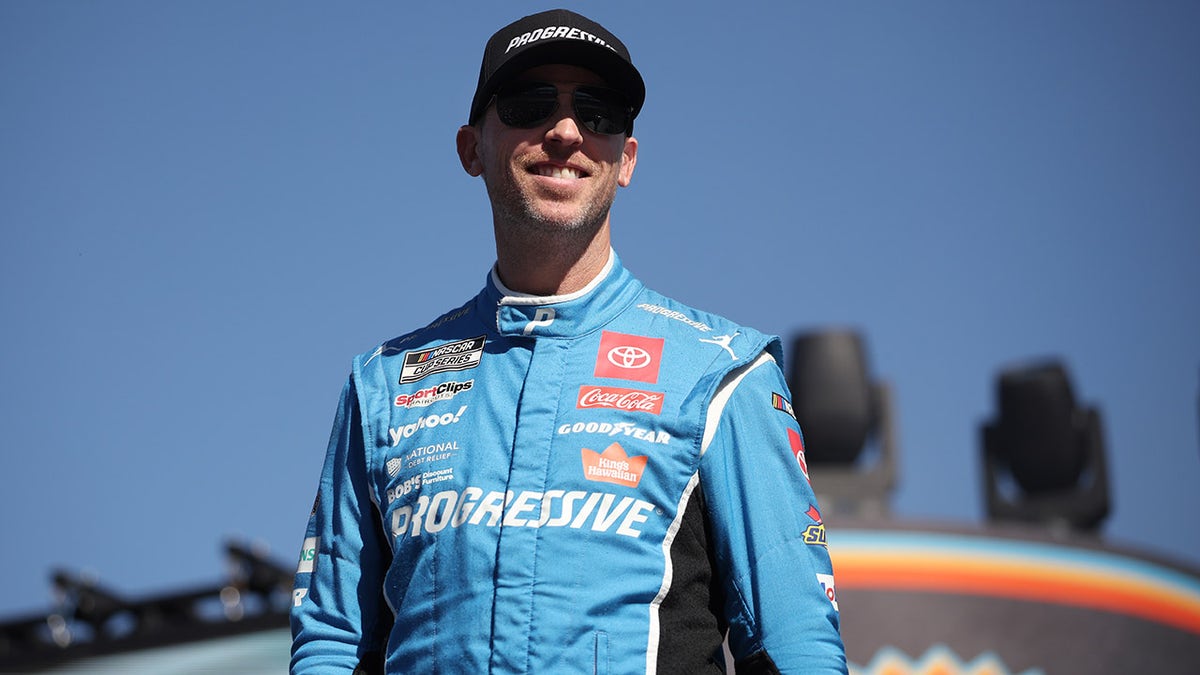
Denny Hamlin, a prominent NASCAR driver, has voiced his concerns about the impact of forward-facing sonar technology in professional bass fishing. Since purchasing a boat last winter, Hamlin has immersed himself in the world of bass fishing. He argues that while this technology might help professionals catch more fish, it compromises some of the traditional skills vital to the sport.
Hamlin shared his perspective in an interview with OutKick OutDoors, stating, “I think the guys on the pro tour, it’s a little too much.” He believes the use of advanced technology detracts from the art of finding fish through expertise rather than reliance on electronics.
Hamlin suggested, “It’s probably better for TV that these guys are catching monster bass and, you know, 100-pound bags, but I can see where it’s probably getting a little overboard.” Despite acknowledging the benefits of sonar technology, he predicts its use will continue to expand.
“The technology is going to just keep getting more,” Hamlin said. “Eventually it’s going to become even easier.”
This issue is increasingly debated in the realm of professional bass fishing. Major circuits have begun addressing the impact of forward-facing sonar. B.A.S.S., for instance, limits its use to five of the nine regular-season events in the 2026 Bassmaster Elite Series. Coin flips decide which tournaments incorporate the technology, aiming for a balance between tradition and modern sophistication.
In contrast, Major League Fishing (MLF) offers a different approach. It restricts anglers to using sonar only during one of three daily 2.5-hour periods, compelling competitors to plan strategically. MLF’s regulations also cap the number of transducers in use.
The debate resonates with Hamlin, though he admits the technology assists novices like himself. “For someone like me who’s a novice, it at least gets me in the game,” he acknowledges.
His engagement with fishing has grown through mentorship by professional angler Chris Zaldain. Hamlin credits Zaldain with significantly improving his fishing skills. “When you can go out with a pro… it just allows me to watch him cast and watch him work a minnow… and I definitely have caught more fish now,” Hamlin stated.
Having begun with freshwater, Hamlin is now expanding his interests, seeking to purchase an offshore boat. He views fishing not merely as a competition, but as a therapeutic pastime teaching patience. “It certainly is a great outlet for me,” Hamlin remarked, contrasting fishing with other sports he finds physically taxing.
Despite these benefits, Hamlin maintains his competitive spirit on the water. He admits to preferring solo fishing, pointing out the challenges of managing lines with children onboard. He even envisages participating in fishing pro-ams in the future.
Overall, fishing offers Hamlin a welcome escape, providing time away from technology and the demands of his career. It’s an activity that promotes calm, a more leisurely pace, and a connection with nature.