
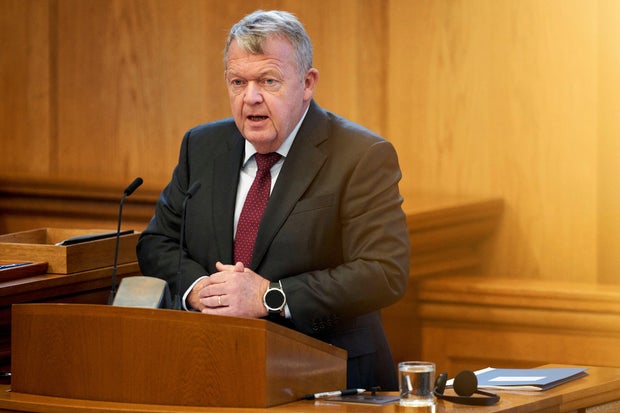
On November 19, 2026, CBS/AP reported that Denmark’s parliament voted unanimously to confirm an agreement with Greenland and the United States, focusing on enhancing security within the Arctic and North Atlantic regions. This decision emerged after sustained pressure from President Trump, who aimed to exert control over Greenland, a semi-autonomous territory of Denmark, an ally in NATO.
The unanimous 109-0 vote in Denmark’s Folketing represents the final step toward implementing the agreement. The deal, designed to facilitate the establishment of more U.S. military bases in Greenland, also aims to ease tensions related to President Trump’s interest in the mineral-rich island.
Previously, Greenland’s parliament also approved the agreement without any opposition. Notably, since the deal is not classified as a treaty, it bypasses the requirement for U.S. Senate approval. The agreement will take effect once Denmark and Greenland formally inform the U.S. through a diplomatic note that their parliaments have completed all necessary actions.
Kenneth Howery, U.S. ambassador to Denmark, praised the Danish parliament’s strong support, indicating it paves the way for the agreement to become operative. He described the agreement as a significant achievement that modernizes the trilateral relationship, addressing future security challenges and enhancing the security of the U.S., the Kingdom of Denmark, including Greenland, and NATO as a whole.
The pact’s main objective is to expand the U.S. military presence in Greenland while maintaining the island’s governance under Danish authority. This condition remains even if Greenland opts for independence in the future. The agreement was signed by Mr. Trump and the leaders of Greenland and Denmark in September in New York after months of discreet negotiations to reconcile Trump’s security priorities with Danish and Greenlandic concerns of possible U.S. annexation.
Building on a defense agreement from 1951, the new accord allows the U.S. to enlarge its military activities at the remote Pituffik Space Base in northwest Greenland and establish defense areas in Narsarsuaq in the south and Mestersvig in the east. It also permits the creation of additional military zones across the territory, boosting U.S. military capabilities and operations.