
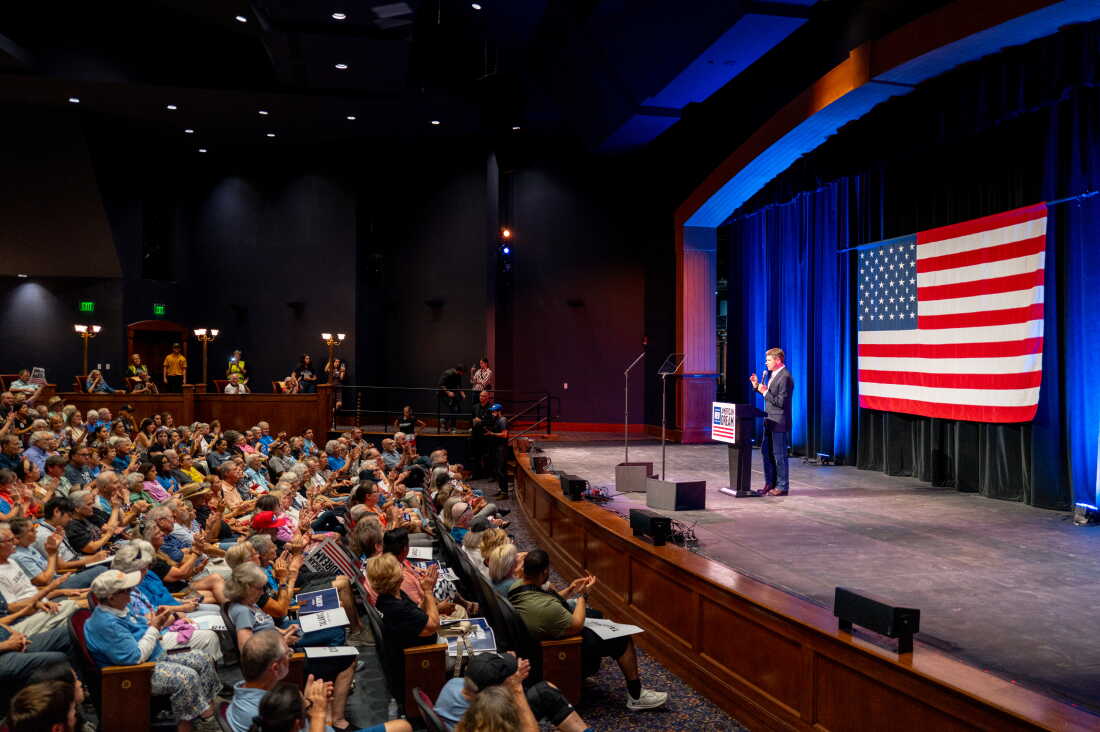
Democratic Senate candidate James Talarico addressed supporters at a campaign rally on August 31, 2026, in Kerrville, Texas. Labor Day traditionally signals the start of general election campaigns.
The current political scene is being reshaped by Democratic energy and dissatisfaction with President Trump’s policies during his second term. As the election approaches, Republicans control the House and Senate by slim margins. Historically, the party in power tends to lose seats in midterm elections. Results from the 2026 primaries and recent opinion polls suggest that Republicans might lose their hold on both Congressional chambers and face setbacks in conservative strongholds.
Voter concerns focus on issues like the Iranian conflict, immigration, tariffs, rising gas prices, and the overall cost of living. Trump’s approval ratings have hit new lows, with many seeing a disconnect between his agenda and voters’ priorities, such as the controversial White House ballroom project.
Following setbacks in the 2024 elections, Democrats have regained strength with their base and independent voters dissatisfied with current conditions. Both Democratic and Republican-controlled states have engaged in mid-cycle redistricting to secure safe seats. Despite polling indicating a potential Democratic takeover of the House, shifts in opinion remain fluid.
Initially, the Democrats’ chances of seizing a Senate majority seemed unlikely. Key races were expected in states like Georgia and North Carolina, typically favorable to Republicans. However, attention has shifted to states including Iowa, Texas, Ohio, and Alaska, where Democrats now pose significant challenges.
Financial resources and communication will heavily influence the midterm results. Democratic candidates are leading in fundraising, while Republican committees and the Trump-affiliated MAGA, Inc. super PAC have substantial funds ready for campaign spending. There is debate within the party on how these funds will be used, especially regarding candidates like Texas Senate nominee Ken Paxton. Recently, MAGA, Inc. announced a $10 million advertising effort for his campaign.
In Dallas, Republicans are hosting an atypical midterm convention to energize their base and appeal to independents. This event features key battleground candidates and members of the Trump administration. Meanwhile, Democrats tackle their messaging challenges, addressing discontent within their base regarding party leadership. Since Trump’s return to office, Democratic voter support has improved across various demographics, evidenced by wins in the 2025 Virginia and New Jersey governor elections.
Some long-term incumbents were challenged and replaced in primaries, with others choosing to retire. In several pivotal races, Democratic strategies emphasize recognizing party shortcomings.