
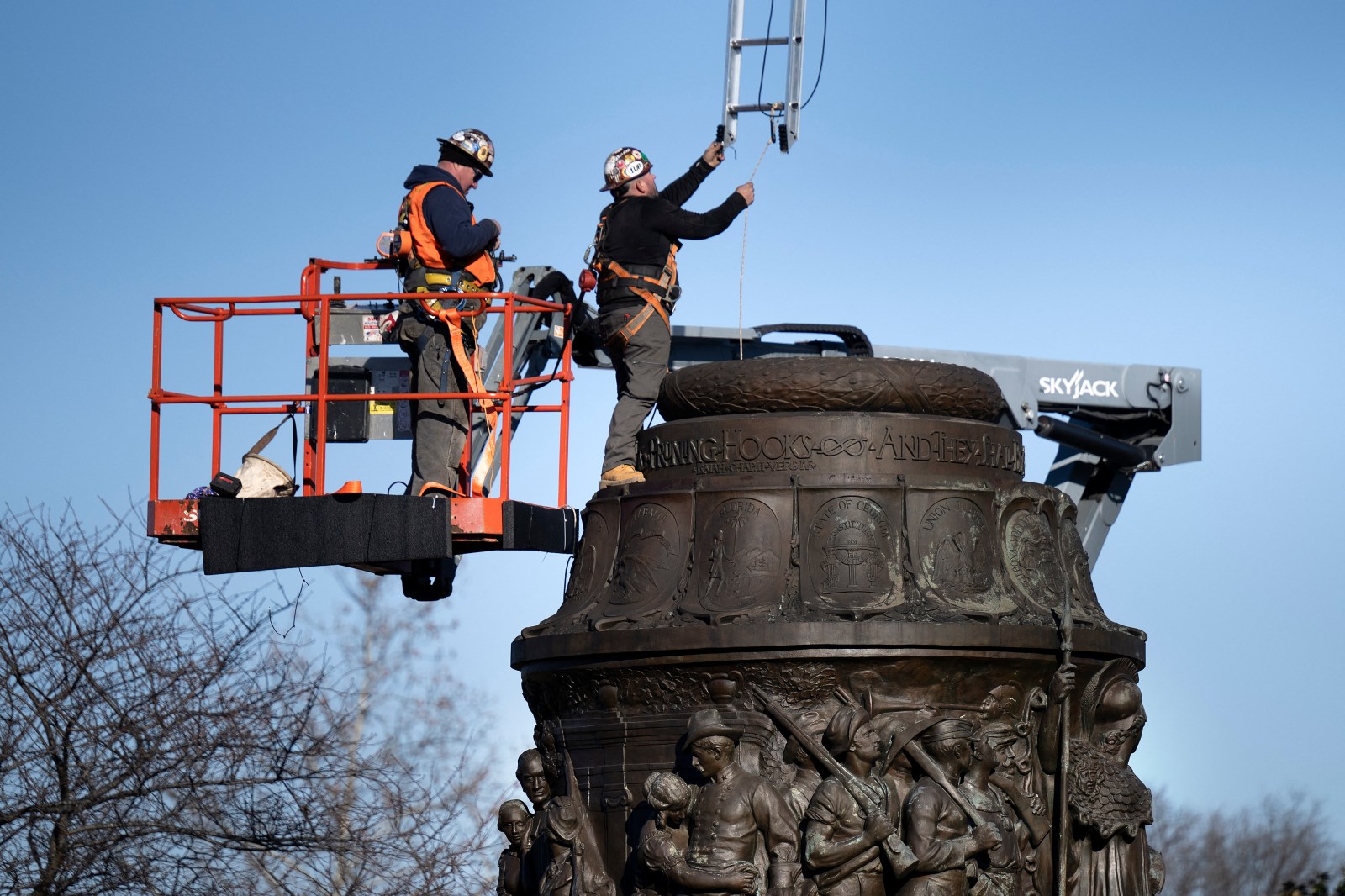
The Trump administration has altered descriptions related to the dismantled Confederate Memorial at Arlington National Cemetery. Previously, these descriptions portrayed the memorial as depicting a ‘nostalgic, mythologized vision of the Confederacy’ with ‘highly sanitized depictions of slavery.’
Amendments were reported by The Washington Post affecting both a cemetery marker and a webpage belonging to the Department of Defense. These references related to the ‘Lost Cause’ narrative, a perspective among some historians that romanticized the South before the Civil War while minimizing slavery’s role. Proponents of the Lost Cause argued that Confederate soldiers fought primarily for states’ rights.
The Trump administration’s decision coincides with plans to reinstate the Confederate Memorial at Arlington in 2027, following its removal in 2023. The monument’s removal stemmed from a congressional mandate addressing Confederate symbols on military properties. Secretary of Defense Pete Hegseth commented on social media highlighting a belief in honoring American history without judgmental erasure.
Understanding the Confederate Memorial
The Confederate Memorial, a significant structure standing 32 feet tall, was a prominent feature at Arlington National Cemetery until its 2023 removal. Unveiled in 1914, it consists of a bronze statue and plinth placed on a granite base, commemorating Confederate soldiers who served in the American Civil War.
The monument also includes figures of Black servants, suggesting their support for the Confederate cause. Created by Moses Jacob Ezekiel, a former Confederate soldier and sculptor, the memorial was commissioned by the United Daughters of the Confederacy to counter what Ezekiel saw as Northern ‘lies’ about the South.
A 2020 plaque at the site informed visitors about the ‘highly sanitized depictions of slavery’ portrayed by the monument.
Reasons for Memorial’s Removal
In 2021, amid nationwide protests spurred by George Floyd’s death, a bipartisan congressional commission was formed. Its objective was to recommend changes concerning Confederate honors within the military. During the Biden administration, the Department of Defense accepted these recommendations, leading to the memorial’s removal by late 2023 despite opposition from groups like the Sons of Confederate Veterans.
The Confederate Memorial remains stored at a secure Department of Defense facility in Virginia. By August 2025, the Trump administration announced plans for its return to Arlington National Cemetery by 2027.
Specific Language Removed
The Trump administration expunged paragraphs detailing the controversy surrounding the memorial. Archived texts from the Department of Defense webpage described the monument with a bronze female figure symbolizing the American South, surrounded by classical iconography and inscriptions. Included were depictions of mythical gods with Confederate soldiers and civilians, as well as two figures portrayed as faithful enslaved individuals.
The removed language highlighted the ‘Lost Cause’ narrative, presenting the pre-Civil War South in a romanticized light while omitting slavery’s horrors. This theme, popular in early 20th-century American culture, appeared notably in the film Gone With the Wind.
Language Remaining on the Memorial
The revised description retains a brief mention of the monument’s designer, Moses Jacob Ezekiel, and outlines his achievements. It notes that Ezekiel and three other Confederate soldiers are buried at the monument’s base. The existing content suggests the memorial encourages visitors to reflect on Civil War history, slavery, and themes related to military service, citizenship, and race in America.
The same edits were implemented at a marker at the site, as reported by The Washington Post.
Broader Context of Language Removals
Since Donald Trump’s return to the White House, similar removals and revisions of historical materials have occurred at various federal sites. These changes address plaques, exhibits, and signage discussing topics like slavery, racism, and immigration.
- Bunker Hill Monument (Boston): Removed quotes on slavery, immigration, and anti-war activism.
- President’s House Site Slavery Exhibit (Philadelphia): Temporarily removed details about enslaved individuals owned by George Washington.
- Francis G. Newlands Memorial Fountain (Washington, D.C.): Removed sign explaining white supremacist policies.
- Fort Sumter National Historical Park (South Carolina): Removed signs about climate threats.
- Fort Pulaski National Monument (Georgia): Flagged display of a Civil War-era photograph as evidence of slavery’s brutality.
- Selma-to-Montgomery National Historic Trail (Alabama): Reviewed interpretive signs about the 1965 voting-rights march.
Critics argue these changes remove important historical context, while the administration cites efforts to offer a more balanced perspective on American history.