
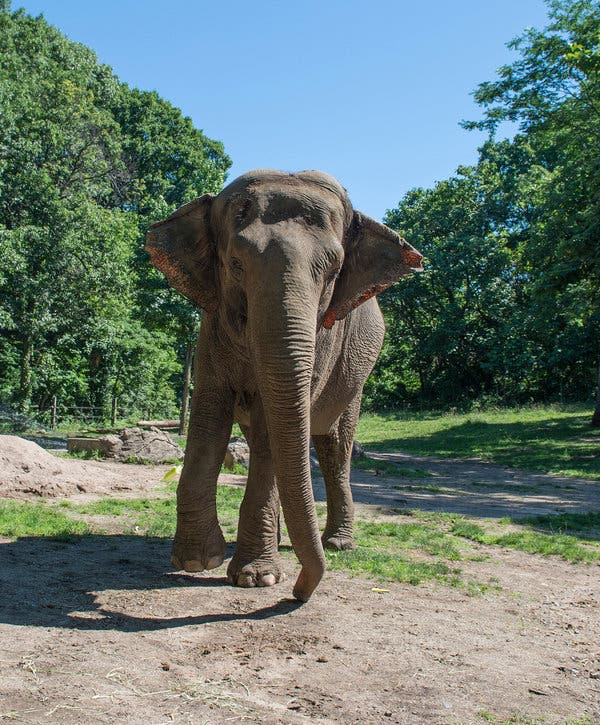
Happy, a 44-year-old elephant, resides alone at the Bronx Zoo. She is separated from the other elephants for her protection. The zoo plans to phase out elephants but has faced pressure from animal rights groups to relocate Happy to a private sanctuary.
On a gray day in June, Happy stood still in her leafy enclosure within the Bronx Zoo’s Wild Asia habitat. The surroundings included logs, grass, shrubs, and a concrete-lined pool, with a green ball nearby. Visitors on the monorail snapped photos of Happy while learning about her age and weight from a guide. A recorded message highlighted the challenges elephants face in the wild. As the monorail moved on, guests focused on the rhinos next door, unaware of the debate surrounding Happy’s future.
For nearly a decade, Happy has lived in isolation, unlike wild elephants who thrive in tight-knit matriarchal groups. Elephant families cooperate to raise their young, and females maintain lifelong bonds with relatives.
Happy’s situation has attracted animal advocacy groups like In Defense of Animals, which has listed the Bronx Zoo among the “10 worst zoos for elephants” for three consecutive years due to Happy’s isolation. Petitions online are urging action; one calls on Mayor Bill de Blasio to assess Happy’s well-being, while another with nearly 87,000 signatures demands her release from solitary confinement.
The controversy over Happy poses challenges for the Bronx Zoo and others, sparking debate over the ethics of keeping intelligent animals like elephants in captivity. Approximately a decade ago, the Bronx Zoo decided to conclude its elephant program. Instead, it would focus on aiding endangered elephants in their natural habitats. The zoo chose not to replace elephants that had passed on, planning to eventually introduce other species to the elephant habitat. Determining the fate of the zoo’s remaining elephants, especially the isolated Happy, remains an unresolved issue.