
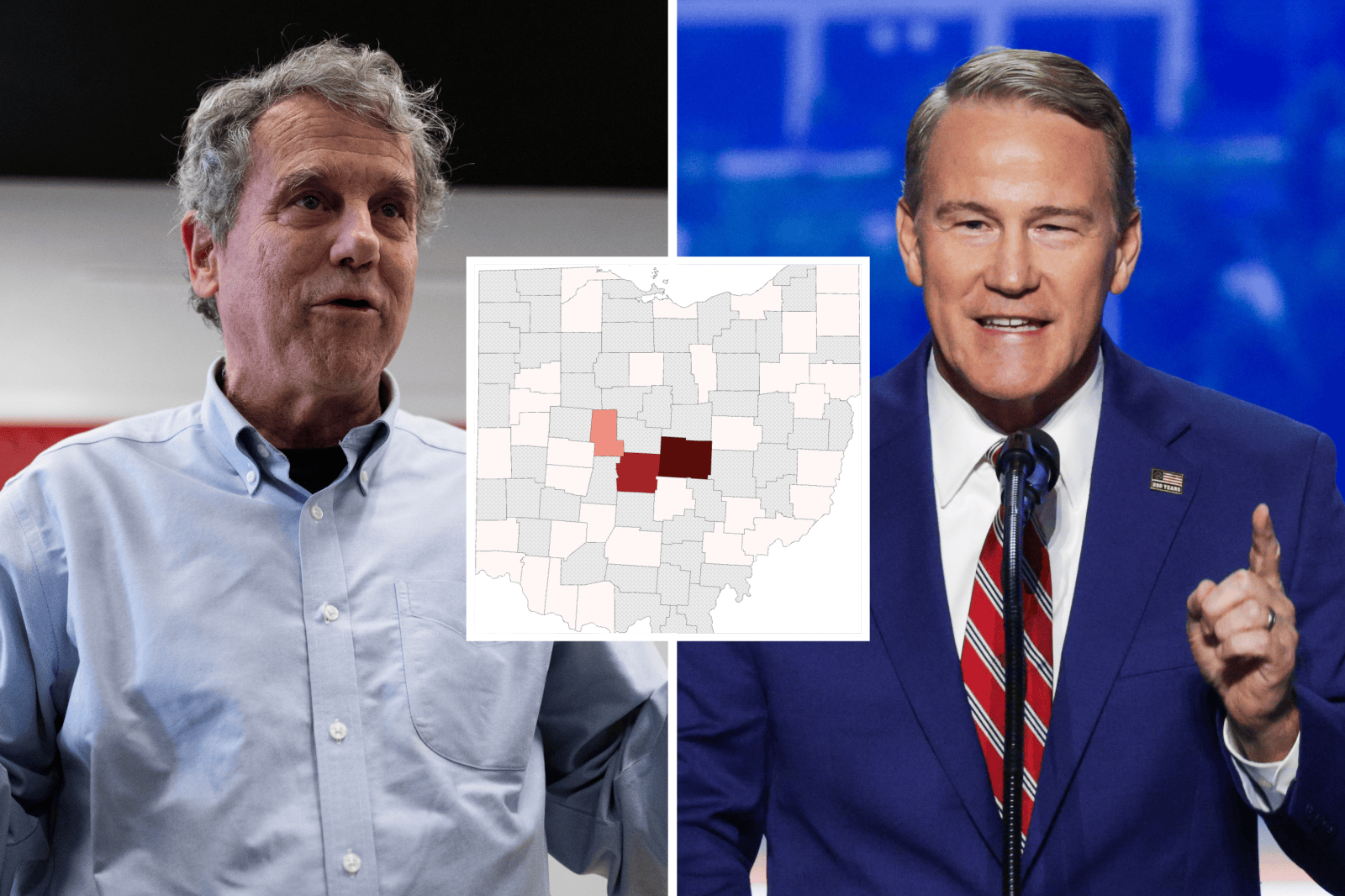
Data centers have become a focal point in the Ohio Senate race between Republican Senator Jon Husted and Democratic former Senator Sherrod Brown. The debate centers on the impact of data center development, with a growing number of Americans expressing opposition to their presence in local communities.
**Proponents** argue that data centers are vital for artificial intelligence (AI) infrastructure and present a chance to create quality jobs, including union jobs. However, **critics** highlight concerns over environmental impacts, increased water and electricity usage, and noise pollution.
According to a map by activist Erin Brockovich, Ohio has witnessed the establishment of numerous large AI data centers. Her map focuses on major AI-focused and hyperscale facilities across the state, although many smaller, unannounced data centers exist too.
Brown and Husted have addressed these rising community concerns by making data center regulation a priority in their campaign platforms as they prepare for Congress convening in 2027. Brown has emphasized residents’ concerns, while Husted focuses on consumer choice in digital products, framing the issue within broader economic development.
**Data Center Revolt In Ohio**
Ohio has seen a widespread backlash against data centers, especially in rural areas. David Niven from the University of Cincinnati’s School of Public and International Affairs told Newsweek that critics accuse Ohio Republicans of ignoring public outrage and continuing to offer tax breaks for data center developments.
Paul Beck, a professor emeritus of political science at Ohio State University, mentioned a lack of transparency regarding data centers as a significant issue for voters. A poll by Bowling Green State University indicates significant opposition, with 75% of Ohioans against having data centers in their communities, and 78% supporting a temporary construction ban until impacts are better understood.
**Economic and Political Dynamics**
Columbus is central to data center development, favored for its large population, flat land, and accessible utilities. Surrounding suburban counties, Licking and Union, have attracted further investment but also community resistance.
Despite tax incentives, critics argue the benefits do not outweigh the negative impacts. Ohio has granted a minimum of $2.3 billion in sales tax breaks, according to Signal Ohio.
**Candidate Positions**
Husted introduced the Ratepayer Protection Act to establish standards for when data centers connect to the grid. The proposal aimed to prevent rising electricity costs, facing opposition for not addressing concerns sufficiently. Husted stresses consumer demand for digital services as driving data center expansion.
In contrast, Brown appears more cautious, advocating for data centers to bear the full cost of utilities and opposing the burden on Ohioans.
**Labor Union and Political Challenges**
Labor unions add complexity, viewing data centers as a job opportunity. Some Democrats have struggled to clarify their stance, balancing this with union support, reflecting the economic significance of new jobs in Ohio.
**Ohio Senate Race Polls**
Polls indicate a tight race with Brown leading Husted in several surveys. Both camps are vying for voter attention, with close margins suggesting potential shifts affecting state power dynamics post-election.
**Implications for Ohio and the Nation**
Brown, a former two-term senator, eyes a comeback amidst Ohio’s political shifts. After Trump’s influence turned Ohio more conservative, Brown’s campaign may challenge Republican strongholds. Democrats argue that Trump’s economic policies and declining approval could favor their prospects in conservative regions this election.
Political analysts suggest Ohio’s outcome could influence congressional control. With early voting underway, both candidates emphasize the race’s competitiveness and its implications for future governance.