
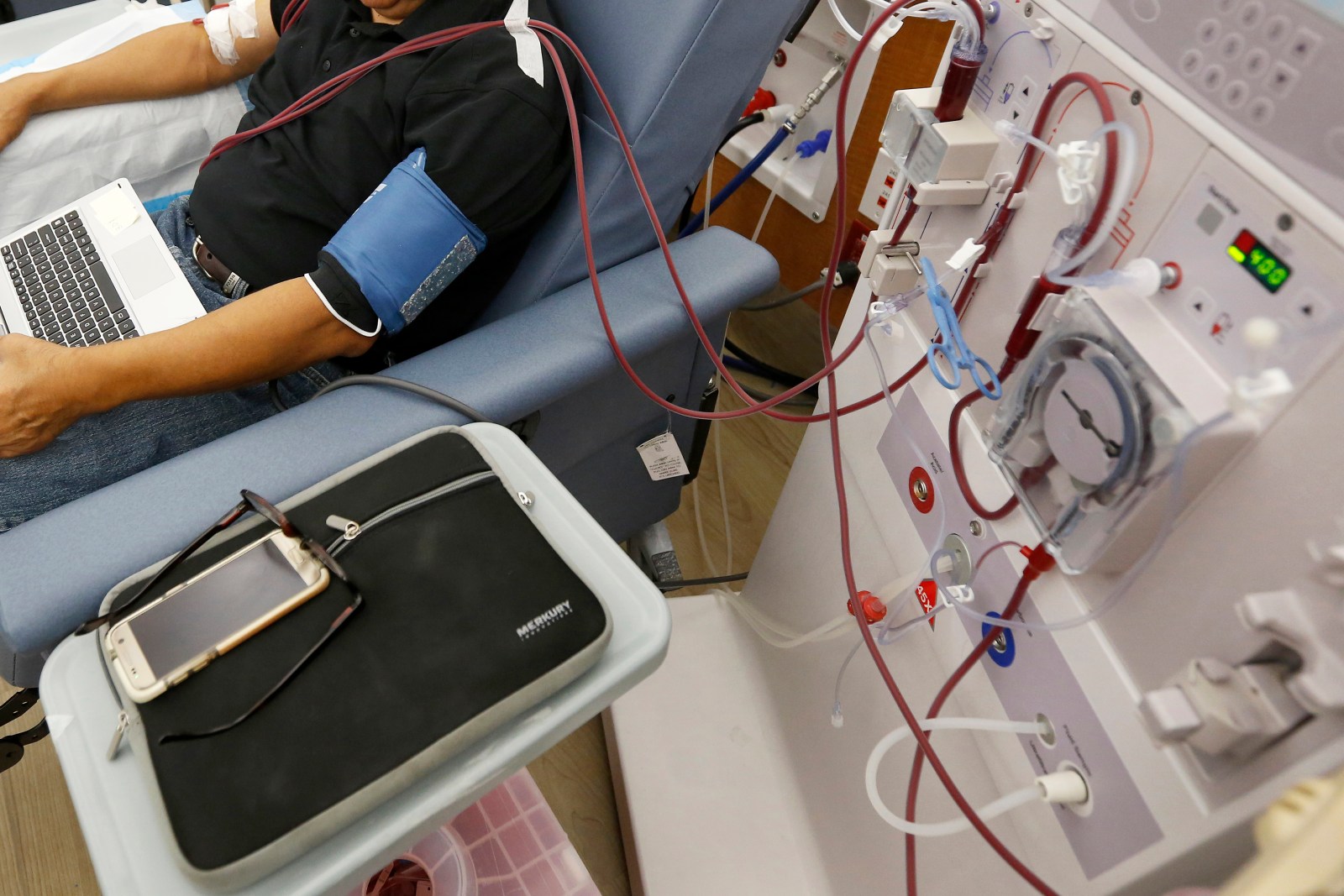
A federal appeals court has ruled to release Raheem Fulton, a Jamaican national, from immigration detention due to his end-stage kidney disease and unresolved legal claims. The U.S. Court of Appeals for the Second Circuit granted bail to Fulton, who is in ICE custody and facing a final order of removal following a burglary conviction.
There has been increasing scrutiny over medical care in ICE custody, focusing on access to treatment, continuity of care, and handling medically vulnerable individuals. DHS asserts all detainees receive appropriate medical care following established protocols.
Earlier this year, a Costa Rican man deported from the U.S. in a vegetative state after ICE detention died weeks post-deportation, prompting an investigation into his medical treatment and removal.
Reasons for Fulton’s Release
The court determined Fulton met the demanding standard for bail during his habeas corpus appeal, which challenges the legality of his detention. The majority found Fulton’s case involved substantial legal questions, and extraordinary circumstances necessitated release.
Fulton, requiring regular dialysis due to his condition, argues inadequate planning for his medical discharge before deportation. A previous court panel confirmed Fulton presented a substantial claim concerning his life-threatening medical condition.
The court stated, “Failure to supply adequate medical care will result in Fulton’s ‘near certain death.’”
A prior missed dialysis appointment led to a life-threatening episode for Fulton, and records show ICE declined to facilitate a kidney-transplant process despite referring him for evaluation.
The government did not dispute that failing to ensure dialysis post-deportation equates to a death sentence for Fulton, nor did it argue he posed a community danger or flight risk.
ICE’s Position
This legal dispute highlights government responsibilities when deporting immigrants with severe medical conditions. Fulton demands adequate discharge planning before his removal to Jamaica.
Judge Steven Menashi dissented, arguing that Fulton himself caused the delay in removal through court-ordered stays. Menashi asserts the government coordinated with Jamaican authorities to ensure dialysis availability upon Fulton’s return, confirming regular dialysis during U.S. detention.
The dissent focuses on whether additional assurances are necessary post-deportation, while the majority sees unresolved discharge planning as grounds for Fulton’s release.
Implications of the Decision
The ruling signals potential for federal courts to permit release of detainees with life-threatening conditions during unresolved legal disputes. While it does not resolve the core issue, Fulton’s appeal could influence ICE’s responsibilities when deporting individuals needing continued medical care.
A favorable ruling for Fulton may alter how ICE handles removals involving detainees dependent on ongoing, essential treatment.