
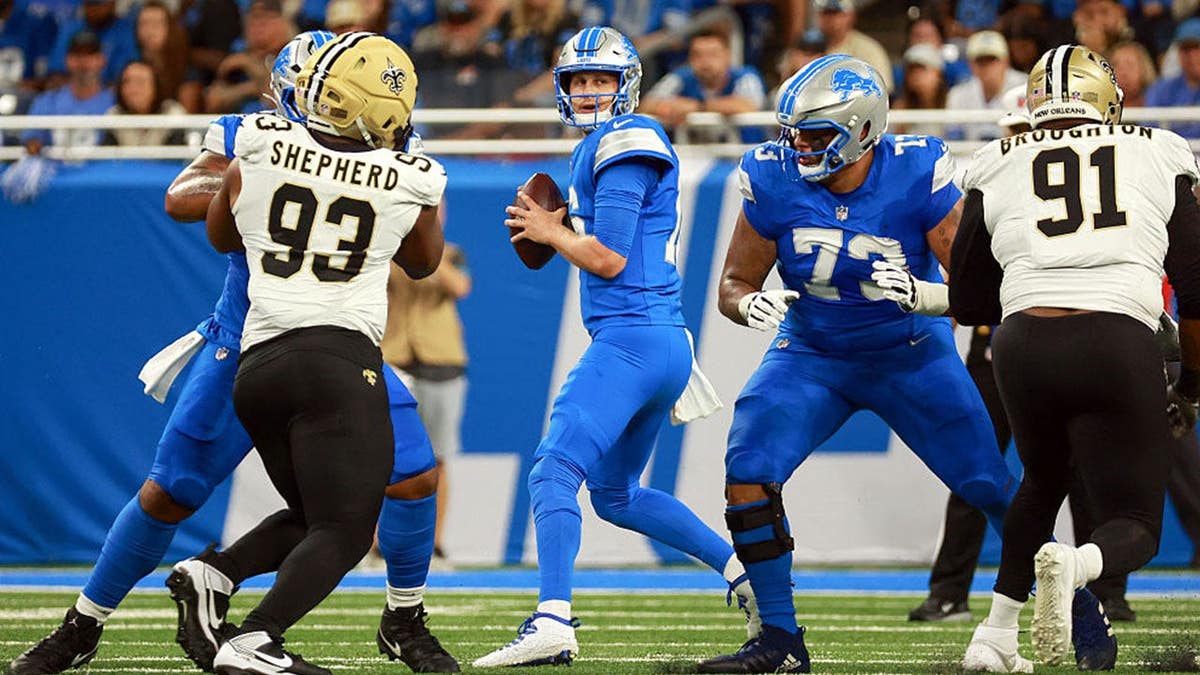
The New Orleans Saints experienced a significant setback in their game against the Detroit Lions when a potential defensive touchdown was negated. The Lions were leading 7-0 early in the second quarter when Saints defensive end Chase Young forced an apparent fumble from Detroit’s quarterback Jared Goff. The ball traveled backward, suggesting a routine fumble, and Saints safety Jonas Sanker picked it up, running it into the end zone.
However, after a review, officials ruled the play an incomplete pass. They determined that Goff had initiated his throwing motion, indicating his intent to throw the ball forward, which overruled the backward trajectory of the ball. This decision was explained by Mike Pereira, an NFL rules analyst, stating that the throwing motion begins when the ball is brought up, regardless of where the ball lands once released.
“He had started his throwing motion,” explained Pereira during the game broadcast. “Throwing motion starts, hand going up, then he’s hit, ball comes loose. Since that motion had already started, that’s going to be an incomplete pass, no matter where it lands.”
This ruling was met with confusion, as the consideration of a quarterback’s intent can create ambiguity, particularly in fast-paced situations. Despite the Saints’ disappointment, the Lions punted shortly after the play and carried a 7-0 lead into halftime.
Jared Goff’s reversed fumble due to his intent might become one of the more memorable incidents early in the NFL’s 2026 season. Head Coach Kellen Moore of the Saints observed as his team lost the chance for points due to an unusual application of the rules.