
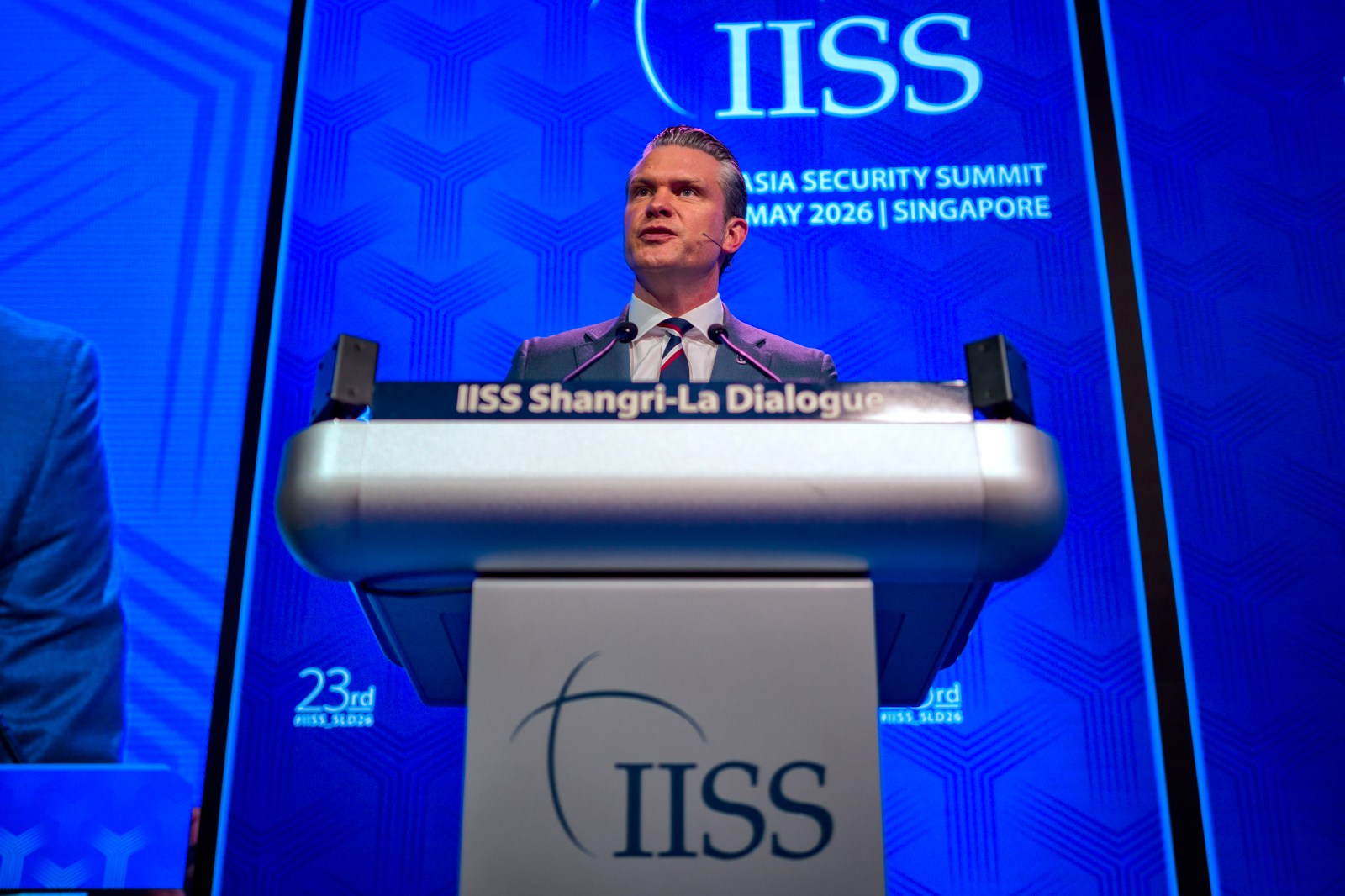
On May 30, U.S. Secretary of Defense Pete Hegseth delivered a standard speech at the Shangri-La Dialogue, a key national security conference in East Asia. Notably, he mentioned the defense of the ‘First Island Chain’ but avoided any explicit reference to Taiwan, a focal point in the Indo-Pacific region.
Hegseth’s remarks were perceived as uninspired, especially his comments to reporters where he acknowledged respect for China’s ambitions. Critics argue these ambitions include territorial expansion and restricting international waters and airspace.
This stance echoed President Donald Trump’s recent comments about Taiwan, made after his meeting with China’s President Xi Jinping. Trump referred to Taiwan as a ‘negotiating chip,’ compromising American credibility in the region. In response, China intensified its military presence near Taiwan and the disputed Scarborough Shoal.
Concern about China’s actions is growing, as evidenced by Japanese Defense Minister Shinjiro Koizumi’s unprecedented question to Hegseth about U.S. commitment to the region. Lance Gatling, from Tokyo-based Nexial Research, noted that Koizumi’s inquiry reflects a more media-savvy approach from Japan’s national security faction and a broader awareness of regional partnerships.
Japan emerges as a key player, actively engaging in partnerships like the Japan-U.S.-Australia collaboration on weapons production and the AUKUS submarine partnership. Other collaborations include the Quad, JAROKUS, and JAROPUS groupings, involving nations such as the U.S., Japan, Australia, and others.
Hegseth’s Pentagon is also forming new alliances, notably with Indonesia, through a Major Defense Cooperation Partnership signed in April. This agreement aims to enhance defense cooperation, recognizing Indonesia as a strategic partner due to its position along the Malacca Strait, a crucial maritime route.
James Fanell from the Geneva Centre for Security Policy emphasized the importance of this pact for maritime security and resistance to China’s territorial aspirations. He highlighted Indonesia’s recognition of the U.S. as a more dependable ally.
Taiwan, while not part of formal regional groups, remains central to regional security. Last year, Japanese Prime Minister Sanae Takaichi stated that a Chinese attack on Taiwan would threaten Japan’s survival, risking military action. Despite China’s aggressive response, Takaichi maintained her position, securing support for her coalition.
Japan’s firm stance illustrates the ability of smaller nations to confront China. The reassurance from Hegseth in Singapore was valuable, but regional allies also need decisive words from Trump. The atmosphere remains tense as regional concerns about China’s actions persist.
Gordon G. Chang is the author of several books on China. His views expressed in this article are personal.