
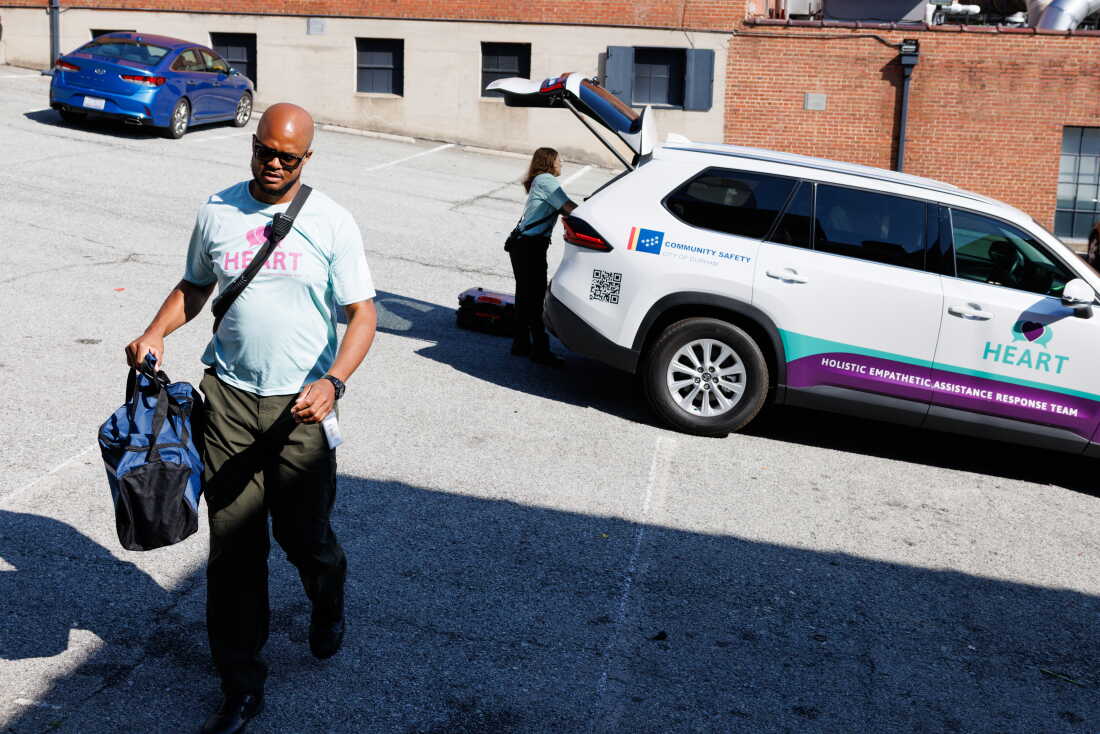
On a Wednesday in Durham, N.C., Rob Crisp and Allie Craft, members of the Holistic Empathetic Assistance Response Team (HEART), responded to a wellness check call in a parking lot. Armed with snacks, bottled water, and hygiene kits, they sought a man reported by a 911 caller for trespassing. Crisp approached the man, who was visibly tense. Having battled drug addiction himself, Crisp related to the man’s situation. He calmed him down, offering supplies and empathy to defuse the tension.
The HEART program exemplifies a growing trend in U.S. cities to employ unarmed community responders for certain 911 calls. Following George Floyd’s death in 2020, cities recognized that not all emergency situations require armed police officers. Initially, only six programs like HEART existed nationwide. Now, nearly 100 cities use unarmed responders, employing mental health experts and other specialists.
Durham’s HEART program, launched in 2022, manages multiple types of calls. It includes co-response with police and mental health inclusion in 911 operations. Ryan Smith, director of the Durham Community Safety Department, noted similar outcomes between law enforcement and social workers in certain calls prove alternative response success.
Research validates Durham’s approach. Duke University’s study indicates increased 911 calls show public trust in HEART. An RTI study revealed fewer arrests and high police approval of the program, indicating effectiveness.
Community-driven response programs face challenges. Patrice Andrews, Durham’s former police chief, acknowledges initial discomfort among officers about the safety of unarmed responders and perceptions of political motivations. Over time, HEART was accepted and integrated into communication channels, fostering teamwork and confidence in unarmed processes.
Determining the capacity of such programs remains complex. Fatal police shootings like Win Rozario’s in NYC highlight limitations in specific cities. Baltimore’s lower diversion rates call for adopting Durham’s model.
Balancing call volume and effectiveness presents an ongoing challenge. Programs like HEART must decide whether to address deeper social issues causing repeated crises. Some argue for a broader scope, tackling root causes rather than only providing temporary relief.
Durham embraces this challenge through its Stabilization Services, aiming to connect individuals with resources post-crisis. Anise Vance oversees efforts to provide housing, medical care, and basic life necessities.
Ultimately, the goal is to reduce the need for crisis intervention, creating lasting change in community safety and wellbeing.