
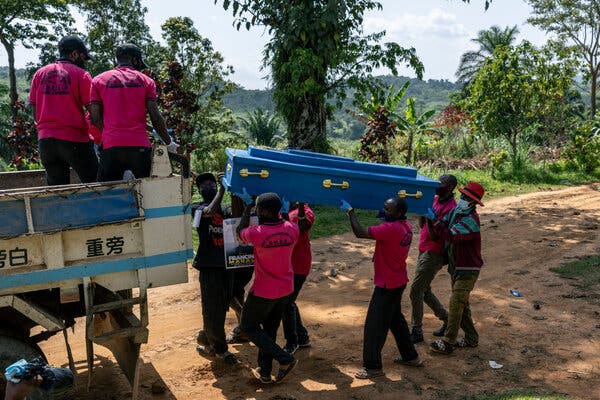
Ebola continues to spread in East Africa. The United States is taking a lesser role than in previous outbreaks. This shift leaves China as a potential leader in the effort. China’s economic strength and expertise in epidemic control position it well to contribute supplies, funds, and medical personnel.
In Mongbwalu, located in the Democratic Republic of Congo, treatment centers face shortages of essential equipment, medicines, and testing facilities. The Bundibugyo virus, the cause of this outbreak, still lacks an approved vaccine or treatment. Despite Beijing’s substantial investment in the region, China’s potential involvement in combating this Ebola outbreak remains uncertain.
The United States’ reduced involvement, compared to its earlier emergency responses, decreases competitive pressure on China to act. China’s cautious approach suggests a reluctance to intervene quickly in a remote and conflict-prone area. Bradley Parks, executive director of AidData, emphasizes the critical period China faces, saying, “Now we are in this moment of truth.” He questions if China will allow a leadership void or step up to the challenge.
China’s initial response involved sending a team of five medical experts to Kinshasa, over 1,000 miles from the outbreak’s center. This tentative measure, taken weeks after the outbreak’s declaration, illustrates China’s cautious and strategic engagement approach.