
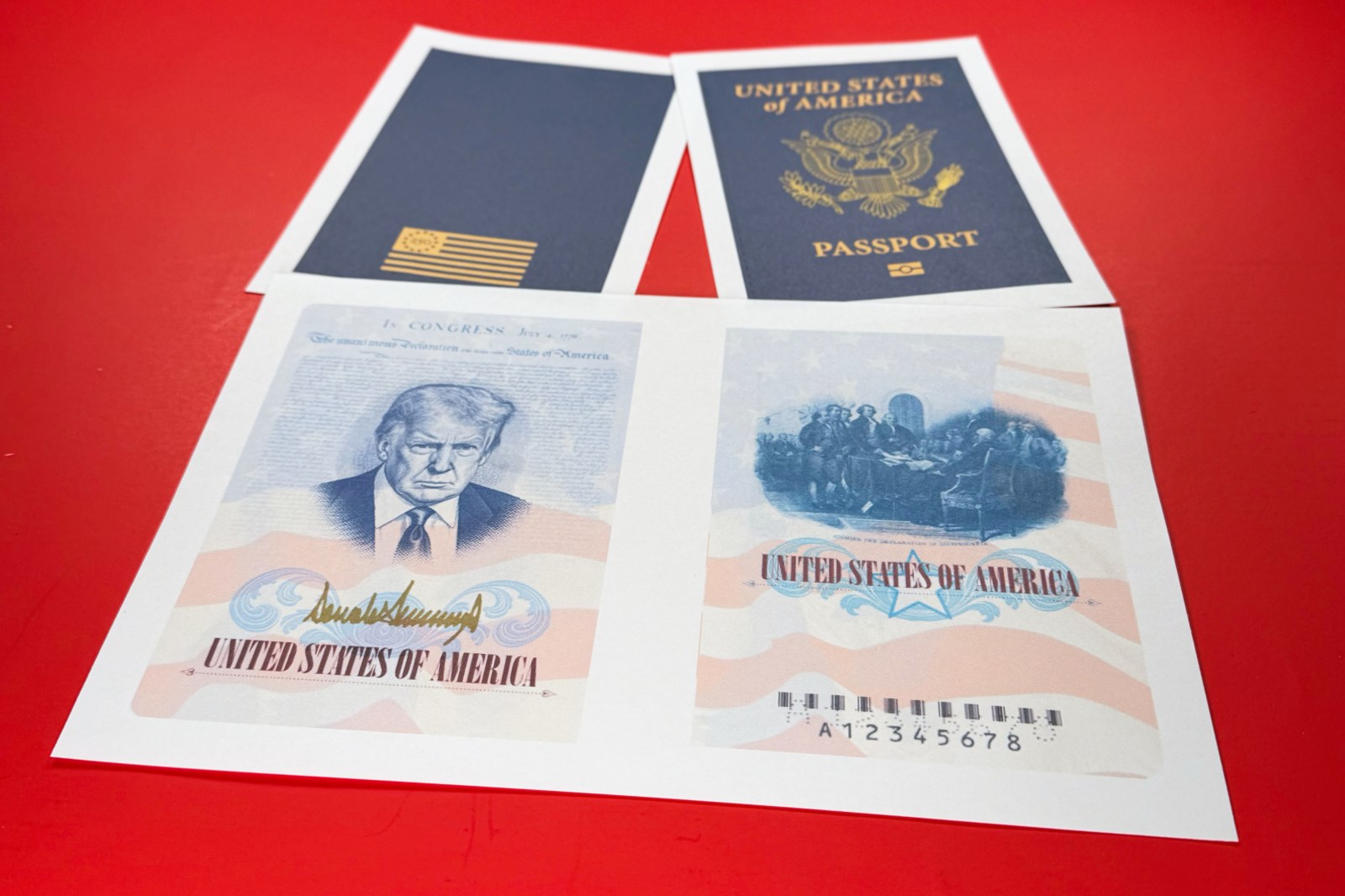
The Trump administration is exploring a potential new policy that would alter passport application requirements for children. This change could mandate that parents provide evidence of their own U.S. citizenship or immigration status. Reuters reports this could represent a notable shift in the State Department’s procedures, reflecting President Donald Trump’s stance on birthright citizenship.
Under the proposed policy, parents might have to submit documents like passports, birth certificates, or immigration paperwork to validate their citizenship or legal status. The policy has not yet been finalized, but Tommy Pigott, a State Department spokesperson, commented to Newsweek, emphasizing, “President Trump is committed to safeguarding the value of American citizenship by ensuring the passport process upholds that standard.” He also noted that the department does not verify or pursue leaked documents.
This proposal introduces concerns about potential governmental restrictions on children otherwise recognized as U.S. citizens under the Constitution. The Constitution’s 14th Amendment guarantees birthright citizenship to individuals born in the United States, a policy recently upheld by the Supreme Court despite Trump’s attempts to limit it.
Potential Changes Required
Currently, the State Department draft guidance, as per Reuters, indicates parents could be required to provide their citizenship status to assess an applicant’s eligibility related to Executive Order 14418. Presently, when applying for passports for children born in the U.S., parents must submit proof of the child’s U.S. citizenship and evidence of their relationship to the child, along with photo identification. However, separate proof of the parents’ citizenship or immigration status is not typically required.
Legal Perspectives
Legal experts express varied opinions regarding the constitutional implications. Former Palm Beach County State Attorney Dave Aronberg suggests requiring such documentation raises constitutional concerns if used to evaluate a U.S.-born child’s citizenship or passport eligibility. He notes, “The 14th Amendment protects citizenship rights for U.S.-born individuals, and the Supreme Court has upheld this interpretation broadly over a century.” Aronberg anticipates potential lawsuits should the policy be formally enacted, arguing that an executive agency cannot alter constitutional citizenship clauses through administrative paperwork.
Neama Rahmani, a former federal prosecutor and president of West Coast Trial Lawyers, presents a nuanced view. He explains that requesting parental documentation isn’t inherently unconstitutional, yet denying a passport to a U.S.-born citizen based on parental immigration status could present significant constitutional issues. Rahmani indicates a hypothetical test case might involve parents unlawfully residing in the U.S. but with a child born on American soil, thereby securing birthright citizenship. He mentions that such parents might avoid applying for passports due to fears of detention or deportation.
Executive Order on Birth Tourism
In addition, Trump signed an executive order on August 6, 2026, targeting “birth tourism” as defined by his administration. This practice involves foreign nationals traveling to the U.S. on temporary visas with the intention of giving birth, thus securing citizenship for their children. The order instructs the Secretaries of State and Homeland Security to prevent individuals suspected of birth tourism from obtaining U.S. entry approval. It includes the possibility of visa revocations and permanent bans from entering the country, while offering certain humanitarian exemptions.
The White House claims the policy aims to ensure nonimmigrant visas serve their intended purposes, rather than as a means to gain permanent immigration benefits. However, the executive order does not eliminate birthright citizenship but instead targets foreign nationals engaged in birth tourism practices.
Future Considerations
The State Department continues to review the proposal, which remains in deliberation stages. If adopted, it would further implement Trump’s executive order on birth tourism without necessitating congressional consent. Any finalized policy is anticipated to encounter immediate legal challenges, with courts addressing lawsuits related to broader efforts to restrict birthright citizenship.
Contact Newsweek editors on this story: Gray R. Thomas