
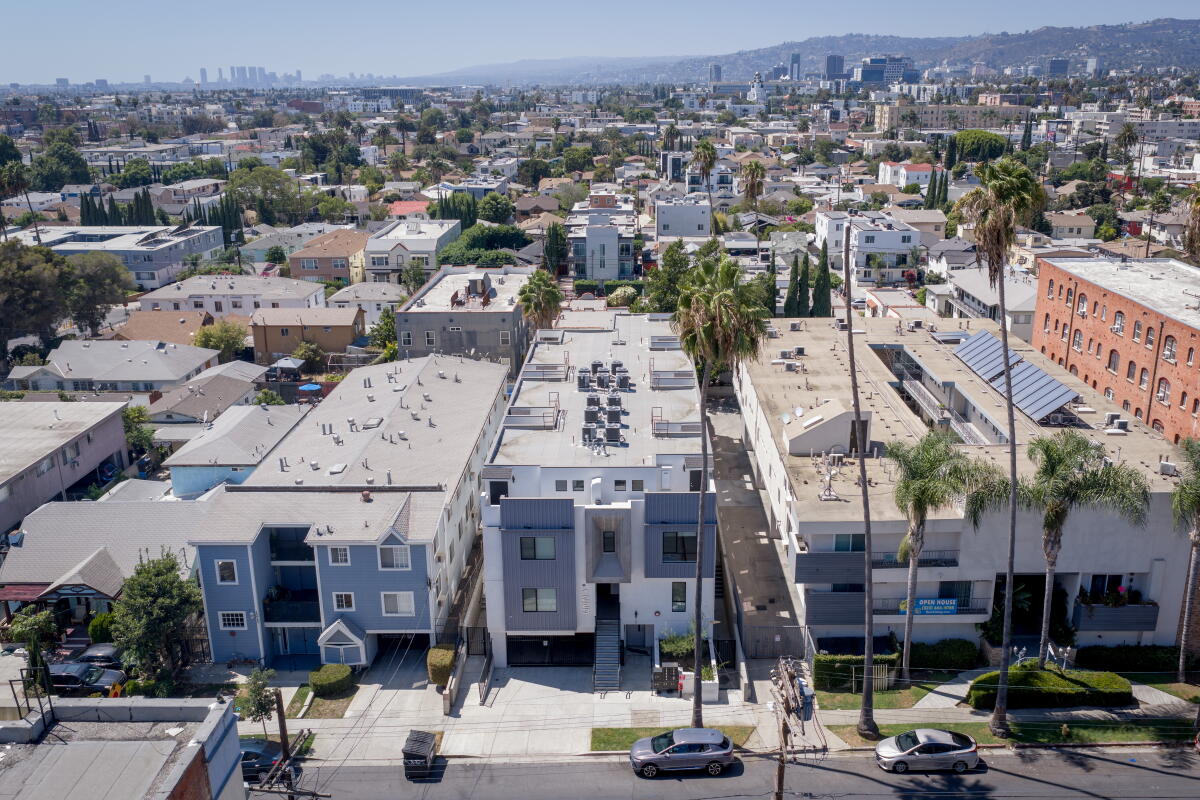
In 2021, developer Paul Schon was paid $6.5 million for a 14-unit Hollywood apartment building he constructed. Recently, he repurchased the building for $4.75 million. This example illustrates the drop in Los Angeles apartment building values. Over five years, the value dropped by 30%, which is now typical.
In 2022, the average sale price per unit in multi-family buildings was $397,289 in Los Angeles County, according to Kidder Mathews, a commercial real estate firm. By 2026, this number fell to $280,591. The city faces a housing shortage, with state interventions urging development. Mayor Karen Bass has accelerated the permitting process. Nevertheless, developers like Schon find new apartment construction unrealistic.
Current Market Conditions
Developments are not profitable. Taxes reduce potential earnings. Many developers prefer smaller projects like ADUs and townhouses to larger, transformative developments aimed at addressing the housing crisis. The situation yields little benefit; developers are not profiting, and renters face high rents.
Rent saw a temporary decline, reaching a four-year low, but long-standing underbuilding keeps costs high. Schon notes, “Building in L.A. is unattractive right now.” His fellow developers remain inactive due to financial impracticalities.
Construction has decreased. Kidder Mathews reported a nearly 9% drop in new apartment completions in the first half of the year, with only 25,636 units under construction, a 15% decrease from the previous year. Darin Beebower, executive vice president at Kidder Mathews, observes a continuing decline in construction.
“Developers are ‘pencils down.’ They have been for a while,” said Beebower.
Efforts to Revitalize Development
Paige Sterling, a spokesperson for Mayor Bass, cites measures addressing developer concerns. Executive Directive 1 accelerates affordable housing projects, and nearly 50,000 units benefit from this easing of bureaucratic processes.
However, developers highlight reasons for the construction slowdown:
- Interest Rates: Borrowing costs remain high, reducing project viability.
- Pandemic Policies: Rent freezes and eviction protections have lasting effects, while construction costs increase.
- Measure ULA: The mansion tax affects sales over $5.4 million, discouraging property investment.
Developers opt for projects below the mansion tax threshold, limiting potential housing expansion. Yoni Chriqui, focusing on small residential developments, states that soft costs now consume 20% to 25% of budgets. Park fees, introduced in 2016, further strain finances, reaching $8,929 per unit in 2026.
Market Dynamics and Future Prospects
State measures, such as SB 79, intended to facilitate larger projects near transit stops, see no proposals yet. Developers like Paul Darrow at Walker & Dunlop observe losses in sales, although selective buyers are interested in promising areas.
Darrow notes substantial investor interest in trendy neighborhoods, but sites in areas plagued by crime and homelessness lose value. A market bottom could attract buyers ready to capitalize on reduced prices.
“Investors are scrutinizing L.A.,” Darrow commented. “Numerous eyes are watching.”
Schon’s purchase represents a contrarian view in the market, weighing potential gains against significant risks. Meanwhile, plots capable of hosting many remain underutilized. Chriqui modifies development plans due to economic constraints, leaving some projects as parking lots.