
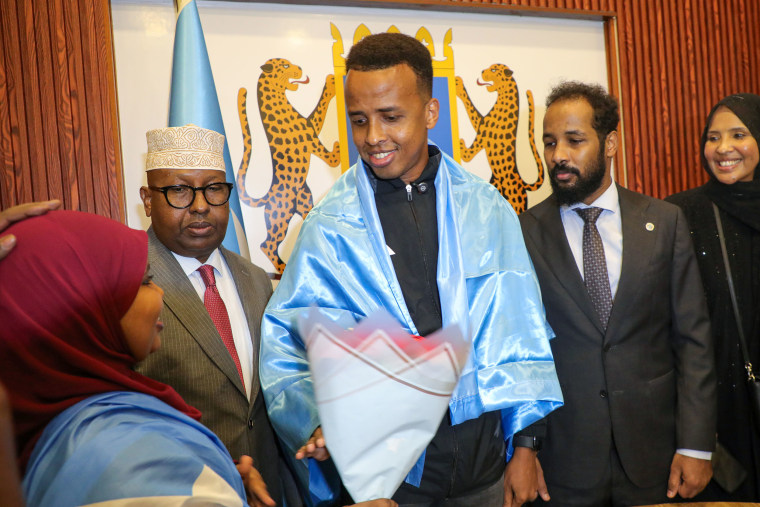
Somalia is not a participating team in the World Cup, yet the atmosphere at Mogadishu’s airport on Wednesday suggested a celebratory triumph. Enthusiastic supporters and media personnel gathered around to welcome Omar Artan, a symbol of the complications facing foreign entrants due to stringent American immigration policies.
Artan, 34, was supposed to be the first Somali referee at the World Cup, which begins in the U.S., Canada, and Mexico. However, upon landing in Miami for training, he was detained for 11 hours before being sent back to Somalia. His case is part of a larger issue, with 15 Iranian officials and Iraq’s team photographer also denied entry, citing intense border checks.
The U.S. assured FIFA that eligible participants from around the world could attend. Yet, travel bans hindered preparations.
Reflecting historical concerns, past World Cups had their faults, but barring an accredited referee is notably unique. Former Secretary of State Hillary Clinton criticized the U.S. approach as backward, while Ian Wright labeled the event “World Cup of Chaos.” His comments reflect a broader sentiment against the restrictive policies observed.
Andrew Giuliani, from the White House World Cup task force, defended the decision, citing “very good reason” for Artan’s denial, though details remain withheld. CBP spokespersons pointed out “vetting concerns” without elaboration, asserting that standard inspection processes were in place. Trump administration officials suggested Artan’s alleged connections to suspect groups—claims he refuted, denying any ties to al-Shabab.
Somalia expressed regret over Artan’s treatment, and officials urged caution in speculative judgments. Meanwhile, CBP actions towards two Iraqi officials attracted scrutiny, leading to admission for one and denial for another. Trump aims to showcase a secure World Cup experience for all, dismissing critiques as politically driven.
These entry disputes clash with the tournament’s spirit, impacting fans’ willingness to attend due to high costs and rigid controls. Ronan Evain of Football Supporters Europe advocates universal access, lamenting how policies appear to exclude parts of the global community.
The tournament, overwhelmingly held in the U.S., becomes contentious amid visa issues since Trump extended the travel ban. While some players gained entry, fan accommodations remain uncertain. Concerns intensify with reports of revoked tickets for Iranian fans and travel hesitancy from Ivory Coast communities.
Amnesty International decried the policy as discriminatory, highlighting a need for more inclusive practices.
Previous World Cups in Qatar and Russia facilitated easier access, recognizing the unified nature of such events. The challenges imposed by the U.S. strain even those outside banned regions facing prohibitive fees and denials. While FIFA endeavored to streamline entry with priority passes, critiques abound about their effectiveness.
Sarah Pierce underscores a warning from these policies, advocating backlash to encourage welcoming approaches in future global gatherings.