
Before Broccoli City became a nationally recognized cultural platform, Brandon McEachern searched for a gathering place that combined music, entrepreneurship, wellness, and community. During the blog era, discovery moved through sites like 2DopeBoyz, and artists gained momentum before radio caught up. McEachern identified an opportunity: “At the time, there was nothing geared toward us,” he told Newsweek, recalling conversations that shaped Broccoli City around 2009 and 2010. “We wanted something truly for us.”
A clothing line inspired the name, Earth Day provided the occasion, and Los Angeles offered the first stage. Though some associated “Broccoli City” with marijuana, McEachern envisioned a broader civic identity focused on organic living, local commerce, and a culturally fluent lineup supporting each other. “People thought it was weed,” he said. “We were focused on community.”
The inaugural Los Angeles event showcased Dom Kennedy, Kendrick Lamar, Casey Veggies, and Pac Div, artists whose momentum reflected the restless creativity of the era. When McEachern moved the concept to Washington, D.C., Big K.R.I.T. headlined its first edition, and vendors, juices, and emerging clothing labels gave the festival a commercial and social life beyond the stage. “It was health, community, wellness, and good entertainment,” McEachern said.
Programming Across a Cultural Spectrum
As Broccoli City grew, McEachern learned that a lineup could not rely solely on popular rap acts. To reflect its audience, the festival needed a diverse range of sounds, styles, and experiences, requiring women to have a more visible presence. “We need women in the mix,” he explained. The festival began pairing hip-hop with R&B, alternative music, and artists starting to break through.
One edition featured H.E.R., Daniel Caesar, Nipsey Hussle, Migos, and Cardi B; another paired Jhené Aiko, Anderson .Paak, The Internet, and Sango, with earlier bookings introducing audiences to Kaytranada before his rise. Each combination felt intentional, even when artists occupied different corners of contemporary music. “Black people are through the spectrum,” McEachern said. “Some prefer hard rap; some prefer conscious rap.”
Taste changes quickly, especially as founders grow older alongside an evolving audience. McEachern’s team stays close to younger listeners, asking what resonates and grounding programming with these insights. “We were trying to touch all those different pockets of our people,” he said.
Making Live Music Affordable
Access remained a focal point for McEachern. A festival might build cultural credibility and book top talent, yet its purpose narrows if the intended audience cannot afford entry. Growing up in Greensboro, North Carolina, he recalls high prices in Los Angeles feeling out of touch with everyday life. “I’m from North Carolina,” he said. “I moved to Los Angeles, and I thought, ‘It costs how much?’”
Artist guarantees, production costs, and venue expenses explained economics, although understanding the math did not erase the problem. Broccoli City leaned on sponsors and public partners, whose support lowered ticket prices without sacrificing experience quality. “It makes no sense to host these events if our community can’t attend and enjoy them,” McEachern said. “I don’t want anyone choosing between rent and seeing a performance.”
For Holding Hands, an R&B experience within Broccoli City, AT&T’s involvement made $25 tickets possible. McEachern’s focus was less on discounting entertainment and more on removing the calculation that drains spontaneity from nights out. “We’re reading the room,” he said. “People are facing challenges.” The team refused to compromise on talent, as affordability meant little if audiences felt offerings diminished. Summer Walker and the rest of the Holding Hands lineup needed to deliver value exceeding the price, even as partners absorbed behind-the-scenes costs.
A Place to See Yourself
Music draws people through gates, but McEachern measures the festival’s impact by interactions between performances: attendees meet future collaborators, vendors reach customers, creators find material, and people engage with shared reference points simplifying conversation. “Some people started whole businesses after meeting at Broccoli City,” he said.
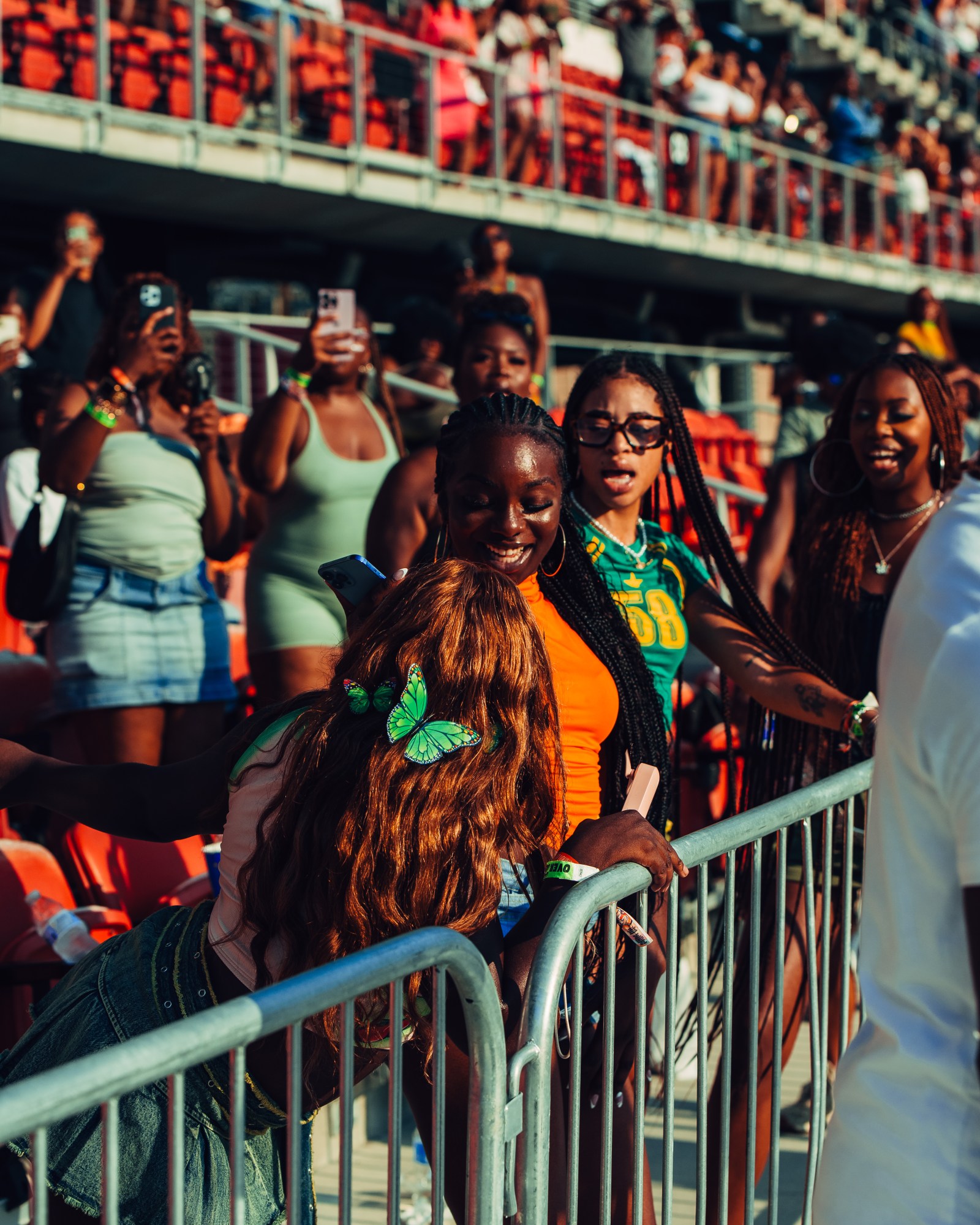
The atmosphere combines HBCU homecoming energy with music festival scale and discovery. Because audiences recognize themselves across the grounds, the experience feels natural and easy to connect with, hard to manufacture solely through branding. “It feels like a historically Black college event mixed with a regular music festival,” McEachern said. “You see yourself in the crowd.”
Holding Hands carries these cues into an amphitheater, allowing attendees to focus more on performances. Its programming widened invitations through artists and partnerships representing community aspects live events often overlook. “It’s all-inclusive for everyone,” McEachern shared. He remembered Anderson .Paak’s 2016 performance, when the singer’s manager noted he’d never performed for so many Black people. It clarified why culturally specific spaces can welcome all while designed with a particular community in mind.
Building Commerce, Careers, and Confidence
Broccoli City’s marketplace follows this philosophy. A platform showcasing artists can also foster commerce for entrepreneurs, as vendors selling clothing, food, and other products help the festival function like the city in its name, circulating money among people who might struggle to reach a concentrated audience. “We built artist platforms,” McEachern said. “Why not create a platform for young entrepreneurs?”
BroccoliCon extended this idea to professional development. Aspiring organizers learned practical language of decks, one-sheets, and sponsorships; young creatives met executives whose careers made new possibilities visible. Later editions introduced job-fair programming, as McEachern wanted attendees to leave with more than inspiration. “You can’t become what you don’t see,” he said. “Our job is to uplift, not gatekeep.”
Taking the Model Beyond Washington
McEachern believes the Holding Hands model can travel to cities where major cultural events are rare. It requires strong sponsors, an established venue, and local partners to align. An amphitheater reduces the infrastructure costs of a traditional festival. A focused lineup of several artists can still create an event with scale, identity, and room for local performers. “Absolutely,” he affirmed when asked about the approach working elsewhere. “We need good acts and seek collaboration with local communities.”
Expansion depends on audiences recognizing their ecosystem role; feedback after events influences future sponsors, venues, and ticket prices. Praise, criticism, and testimonials become evidence for continued investment. “If you had a great time, share that,” McEachern urged. “Mention meeting someone outstanding.” The guiding principle for Broccoli City—from organic T-shirt line to a network of festivals, conferences, and initiatives—is that live entertainment creates opportunity, pleasure, and proof of concept, relying on participation and sharing why the space matters. “There should be more Broccoli Cities,” McEachern concluded. “More experiences from our perspective.”