
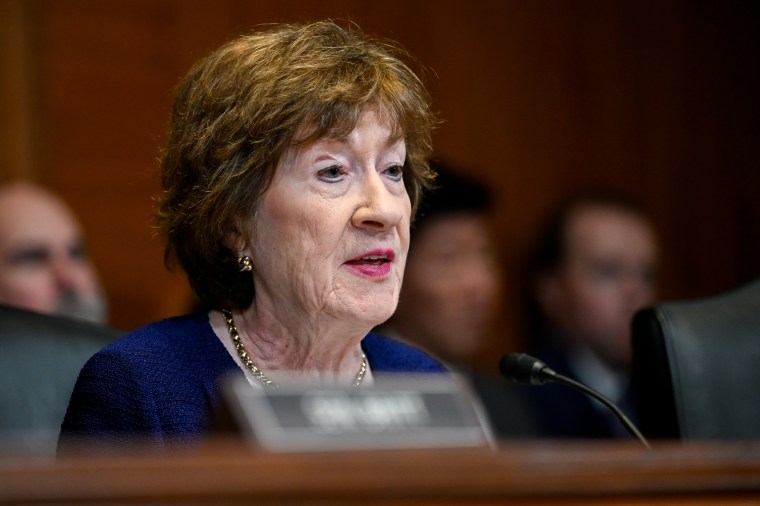
The political climate in Maine’s upcoming Senate race is charged with multiple pressing issues, notably including Brett Kavanaugh’s past Supreme Court confirmation. Eight years ago, Republican Sen. Susan Collins of Maine cast a critical vote for Kavanaugh, who had assured her that he considered Roe v. Wade “settled law.” This assurance was later proven incorrect when Kavanaugh contributed to the 5-4 majority that overturned the landmark case in 2022, instigating a wave of abortion bans across several states.
For many voters in Maine, especially Democrats, Collins’ vote for Kavanaugh remains a significant point of contention. Arie Mobley, a participant at a recent rally for Graham Platner, Collins’ anticipated Democratic challenger, expressed her dissatisfaction, recalling Collins’ initial hesitation to confirm Kavanaugh and the subsequent disappointment when she did. Janice Low echoed similar sentiments, highlighting the perceived contradiction between Collins’ statements and actions.
Kavanaugh’s past confirmation is gaining renewed attention as Collins faces another re-election. Democrats aim to reclaim the Senate, viewing Maine as a key battleground. Collins has consistently been targeted by Democrats who argue that her support of Kavanaugh, amid allegations of sexual misconduct that he denied, marked a pivotal moment in her career. Collins justified her vote by underscoring her belief in Kavanaugh’s denial and the importance of a fair confirmation process.
As the Senate race progresses, Platner’s supporters are using Collins’ past endorsement of Kavanaugh as leverage, particularly in light of Kavanaugh’s role in overturning Roe v. Wade. They emphasize that if Republicans regain the Senate, Collins may again play a decisive role in appointing future Supreme Court justices, as some current justices near retirement.
In a recent speech, Platner criticized Collins, accusing her of breaking promises to protect Roe v. Wade by voting for justices who ultimately overturned it. He argued that Collins’ Kavanaugh vote is indicative of untrustworthy political conduct.
Collins, however, has defended her decision, stating she undertook thorough consideration and consulted with experts before confirming Kavanaugh. While expressing disappointment over the ruling against Roe v. Wade, she maintains her vote was justified.
Maine’s political landscape is unique, with a history of electing Republican senators despite a strong inclination towards reproductive rights. Consequently, key Democratic groups, like the Senate Majority PAC, intend to highlight abortion issues in campaign ads, targeting Collins’ “anti-choice record.” Their strategy, based on recent polling, suggests emphasizing Collins’ role in the abortion rights reversal can resonate with Democratic voters.
The race isn’t solely about Kavanaugh and Roe v. Wade. Platner has faced personal allegations of threatening behavior by an ex-girlfriend, which he denies. His accuser, Lyndsey Fifield, formerly rallied in support of Kavanaugh, rejecting accusations against him during his confirmation hearings. Platner’s allies argue that her allegations against him are politically motivated.
Overall, the Kavanaugh confirmation shadows the Maine Senate race, playing a crucial role in campaign strategies and voter perception. Democratic strategists assert that few issues senators vote on are more significant than Supreme Court appointments, especially in light of recent judicial decisions influencing national policy.
Despite the controversy, Collins remains steadfast in her prior decisions, having voted for several justices across party lines during her tenure, only opposing Justice Amy Coney Barrett for procedural reasons.
As political entities on both sides navigate the complexities of the upcoming election, Kavanaugh’s past confirmation remains a central issue with potential implications for Collins and the future political landscape in Maine.