
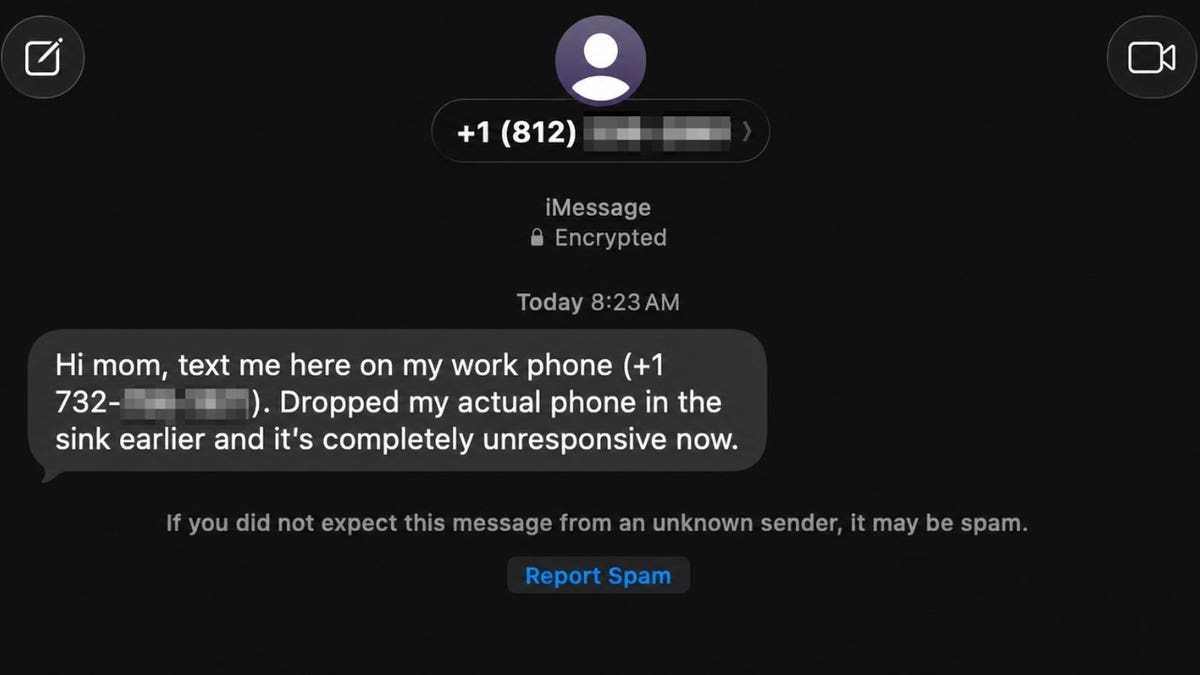
A new scam text made its way to phones, raising alarms especially among parents. The message states: “Hi mom, text me here on my work phone. Dropped my actual phone in the sink earlier and it’s completely unresponsive now.” It appears to be from an unknown number, asking you to contact another unknown number. This tactic attempts to shift the conversation before verification happens.
Understanding the ‘Hi Mom’ Text Scam
This scam preys on parental concern, blending a believable personal touch with a sense of urgency. No suspicious links or immediate requests for money appear at first.
The message exploits typical family dynamics, using a believable excuse to elicit a quick response.
Parents might act quickly when a child seems to be asking for help. Scammers capitalize on this urgency. The conversation shifts from exchanging greetings to potential monetary requests. The scam might culminate in pleas for money through apps like Zelle or gift cards, or even extracting verification codes for account access.
The Anatomy of a Scam Message
- “Hi mom”: This general greeting increases the message’s reach. For mothers, it can feel personal.
- “Text me here”: Keeps the scam within text messages, allowing the scammer control over the narrative.
- “On my work phone”: Offers a plausible explanation for an unknown number.
- “Dropped my actual phone in the sink”: Hooks the reader with a common mishap.
- “Earlier”: Suggests recency without offering details that can be verified.
- “Completely unresponsive now”: Preempts attempts to verify through the actual phone.
These elements combine to lower defenses, increasing the likelihood of a response.
Potential Consequences of Engaging
Replying to these messages can lead to deeper traps. Subsequent messages may request money, bank account information, or verification codes. Scammers might suggest using fast and sometimes irreversible payment methods.
Why Parents Are Targeted
Parents often respond to perceived emergencies from their children. The scam leverages this instinct, bypassing skepticism through strategic timing and concise messaging.
Strategies to Counter ‘Hi Mom’ Scams
- Don’t reply: Even a simple response can confirm your number’s activity.
- Directly call the person: Use known contact information to verify the situation.
- Ask personal questions: Use information that only real family members would know.
- Refrain from sending money: Verify any request through trusted communication channels.
- Avoid sharing verification codes: These codes safeguard your accounts.
- Use antivirus software: Protect against threats that may arise from scams.
- Consider data removal services: These can reduce your online data footprint, making scam messages less convincing.
- Report and block the number: On iPhones, use the built-in spam reporting. On Androids, report messages through Google Messages.
If You’ve Already Responded
Stop communication and protect your accounts. Take screenshots for evidence, contact the real person directly, and alert banks or payment apps if financial transactions occurred.
Conclusion
The ‘Hi Mom’ scam thrives on its familiarity. By beginning with a minor issue and escalating slowly, it can trick even vigilant individuals. Always pause and verify any suspicious messages with family through known numbers. Share your experiences with fake emergency texts at Cyberguy.com.