
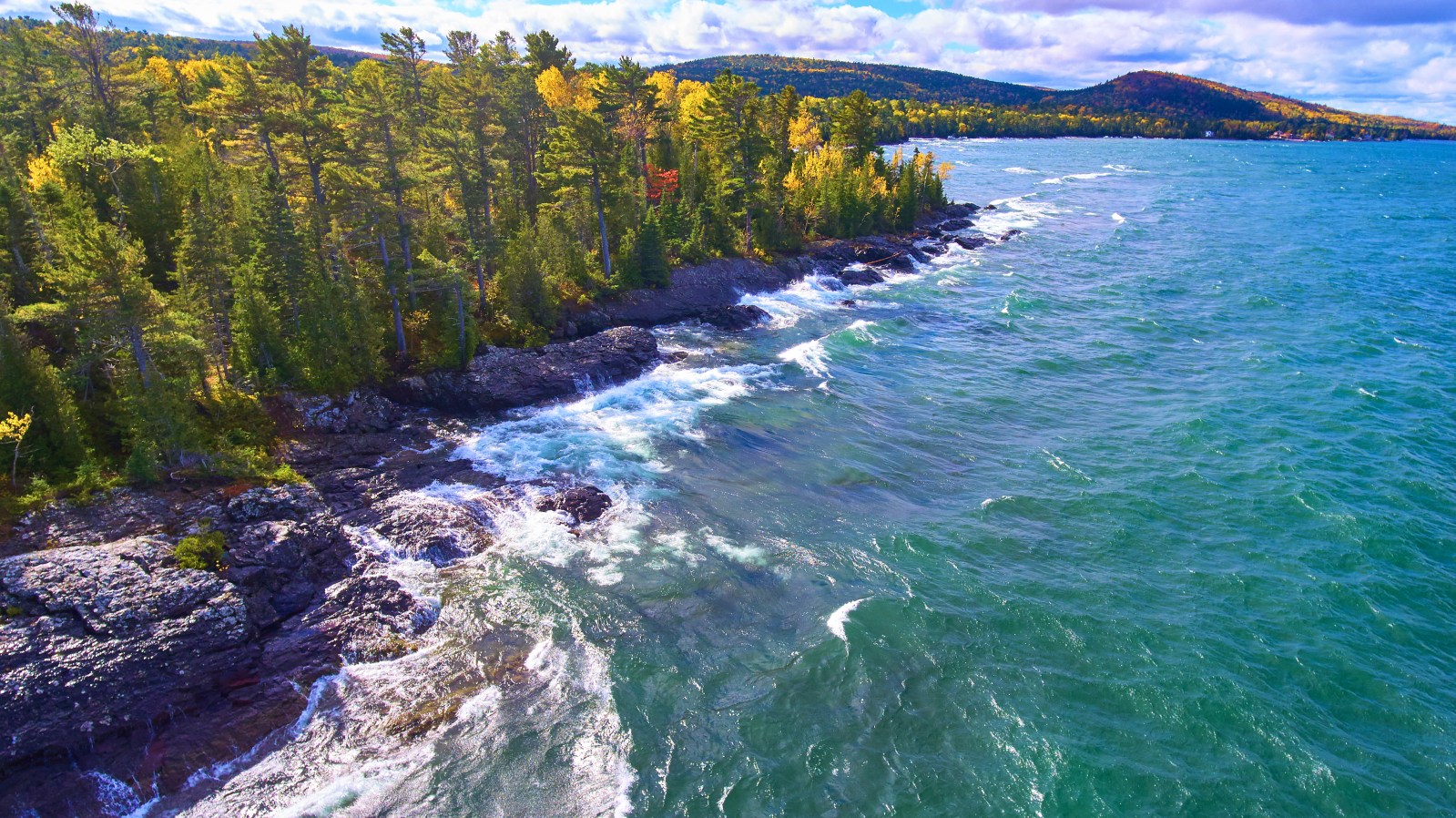
The National Weather Service (NWS) has issued beach hazards statements across the Great Lakes region. This alert coincides with the popularity of beach visits during the shoulder season before fall officially arrives. Earlier this month, similar warnings affected about 1 million residents near the Great Lakes, including Lake Michigan, Lake Superior, Lake Huron, Lake Erie, and Lake Ontario. As of Monday, over 8 million people are affected by these warnings.
Current Warnings
By 10:30 a.m. Eastern time, NWS offices issued alerts for various regions including Wisconsin, Minnesota, Michigan, Illinois, Indiana, Ohio, Pennsylvania, and New York. Dangerous waves and currents prompted advice to avoid the water. Warnings cover areas like Duluth, Minnesota, northwestern Wisconsin, Michigan’s Upper Peninsula, nearly all of Wisconsin’s Lake Michigan shoreline, northeastern Illinois, northwestern Indiana, northeastern Michigan, northern Ohio, northwestern Pennsylvania, and most of New York’s Lake Ontario shoreline. Many warnings will remain in effect until Wednesday evening, though some may expire earlier.
Meteorologists from the NWS emphasize the risks associated with rip currents and large waves. “Life-threatening waves and rip currents are expected. Stay out of the water and away from areas like piers and breakwalls,” the Duluth office stated. Strong wind and wave actions create currents along the lakeshore, leading experts to advise against swimming.
Reasons for the Alerts
Beach hazards statements in this season are uncommon, as explained by Bryan Jackson, a meteorologist at NWS Weather Prediction Center. Cooler air moving in during the shoulder season often triggers extensive warnings due to cold fronts. A Canadian high-pressure system north of the Great Lakes has contributed to these dangerous conditions. Jackson noted a significant pressure gradient and continued warm weather attracting beachgoers, intensifying the risks.
Winter cold fronts in this region generally lead to lake effect snow, strong winds, and ice accumulation. Currently, the prolonged wind from the north’s high-pressure system necessitates the beach hazards warnings. “Generally, strong winds like these don’t occur in summer,” Jackson said, highlighting the transition into the cooler season.
Drownings This Year
The Great Lakes have recorded 73 drownings so far this year, with Lake Michigan accounting for 41 of those incidents, according to data from the Great Lakes Surf Rescue Project (GLSRP). The absence of lifeguards after Labor Day accentuates the importance of these warnings, noted GLSRP’s executive director, Dave Benjamin.
Understanding Rip Currents
Rip currents are fast-moving water channels perpendicular to the shoreline. They do not drag swimmers under; however, they can carry individuals further away from the shore. It’s advised to stay calm if caught in a rip current. Swimmers should move parallel to the shoreline, then head back to shore once they’re out of the current. In case of fatigue, floating and waving for assistance is recommended.
Future Expectations
Some warnings will expire by Monday afternoon. Others may continue for several days. Residents and visitors near the affected shores should heed local weather advisories and approach water activities with caution.
Looking ahead, Jackson indicated that the Mid-Atlantic region might face similar concerns due to a strengthening low-pressure system off the coast. This development could lead to elevated tides and beach erosion in the coming days, requiring vigilance.